Tag: comfort

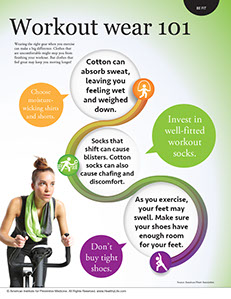
  • Workout Wear 101

    BE FIT

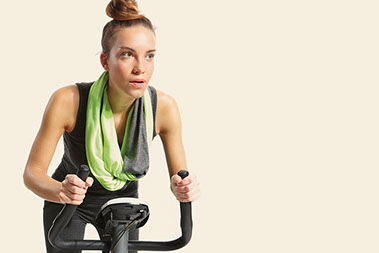
    Women riding stationary bike.

    Wearing the right gear when you exercise can make a big difference. Clothes that are uncomfortable might stop you from finishing your workout. But clothes that feel great may keep you moving longer!

    *  Choose moisture-wicking shirts and shorts. Cotton can absorb sweat, leaving you feeling wet and weighed down.

    *  Invest in well-fitted workout socks. Socks that shift can cause blisters. Cotton socks can also cause chafing and discomfort.

    *  Don’t buy tight shoes. As you exercise, your feet may swell. Make sure your shoes have enough room for your feet.

    Source: American Heart Association

    © American Institute for Preventive Medicine

  • Footwear And Foot Care For Travelers

    Healthy Travel

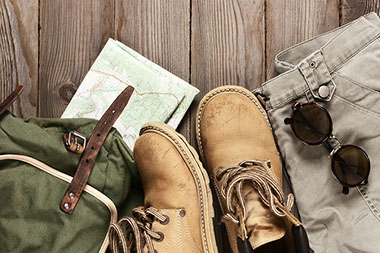
    Image of hiking boots, backpack and map.

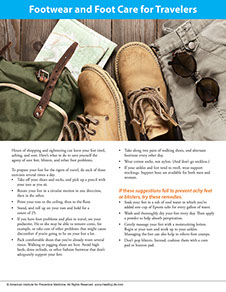
    Hours of shopping and sightseeing can leave your feet tired, aching, and sore. Here’s what to do to save yourself the agony of sore feet, blisters, and other foot problems.

    To prepare your feet for the rigors of travel, do each of these exercises several times a day.

    *  Take off your shoes and socks, and pick up a pencil with your toes as you sit.

    *  Rotate your feet in a circular motion in one direction, then in the other.

    *  Point your toes to the ceiling, then to the floor.

    *  Stand, and roll up on your toes and hold for a count of 25.

    *  If you have foot problems and plan to travel, see your podiatrist. He or she may be able to remove corns, for example, or take care of other problems that might cause discomfort if you’re going to be on your feet a lot.

    *  Pack comfortable shoes that you’ve already worn several times. Walking or jogging shoes are best. Avoid high heels, dress oxfords, or other fashion footwear that don’t adequately support your feet.

    *  Take along two pairs of walking shoes, and alternate footwear every other day.

    *  Wear cotton socks, not nylon. (And don’t go sockless.)

    *  If your ankles and feet tend to swell, wear support stockings. Support hose are available for both men and women.

    If these suggestions fail to prevent achy feet or blisters, try these remedies.

    *  Soak your feet in a tub of cool water to which you’ve added one cup of Epsom salts for every gallon of water.

    *  Wash and thoroughly dry your feet every day. Then apply a powder to help absorb perspiration.

    *  Gently massage your feet with a moisturizing lotion. Begin at your toes and work up to your ankles. Massaging the feet can also help to relieve foot cramps.

    *  Don’t pop blisters. Instead, cushion them with a corn pad or bunion pad.

    Page image from A Year of Health Hints book by the American Institute for Preventive Medicine. www.HealthyLife.com. All rights reserved.

    © American Institute for Preventive Medicine

  • How To Buy Sports Shoes That Fit

    Fitness

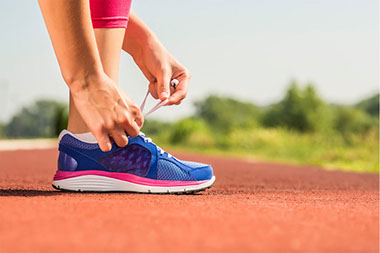
    Image of person lacing tennis shoe.

    A carpenter needs a saw, a painter needs a brush, and an accountant needs a calculator. And anyone who’s serious about fitness needs a good pair of shoes (or several, if you’re active in more than one activity besides swimming). The right shoes can make the difference between comfort and discomfort, between safety and injury, between performing well and not performing well.

    Consider these factors before you buy activewear shoes.

    *  Are the shoes suitable for the sport or activity for which you intend to wear them? Walking, hiking, racquetball, tennis, aerobics, and so forth require differently designed footwear. But you may want to consider cross-training shoes, suitable for several different activities.

    *  Can you wiggle your toes in the shoes while sitting and standing? (You should be able to.)

    *  Does the widest area of your foot correspond to the widest area of the shoe? (To find out, try this: Stand on a piece of paper, bend down, and trace a line around each shoe with a pencil. Then slip off your shoes, stand in the same place, and trace a line around each foot with a different colored pencil. If at any point the outline of your feet is larger than the outline of your shoes, you’re squeezing some or all of the bones, ligaments and muscles in each foot.)

    *  Do the inner seams rub against your foot? (They shouldn’t.)

    *  Does the shoe have a firm heel cradle and arch support?

    *  Does the shoe provide adequate shock absorption?

    *  Are the shoes comfortable when you move from side to side or when you walk or jump? Test these movements before you buy.

    Good shoes don’t need to be “broken in.” The shoes you buy should be comfortable from the start.

    Page image from A Year of Health Hints book by the American Institute for Preventive Medicine. www.HealthyLife.com. All rights reserved.

    © American Institute for Preventive Medicine

  • Make Soup!

    Nutrition

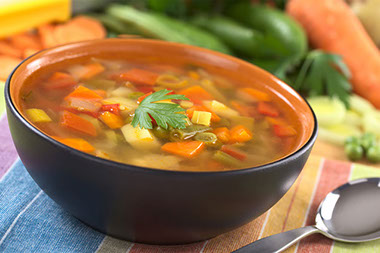
    Image of soup in bowl.

    People sip, slurp, and spoon soup not only for basic sustenance, but also to stay healthy. Chicken soup really does help relieve the nasal stuffiness of a cold. And studies show that soup can help you lose weight. Because soup is mostly liquid, it takes longer to eat than solid food. By the time you’ve sipped the last spoonful, your brain will have noticed that you’ve eaten, and shut off your appetite. If you’d quickly gobbled down a sandwich, your brain would still be asking “What’s for lunch?”

    Here are some tips for making soup that’s a bowlful of nutrition.

    *  Use skim milk instead of whole milk for creamed or condensed soups. You’ll save calories and add calcium, vitamin D, and protein.

    *  Soups that feature vegetables, beans, or rice add fiber and nutrients to your diet.

    *  Add the liquid left over from cooking vegetables to soup stock.

    *  Season homemade soup with herbs and seasonings like parsley, pepper, garlic powder, and onion powder, instead of salt.

    *  If you rely on commercially prepared soup for convenience, try to stick with reduced or low-sodium ones.

    Page from A Year of Health Hints book by the American Institute for Preventive Medicine. www.HealthyLife.com. All rights reserved.

    © American Institute for Preventive Medicine

  • Prevent In-Flight Ear Pops

    Healthy Travel

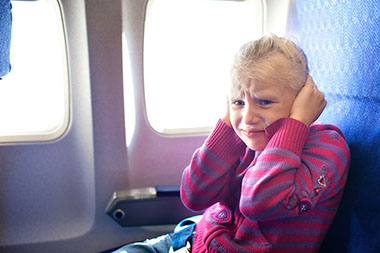
    Image of young girl on plane covering her ears.

    If you’re riding in a plane, your ears might feel full during takeoff and landing, then suddenly “pop.” Ear pops result from pressure changes in the middle ear as a plane changes altitude. You may feel pain or only mild discomfort. And if you have a head cold, ear pops can promote an ear infection.

    It’s rarely convenient to cancel or postpone your flight because of ear trouble. It is highly recommended, however, that you don’t fly if you have an acute ear infection, a severe head cold, or sinusitis. Consult your physician regarding this. If you still decide to fly, here are some ways to keep your ears from popping.

    *  Swallow frequently, yawn, or gently blow through your nose while pinching the nostrils shut, to equalize pressure within your ears. (Don’t do this if you have a head cold, as it will promote an ear infection.)

    *  If you have a mild head cold, use a nasal spray to keep the nasal passages open. Oral decongestant medications are also effective.

    Infants and young children tend to develop ear pain when traveling by plane, too. To prevent discomfort and ear infections in your children:

    *  Have your infant suck on a pacifier or bottle during the takeoff and landing. (Nursing a baby helps, too.)

    *  Ask your doctor about giving children a mild decongestant and antihistamine 1 hour before takeoff and 1 hour before landing.

    Page image from A Year of Health Hints book by the American Institute for Preventive Medicine. www.HealthyLife.com. All rights reserved.

    © American Institute for Preventive Medicine

  • Safe Travel For Pregnant Women

    Healthy Travel

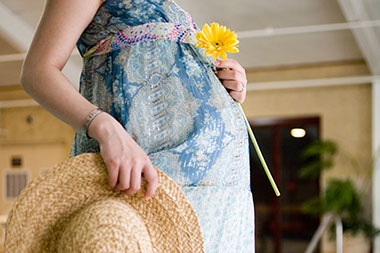
    Image of pregnant women on vacation.

    Expecting to travel before your baby is due? Follow these guidelines.

    *  Check with your physician to make sure travel is permissible. Travel during pregnancy is least risky during the fourth to sixth months.

    *  If you’re planning to travel by airplane or train, ask for an aisle seat so you can get to the lavatory more easily.

    *  Don’t exert yourself to the point of fatigue.

    *  If you experience motion sickness, get some fresh air or eat soda crackers. Don’t take motion sickness medication.

    *  If you’re traveling by car, wear a safety belt. It should fit snugly across your chest and hips, not over your stomach.

    Page image from A Year of Health Hints book by the American Institute for Preventive Medicine. www.HealthyLife.com. All rights reserved.

    © American Institute for Preventive Medicine

  • Compression Socks: A Fitness Friend?

    BE FIT

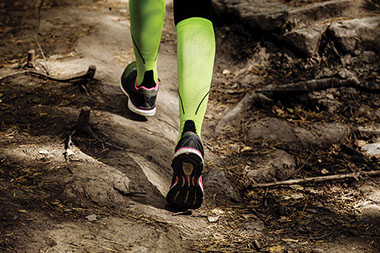
    Close up of running legs wearing compression socks.

    Some athletes use compression socks during their exercise or sports activities. They look like tights, knee-high socks or sleeves that go over the calves.

    Compression socks are not new. They have been used for years to help with leg pain, swelling, blood clots and varicose veins. They work by gently squeezing the legs to help move blood upward.

    But do they help with exercise performance?

    Lack of evidence for exercise performance

    While compression socks aren’t usually harmful, they’re not proven to be helpful for exercise. Studies have not found that compression socks help a person’s athletic ability.

    Still, there may be some benefit to using them if your doctor says it’s okay. Some evidence suggests that compression socks may help slightly with exercise recovery. A review of several small studies found that for some people, compression socks could help with muscle soreness. But, because these results haven’t been proven in large studies, it’s too early to say whether they will work for most people.

    Some people enjoy the feeling of pressure on the legs. They may feel that it helps them exercise longer. If that’s the case, compression socks can be a good way to help you stay active.

    Using compression socks

    If you’re interested in compression socks, ask your doctor about them. They can help with:

    *  Legs that feel achy or heavy

    *  Swelling in the feet or legs from standing or sitting for long hours

    *  Pain from varicose veins

    *  Preventing blood clots, especially after surgery or for people who can’t move around easily. This could be after an injury or for people who have an illness that requires them to be in bed for long periods.

    Some compression socks are tighter than others. Your doctor can give you a prescription for them, or you may purchase them online. Ask your doctor how long you should wear them, and what to do if you find the socks uncomfortable.

    Sources: British Journal of Sports Medicine, Journal of Sports Science and Medicine, U.S. National Library of Medicine
    © American Institute for Preventive Medicine

  • Eat Soup To Satisfy

    HEALTHY EATING

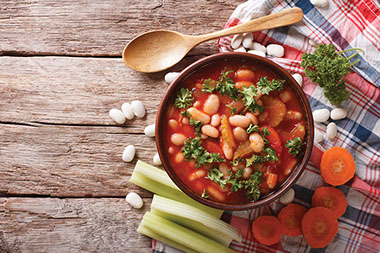
    A bowl of soup.

    Healthy foods like vegetables and fruits have lots of nutrients and fewer calories. Eating a diet with plenty of vegetables and fruit can help you lose weight.

    Soup is a comforting way to enjoy vegetables (and sometimes fruit) of the season. It’s warm, easy to eat and may help you fill up. In fact, some evidence suggests that eating soup before a meal can help you eat less.

    You’ll need to make sure your soup is lower in calories if you want to lose weight. It helps to use lots of vegetables and some fruits, and avoid high-calorie ingredients like cream and sugar.

    © American Institute for Preventive Medicine