Tag: community

  • Friends Help Friends Through Addiction

    Substance Use & Abuse
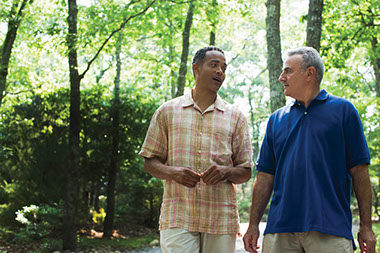
    Image of 2 friends walking and talking.

    Support and gentle guidance may be key to recovery.

    It’s hard to be supportive and caring when you’re watching a person you love destroy him or herself with drugs  and/or alcohol. People who abuse alcohol or other drugs may not be able to admit they have a problem. If family members or friends have a drug problem, help them to help themselves.

    Be supportive and caring.

    For most addicts, bullying them into treatment doesn’t work.

    Offer help on your terms.

    You want to help the person get clean and sober, not support the habit. Tolerate the struggle, not the abuse.

    Encourage the person to seek professional help.

    *  Offer to go with him or her to a health care provider visit.

    *  Provide phone numbers and websites for places that can help, such as: Substance Abuse and Mental Health Services Administration (SAMHSA) – 800.662.HELP (662.4357)www.findtreatment.samhsa.gov

    *  Find out if his or her workplace has an Employee Assistance Program for drug abuse. If it does, remind the person that what is said to a counselor is kept confidential.

    If your friend chooses rehab, let him or her know you will continue to be supportive. If the person refuses to seek help, contact a health care professional for advice on ways best suited to help him or her get the care that is needed.

    Offer to go with him or her to a local support group.

    Alcoholics Anonymous

    212.870.3400

    www.aa.org

    Cocaine Anonymous

    310.559.5833

    www.ca.org

    Narcotics Anonymous

    818.773.9999

    www.na.org

    Action Step

    Be patient. Addiction does a lot of damage. During the rehab process, that damage is unraveling. It takes time.
    Page from Ways to Well-Being book by the American Institute for Preventive Medicine. www.HealthyLife.com. All rights reserved.

    © American Institute for Preventive Medicine

  • Get Fit For A Cause

    Fitness

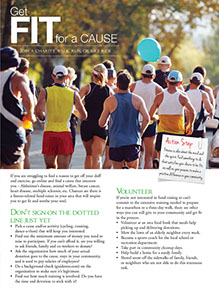
    People running a marathon for charity.

    Join a charity walk, run, or bike ride.

    If you are struggling to find a reason to get off your duff and exercise, go online and find a cause that interests you – Alzheimer’s disease, animal welfare, breast cancer, heart disease, multiple sclerosis, etc. Chances are there is a fitness-related fund-raiser in your area that will inspire you to get fit and soothe your soul.

    Don’t sign on the dotted line just yet.

    *  Pick a cause and/or activity (cycling, running, dance-a-thon) that will keep you interested.

    *  Find out the minimum amount of money you need to raise to participate. If you can’t afford it, are you willing to ask friends, family and co-workers to donate?

    *  Ask the organization how much of your actual donation goes to the cause, stays in your community, and is used to pay salaries of employees?

    *  Do a background check (www.guidestar.com) on the organization to make sure it’s legitimate.

    *  Find out how much training is involved. Do you have the time and devotion to stick with it?

    Volunteer.

    If you’re not interested in fund-raising or can’t commit to the extensive training needed to prepare for a marathon or a three-day walk, there are other ways you can still give to your community and get fit in the process.

    *  Volunteer at an area food bank that needs help picking up and delivering donations.

    *  Mow the lawn of an elderly neighbor every week.

    *  Become a sports coach for the local school or recreation department.

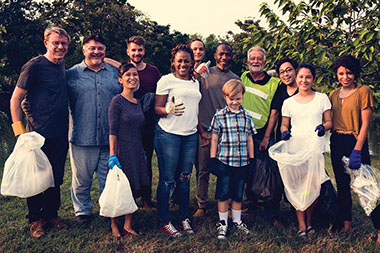
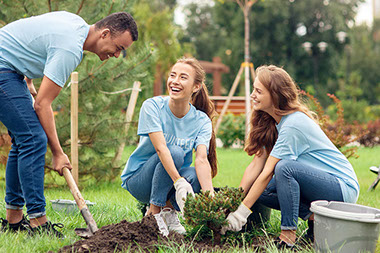
    *  Take part in community cleanup days.

    *  Help build a home for a needy family.

    *  Shovel snow off the sidewalks of family, friends, or neighbors who are not able to do this strenuous task.

    Action Step

    Fitness is also about the mind and the spirit. Find something to do that satisfies your desire to be fit, as well as your passion to make a positive difference in your community.

    Page image from Ways to Well-Being book by the American Institute for Preventive Medicine. www.HealthyLife.com. All rights reserved.

    © American Institute for Preventive Medicine
  • Blood Donation

    Medical Care

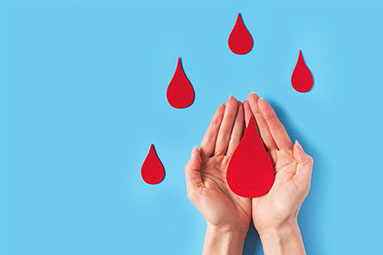
    Hands cupped together holding a red paper shaped as a blood drop.

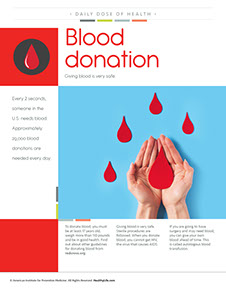
    Giving blood is very safe.

    Every 2 seconds, someone in the U.S. needs blood. Approximately 29,000 blood donations are needed every day.

    To donate blood, you must be at least 17 years old, weigh more than 110 pounds and be in good health. Find out about other guidelines for donating blood fromredcross.org.

    Giving blood is very safe. Sterile procedures are followed. When you donate blood, you cannot get HIV, the virus that causes AIDS.

    If you are going to have surgery and may need blood, you can give your own blood ahead of time. This is called autologous blood transfusion.

    A Year of Health Hints book by the American Institute for Preventive Medicine. www.HealthyLife.com. All rights reserved.

    © American Institute for Preventive Medicine
  • Crossfit Faq

    BE FIT

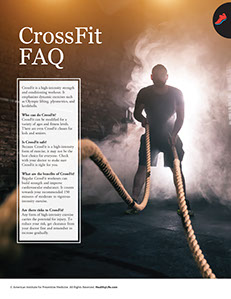
    Man in gym working out.

    CrossFit is a high-intensity strength and conditioning workout. It emphasizes dynamic exercises such as Olympic lifting, plyometrics, and kettlebells.

    Who can do CrossFit?

    CrossFit can be modified for a variety of ages and fitness levels. There are even CrossFit classes for kids and seniors.

    Is CrossFit safe?

    Because CrossFit is a high-intensity form of exercise, it may not be the best choice for everyone. Check with your doctor to make sure CrossFit is right for you.

    What are the benefits of CrossFit?

    Regular CrossFit workouts can build strength and improve cardiovascular endurance. It counts towards your recommended 150 minutes of moderate to vigorous-intensity exercise.

    Are there risks to CrossFit?

    Any form of high-intensity exercise carries the potential for injury. To reduce your risk, get clearance from your doctor first and remember to increase gradually.

    © American Institute for Preventive Medicine