Tag: community

  • Tips For Joining A Gym

    BE FIT

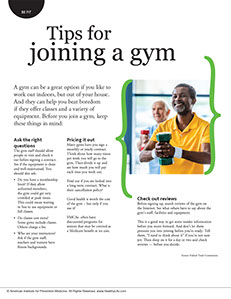
    Older adults using dumb bells in fitness class.

    A gym can be a great option if you like to work out indoors, but out of your house. And they can help you beat boredom if they offer classes and a variety of equipment. Before you join a gym, keep these things in mind:

    Ask the right questions

    The gym staff should allow people to visit and check it out before signing a contract. See if the equipment is clean and well-maintained. You should also ask:

    *  Do you have a membership limit? If they allow unlimited members, the gym could get very crowded at peak times. This could mean waiting in line to use equipment or full classes.

    *  Do classes cost extra? Some gyms include classes. Others charge a fee.

    *  Who are your instructors? Ask if the gym staff, teachers and trainers have fitness backgrounds.

    Pricing it out

    Many gyms have you sign a monthly or yearly contract. Think about how many times per week you will go to the gym. Then divide it up and see how much you will pay each time you work out.

    Find out if you are locked into a long-term contract. What is their cancellation policy?

    Good health is worth the cost of the gym – but only if you use it!

    YMCAs  often have discounted programs for seniors that may be covered as a Medicare benefit at no cost.

    Check out reviews

    Before signing up, search reviews of the gym on the Internet. See what others have to say about the gym’s staff, facilities and equipment.

    This is a good way to get some insider information before you move forward. And don’t let them pressure you into joining before you’re ready. Tell them, “I need to think about it” if you’re not sure yet. Then sleep on it for a day or two and check reviews – before you decide.

    Source: Federal Trade Commission
    © American Institute for Preventive Medicine

  • Exercise For Free

    BE FIT

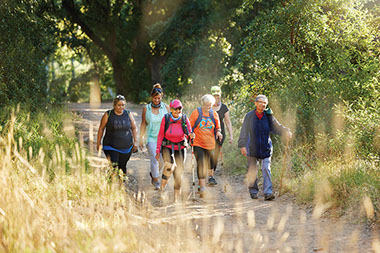
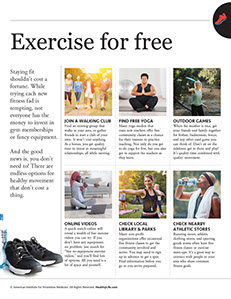
    Group of older friends walking through the park.

    Staying fit shouldn’t cost a fortune. While trying each new fitness fad is tempting, not everyone has the money to invest in gym memberships or fancy equipment.

    And the good news is, you don’t need to! There are endless options for healthy movement that don’t cost a thing.

    Join a walking club

    Find an existing group that walks in your area, or gather friends to start a club of your own. It won’t cost anything. As a bonus, you get quality time to invest in meaningful relationships, all while moving.

    Find free yoga

    Many yoga studios that train new teachers offer free community classes as a chance for their trainees to practice teaching. Not only do you get to do yoga for free, but you also get to support the teachers as they learn.

    Outdoor games

    When the weather is nice, get your friends and family together for frisbee, badminton, bocce, and any other yard game you can think of. Don’t sit on the sidelines; get in there and play! It’s quality time combined with quality movement.

    Online videos

    A quick search online will reveal a wealth of free exercise videos you can try. If you don’t have any equipment, no problem; just search for “free no-equipment exercise videos,” and you’ll find lots of options. All you need is a bit of space and yourself.

    Check local library & parks

    Many non-profit organizations offer occasional free fitness classes to get the community involved and active. You may need to sign up in advance to get a spot. Find information before you go so you arrive prepared.

    Check nearby athletic stores

    Running stores, athletic clothing stores, and sporting goods stores often have free fitness classes or exercise meet-ups. It’s a great way to connect with people in your area who share common fitness goals.

    © American Institute for Preventive Medicine
  • Start A Walking Group

    BE FIT

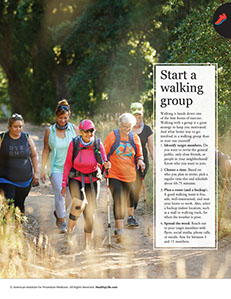
    Group of friends walking on a trail.

    Walking is hands down one of the best forms of exercise. Walking with a group is a great strategy to keep you motivated. And what better way to get involved in a walking group than to start one yourself!

    1. Identify target members. Do you want to invite the general public, only close friends, or people in your neighborhood? Know who you want to join.

    2. Choose a time. Based on who you plan to invite, pick a regular time slot and schedule about 60-75 minutes.

    3. Plan a route (and a backup). A good walking route is free, safe, well-maintained, and near your home or work. Also, select a backup indoor location, such as a mall or walking track, for when the weather is poor.

    4. Spread the word. Reach out to your target members with flyers, social media, phone calls, or emails. Aim for between 5 and 15 members.

    © American Institute for Preventive Medicine

  • Four Ingredients For A Happy Retirement

    Mature Health: Over Age 50

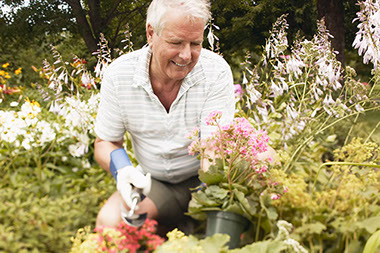
    Image of retired man gardening.

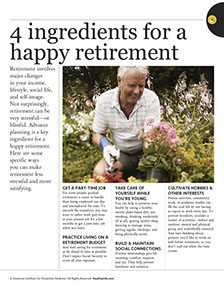
    Retirement involves major changes in your income, lifestyle, social life, and self-image. Not surprisingly, retirement can be very stressful-or blissful. Advance planning is a key ingredient for a happy retirement. A survey conducted by researchers at the University of Michigan found that 75 percent of those who had planned for retirement enjoyed it. Here are some specific ways you can make retirement less stressful and more satisfying.

    Get a part-time job.

    For some people, gradual retirement is easier to handle than being employed one day and unemployed the next. To smooth the transition, you may want to either work part-time at your present job for a few months or get a part-time job at another firm when you leave.

    Practice living on a retirement budget before you retire.

    And start saving for retirement as far ahead of time as possible. Don’t expect Social Security to cover all your expenses.

    Take care of yourself while you’re young.

    You can help to preserve your health by eating a low-fat diet, not smoking, drinking moderately (if at all), learning to manage stress, getting regular checkups, and being physically active.

    Cultivate hobbies and other outside interests.

    Fitness activities, community work, or academic studies can fill the void left by not having to report to work every day. To prevent boredom, consider a variety of activities-indoor and outdoor, mental and physical, group and individually oriented. And start thinking about projects you’d like to work on well before retirement, so you don’t stall out when the time comes.

    A Year of Health Hints book by the American Institute for Preventive Medicine. www.HealthyLife.com. All rights reserved.

    © American Institute for Preventive Medicine

  • It Takes A Village

    Healthylife® Weigh

    Part 4

    Three friends at the beach.

    Build support around you. Support from others can help:

    *  Motivate you and lift you up when you stumble.

    *  Hold you accountable.

    *  Give you new ideas and inspiration.

    *  Make activities more fun.

    Start With One Person

    Find someone you know and trust. This could be anybody-a family member, friend, or coworker. Perhaps this person already motivates you to make positive changes in your life.

    1. Let them know what you are trying to do.

    2. Ask them if they would be willing to support you.

    3. If “yes,” say “thank you!”

    4. Let them know how to help you. This may change over time.

    5. Thank this person often. Let them know the impact they are having on your lifestyle change.

    Let Others Know How to Help You

    Even when someone wants to help you, they may not know how. You have probably experienced this already, like when someone gives you cliché advice or gives you a sweet treat to cheer you up.

    Be specific when you tell others how to help you. Here are a few ideas.

    *  Remind you of your strengths and talents.

    *  Share healthy recipes for easy meals and snacks.

    *  Plan social times that don’t involve food. For example, go for a walk or go to the same exercise class.

    *  Give you non-food gifts only.

    *  Take care of your children so you can do your planned exercise. Or, plan an event where your families can be active together.

    © American Institute for Preventive Medicine

  • Buy Local. Eat Local.

    HEALTHY EATING

    Image of a farmer's market stand filled with vegetables.

    Did you know the average supermarket produce travels about 2,000 miles to your neighborhood grocery store? Farmers’ market produce travels less than 50 miles, according to University of Nebraska-Lincoln Extension experts who offer these buying and storing tips:

    *Go right home from the market.Foods will decline in quality, and perishable foods such as meats and eggs can pose food safety problems if left sitting in your car. Bring along a cooler with ice if it will take more than an hour or so to get perishables into your refrigerator.

    *Store at room temperature:bananas, melons, onions, potatoes, sweet potatoes, tomatoes, and winter squash. Store them in a clean, dry, well-ventilated place, away from direct sunlight and away from areas where meat is prepared.

    *Ripen on the counter and then put in the refrigerator:avocados, kiwifruit, nectarines, peaches, pears, and plums. Do not keep produce in a sealed plastic bag on the countertop. This slows ripening and may increase off-odors and decay from the buildup of carbon dioxide and depletion of oxygen inside the bag.

    *Store in refrigerator most other fresh fruits and vegetables.Use your refrigerator crisper drawer for whole produce. Store fruits in a separate refrigerator crisper drawer from vegetables. Fruits give off ethylene gas, which can shorten the storage life of vegetables. Some vegetables give off odors that can be absorbed by fruits and affect their quality.

    *Refrigerate fruits and vegetables in perforated plastic bags.This helps maintain moisture yet provide air flow. Make your own: use a sharp object to make several small holes in a food-grade plastic bag (about 20 holes per medium-size bag). Air-tight plastic bags can lead to the growth of mold or bacteria.

    *Wash your hands and produce thoroughly.Wash produce before you use it, NOT when you bring it home. Fresh produce has a natural protective coating that helps keep in moisture and freshness. Washing produce before storage causes it to spoil faster.

    *Remove and discard outer leaves.Rinse under clean, running water just before preparing or eating. Don’t use soap or detergent. It can get into produce and make you sick. Rub briskly-scrubbing with a clean brush or hands-to clean the surface. Dry with a clean cloth or paper towel. Rinse produce even when the peel is removed-such as melons and citrus fruits. Once you have cut through the protective skin of fruits and vegetables, bacteria can enter. Refrigerate cut or peeled fruits and vegetables within 2 hours.

    *Take your own bags or baskets to the farmers’ markets.And be sure to wash them too. Bacteria can grow inside.

    © American Institute for Preventive Medicine