Tag: confidence

  • Be Assertive 2

    Healthylife® QuitWell™

    Part 5

    Image of cigarettes and money.

    Learn the differences between passive, aggressive, and assertive communication.

    Passive

    *  You lack expression for yourself.

    *  You do not stand up for your rights and needs.

    Result: You usually do not achieve your goal. You may feel like someone is walking all over you.

    Aggressive

    *  You stand up for your rights and needs, but at the expense of someone else.

    Result: You usually put down or hurt someone else. You gain no respect and may even start a conflict.

    Assertive

    *  You stand up for your rights and needs without putting down or hurting someone else.

    Result: You build self-respect and feel good about yourself. You are likely to achieve your goal.

    Example

    Your co-worker offers you a cigarette, saying that you can have just one, even though you recently quit. This person wants to smoke with you for old time’s sake. You know this could send you back to using tobacco.

    Passive Response:“All right, I’ll have a cigarette with you, but just this one.”

    Aggressive Response:“You really have some nerve offering me a cigarette. I hate cigarettes and I think it’s disgusting that you smoke. You should smell your breath. Don’t ever come near me with a cigarette again.”

    Assertive Response:“No, thank you. I have quit smoking and I plan to stay that way. Even one can trigger my old addiction. You can help me remain an ex-smoker by not offering me any.”

    © American Institute for Preventive Medicine

  • Be Assertive 3

    SleepWell® Program

    Week 5

    Image of man practicing speech in mirror.

    Passive

    *  You lack expression for yourself.

    *  You do not stand up for your rights and needs.

    Result: You usually do not achieve your goal.

    Aggressive

    *  You stand up for your rights and needs, but at the expense of someone else.

    Result: You usually put down or hurt someone else. You gain no respect.

    Assertive

    *  You stand up for your rights and needs without putting down or hurting someone else.

    *  You increase the chance of achieving your goals.

    *  You express your feelings without becoming victim to them.

    Result: You build self-respect and feel good about yourself.

    What Assertive Looks Like

    Body Posture: Be relaxed and natural. Avoid slouching, putting your hands in your pockets, and facing away from the person you are speaking with.

    Eye Contact: Good eye contact is vital to convey self-confidence and interest. Don’t stare at the other person; this comes across as a challenge.

    Voice, Tone, and Quality: Use a strong, varied tone. Speak clearly and firmly. Don’t shout or speak too softly. Don’t whine.

    Distance from the Person: Don’t position yourself too far or too close.

    Facial Expression: Let your face convey the same message as what you are saying.

    Content: Use short sentences. Be specific, clear, and firm.

    Benefits of Being Assertive

    *  You can feel comfortable saying “no.”

    *  You have more confidence to ask others for help.

    *  You gain more respect from others.

    *  You feel less angry with yourself and with others.

    *  You feel justified to say what you want to say.

    *  You feel comfortable to request clarification.

    *  You accept compliments graciously.

    *  You can change your mind without feeling guilty.

    Practice First

    Plan or write down what you want to say. Have responses ready ahead of time to deal with questions and comments. Reinforce your remarks by saying what positive outcomes will occur for you and the other person. Practice in front of a mirror or with a friend.

    Use the L.A.D.D.E.R. Technique

    This is a step-by-step way to be more assertive.

    *Look at your needs, wants, rights, and feelings about the situation.

    *Arrange a meeting that is convenient for you and the other person to talk.

    *Define the problem or issue clearly to the other person.

    *Describe your feelings using “I messages.” I messages let you take charge of your feelings.

    *Express your needs and desires in an assertive manner using a few clear sentences. Be aware of your eye contact, hand gestures, posture, voice and facial expression.

    *Reinforce your remarks by saying what positive outcomes will occur for you and the other person.

    Example:

    L – I wish my partner would help with household chores so I don’t stay up so late at night finishing what needs to get done.

    A – I’ll plan to talk with him or her after dinner tomorrow.

    D – Tell your partner, “When I stay up late doing household chores, I do not get enough sleep at night. I don’t have enough energy to be alert and productive at work the next day.”

    D – “I feel I could get more sleep with your help.”

    E – “I would like to divvy up household to-dos between us. I know we are each better at different tasks.

    R – “This change would help me get more sleep at night and I will have more energy when we spend time together.”

    © American Institute for Preventive Medicine

  • Create Self-Enhancing Feelings 2

    SleepWell® Program

    Week 5

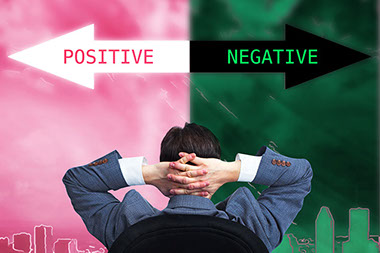
    Split image with arrows, one pointing to positive side and the other to a negative side.

    Take responsibility for your thoughts, feelings, and actions. You will feel better about yourself and your life. Blaming others is a natural, child-like reaction. It is more adult-like to figure out the amount of control you have in a given situation and respond to it in a mature way. You may not have control in every situation, but you can choose how you respond to others.

    One reason to become more accountable for your responses is that a “victim” response forms negative, draining feelings. Self-responsibility creates positive energy. With it you can manage every event in a more positive, self-nurturing manner. One way to do this is to look at your language and see if you use “victim” or “accountability” phrases.

    Example “victim” phrase:

    I can’t improve my sleep until my boss gives me a better work shift.

    Example “accountability” phrase:

    I can schedule a meeting with my boss to discuss my shift and my sleep needs.

    The Power of a Phrase

    Fill in after the victim phrase with something you have caught yourself saying or are feeling right now. Use an accountability phrase to re-write this statement.

    Victim Phrase

    *  I can’t…

    *  It’s useless…

    *  I have to…

    *  Why am I always the one who…

    Accountability Phrase

    *  I can…

    *  There’s always a chance…

    *  I choose to…

    *  I’ll be the one who…

    © American Institute for Preventive Medicine

  • Be Strong At Any Age

    BE FIT

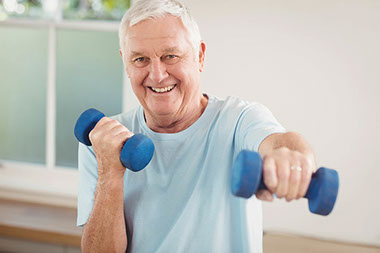
    Older man using weights.

    When you think of exercise, do you think of going for a run or taking an aerobics class? Those are great cardio workouts. But there is more to fitness than just cardio.

    Strong is healthy

    Strength training or lifting weights is a big part of being healthy and fit. Many people don’t do strength training because they don’t want to “bulk up.” Older adults might skip it because they think it’s only for younger people who are more muscular.

    You won’t get big bodybuilder muscles from doing strength training. That is, unless you train hard with that goal in mind. And many older adults can safely do strength training and find that they love how it makes them feel.

    If you do regular strength exercises, you will get a stronger body and better quality of life at any age. No bodybuilder is needed!

    Research shows that strength training can lower the risk of heart disease and other health conditions. It also helps you stay independent as you get older. Older adults who do strength training may find that everyday tasks are much easier. This can include things like getting out of a chair or climbing stairs.

    Strong is good for the mind

    The benefits of a strong body don’t stop at the muscles. Research also shows that strength training may reduce the effects of post traumatic stress disorder (PTSD). It can also help boost self-esteem.

    You can start today

    If you don’t have equipment, like weights, you can use things around the house, like soup cans. You can also use your own body weight. Think push-ups, planks and other similar exercises. They use your body weight and gravity to build muscles.

    A good way to start is with an exercise video or online class. You don’t have to go to a gym. But before you start, talk to your doctor. Ask if a new exercise program is safe for you. Talk about things you should or should not do to stay safe and help avoid injury.

    Give strength training a chance. You may find that it makes you feel better than you thought possible! A diet with adequate protein can help build muscle at any age and even promote healing. Talk to your doctor if you plan to make major diet changes.

    Source: National Institutes of Health

    © American Institute for Preventive Medicine

  • Address Insecurity

    Healthylife® Weigh

    Part 6

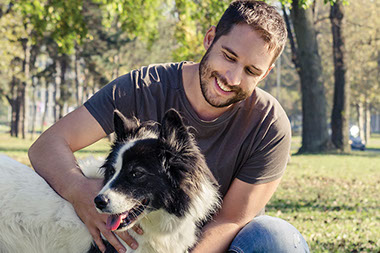
    Man and dog outside.

    Focus on things that you can do well. List at least 5 things in your life that you are proud of. Examples include raising a family, earning a degree, getting promoted at work, increasing your bowling average, and having a garden!

    How can you improve these skills further? Set realistic goals to do this!

    Spend time with people who make you feel loved and secure. Build a list of places you can go where you feel comfortable.

    Spend Time with Animals

    Spend time with a pet. Volunteer at a shelter. Spend time with a friend or family member’s pet. Go to a pet store, or look at adopting a rescue animal. Spending time with a pet can:

    *  Decrease production of cortisol, a stress hormone that can put you on edge and make you ill over time.

    *  Increase serotonin, which helps you feel relaxed and happy.

    *  Help you feel secure. Pets, especially dogs, can love unconditionally and may sense when you need extra support. Some pets are trained to help you manage certain emotions, like anxiety.

    Stand Tall

    Change your posture, whether you are sitting or standing. Changing your posture can help you change your point of view.

    Power Stance: Plant your feet firmly, shoulder-width apart. Take a deep breath and pull your shoulders back, stretching your upper chest forward. Place your hands on your hips.

    This can help you feel respected and powerful. Appreciate your own power and what you are capable of doing. Feel respect for yourself.

    Stand or sit in this pose for a few minutes before a challenge, such as an emotional conversation or job interview. Use this  tool for addressing your inner critic or self-defeating thoughts.

    © American Institute for Preventive Medicine

  • Be Assertive

    Healthylife® Weigh

    Part 4

    Women with arms crossed looking convinced and confident.

    Learn the differences between passive, aggressive, and assertive communication.

    Passive

    *  You lack expression for yourself.

    *  You do not stand up for your rights and needs.

    Result: You usually do not achieve your goal.

    Aggressive

    *  You stand up for your rights and needs, but at the expense of someone else.

    Result: You usually put down or hurt someone else. You gain no respect.

    Assertive

    *  You stand up for your rights and needs without putting down or hurting someone else.

    *  You express your feelings without becoming victim to them.

    Result: You build self-respect and feel good about yourself.

    Example: Your aunt offers you a large piece of cherry pie that she said she made especially for you. You know that you have eaten enough for the meal and eating the piece of pie does not fit your eating goals.

    *  Passive Response: “Thank you. It’s delicious!” Thinking… “I really don’t want to eat this right now, but I don’t want to hurt her feelings.”

    *  Aggressive Response: “I can’t believe you’re offering me cherry pie when you know I’m trying to lose weight. You’re going to ruin my diet!”

    *  Assertive Response: “I appreciate that you went to the trouble of making this pie for me! It looks great and I’m sure it tastes great. I am very serious about losing weight so I’d like to split that piece with someone.”

    What Assertive Looks Like

    *  Body Posture: Be relaxed and natural. Avoid slouching, putting your hands in your pockets, and facing away from the person you are speaking with.

    *  Eye Contact: Good eye contact is vital to convey self-confidence and interest. Don’t stare at the other person; this comes across as a challenge.

    *  Voice, Tone, and Quality: Use a strong, varied tone. Speak clearly and firmly. Don’t shout or speak too softly. Don’t whine.

    *  Distance from the Person: Don’t position yourself too far or too close.

    *  Facial Expression: Let your face convey the same message as what you are saying.

    *  Content: Use short sentences. Be specific, clear, and firm.

    Practice First

    Plan or write down what you want to say. Have responses ready ahead of time to deal with questions and comments. Reinforce your remarks by saying what positive outcomes will occur for you and the other person. Practice in front of a mirror or with a friend.

    Benefits of Being Assertive

    *  You can feel comfortable saying “no.”

    *  You have more confidence to ask others for help.

    *  You gain more respect from others.

    *  You feel less angry with yourself and with others.

    *  You feel justified to say what you want to say.

    *  You feel comfortable requesting clarification.

    *  You accept compliments graciously.

    *  You can change your mind without feeling guilty.

    © American Institute for Preventive Medicine

  • Create Self-Enhancing Feelings

    Healthylife® Weigh

    Part 4

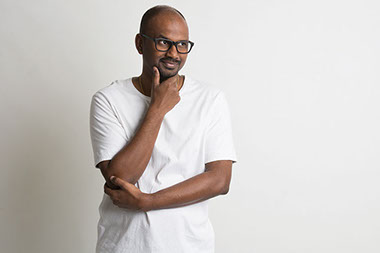
    Man thinking.

    Take responsibility for your thoughts, feelings, and actions. You will feel better about yourself and your life. Blaming others is a natural, child-like reaction. It is more adult-like to figure out the amount of control you have in a given situation and respond to it in a mature way. You may not have control in every situation, but you can choose how to respond to others.

    One reason to become more accountable for your responses is that a “victim” response forms negative, draining feelings. Self-responsibility creates positive energy. With it you can manage every event in a more positive, self-nurturing manner. One way to do this is to look at your language and see if you use “victim” or “accountability” phrases.

    Example “victim” phrase:I can’t lose weight until my family also tries to lose weight.

    Example “accountability” phrase:I can talk with my family about how they can be supportive of my efforts. I can help with family meal planning so I have more control over the foods kept in the house and served during meals.

    Complete the chart on the next page to practice taking responsibility for your thoughts, feelings, and actions.

    © American Institute for Preventive Medicine

  • How Do You View Your Body?

    Healthylife® Weigh

    Part 5

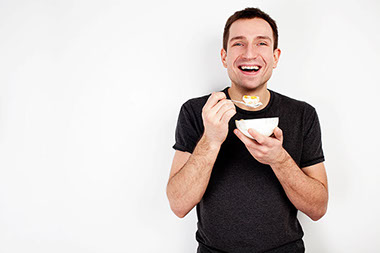
    Young smiling man eating on diet.

    Body Ownership, Healthy Body Image

    *  My body is beautiful to me.

    *  My feelings about my body are not influenced by society’s concept of an ideal body shape.

    *  I know that the significant others in my life will always find me attractive.

    *  I nourish my body so it has the strength and energy to achieve my physical goals.

    *  I pay attention to my body and my appearance because it is important to me, but it only occupies a small part of my day.

    Body Pre-Occupied/ Distorted Body Image

    *  I spend a significant time in front of the mirror viewing my body.

    *  I spend a significant time comparing my body to others.

    *  I’d be more attractive if I was thinner, more muscular, etc.

    *  I have considered changing or have changed my body through surgery so that I can accept myself.

    *  I wish I could change the way I look.

    Body Hate/ Disassociation

    *  I often feel separated and distant from my body, as if it belongs to someone else.

    *  I hate my body and I often isolate myself from others.

    *  I don’t see anything positive or even neutral about my body shape and size.

    *  I don’t believe others when they tell me I look OK.

    *  I hate the way I look in the mirror.

    Move toward viewing your body in a healthy way. Use the healthy body image statements in the left column as affirmations. Repeat these to yourself. Make changing your attitude a goal.

    © American Institute for Preventive Medicine

  • Tackle Limitations

    Healthylife® Weigh

    Part 5

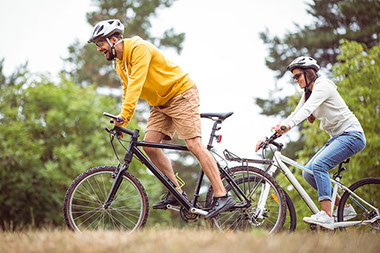
    Couple enjoying a bike ride.

    Think of getting started like riding a bike. You feel the most resistance when you are stopped and trying to start pedaling. Once you get going, the going gets easier. What is stopping you from getting started? Which of the following apply:

    *  Mental Concerns (fears, doubt, low motivation)

    *  Lack of Skills/Knowledge

    *  Equipment/Physical Needs

    *  Other (time, people, etc.)

    © American Institute for Preventive Medicine