Tag: connection

  • Fun Ways To Reduce Family Stress

    SUCCESS OVER STRESS

    Grandfather, father, and young son playing basketball.

    Spending time with people you care about can be a powerful stress reliever. This is true for every person in your family. Finding activities you all enjoy can strengthen family bonds, reduce everyone’s stress, and bring more fun into your life. Here are some stress-relieving activities that can work for the whole family.

    Plan a craft night

    Creative activities are a great way to relax together. Put on some music and get out crafting, drawing, or painting supplies. If you’re not much of a crafter, consider signing up the family for a class or a night out at a local craft shop.

    Play a sport

    Find a sport you all enjoy. Plan a weekly or monthly time to play together as a family. Keep it low stakes and focused on fun. Being active as a family can relieve stress and put everyone in a more positive mood.

    Watch a comedy

    Turn on a show everyone finds funny or look up some silly online videos. Instead of each family member retreating to their own screens, make time to watch something together. Choose something that will get everyone laughing to reduce stress and promote family bonding.

    © American Institute for Preventive Medicine

  • Mood & Food: The Close Link

    HEALTHY EATING

    A bite out of a green apple and in a chocolate bar.

    You may already know that your diet can change how you feel mentally. If you’ve ever been really hungry, you may notice that you start to feel upset or angry. And, some high-calorie junk foods are called “comfort foods” for a reason. They make you feel better mentally, but only for a little while.

    The link between the mind and what a person eats is complex. That’s why it can be so hard to make good choices when you have a bad day or feel depressed. But there are ways to fight this habit and start to make better choices, even when your mood is down or you feel stressed.

    Why we want comfort food

    Stress can make you want to eat unhealthy foods. This is your body’s way of trying to get fuel when it thinks you are in trouble. Although this is normal, you have the power to overcome it.

    Take a moment to think about a food you are craving. Then think about your current emotions. If you’re feeling sad, angry or stressed, this could be why you want that pizza or ice cream.

    If you eat the food, you may feel good for a few minutes. But unhealthy foods with lots of fat and sugar can actually increase the risk of depression or anxiety. This creates an unhealthy cycle that will continue as you eat those comfort foods.

    The cycle of mood & food

    If you use food to cope with stress or depression for too long, your body will get used to it. Then, when you do try to make a healthy choice, your body and mind may be confused. This could lead to an even stronger craving for those comfort foods. This cycle makes it very hard to make changes to your diet.

    You can win!

    You’re not stuck in this cycle. Eating fruits and vegetables can make you feel happy. When you’re happy, you’re more likely to reach for healthy foods again. This can start a positive cycle!

    Source: American Heart Association

    © American Institute for Preventive Medicine

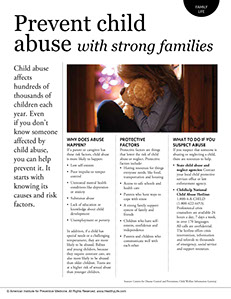
  • Prevent Child Abuse With Strong Families

    FAMILY LIFE

    Young child cuddled up with teddy bear.

    Child abuse affects hundreds of thousands of children each year. Even if you don’t know someone affected by child abuse, you can help prevent it. It starts with knowing its causes and risk factors.

    Why does abuse happen?

    If a parent or caregiver has these risk factors, child abuse is more likely to happen:

    *  Low self-esteem

    *  Poor impulse or temper control

    *  Untreated mental health conditions like depression or anxiety

    *  Substance abuse

    *  Lack of education or knowledge about child development

    *  Unemployment or poverty

    In addition, if a child has special needs or a challenging temperament, they are more likely to be abused. Babies and young children, because they require constant care, are also more likely to be abused than older children. Teens are at a higher risk of sexual abuse than younger children.

    Protective factors

    Protective factors are things that lower the risk of child abuse or neglect. Protective factors include:

    *  Having resources for things everyone needs, like food, transportation and housing

    *  Access to safe schools and health care

    *  Parents who have ways to cope with stress

    *  A strong family support system of family and friends

    *  Children who have self-esteem, confidence and independence

    *  Parents and children who communicate well with each other

    What to do if you suspect abuse

    If you suspect that someone is abusing or neglecting a child, there are resources to help.

    *State child abuse and neglect agencies:Contact your local child protective services office or law enforcement agency.

    *Childhelp National Child Abuse Hotline:1.800-4-A-CHILD  (1-800-422-4453). Professional crisis counselors are available 24 hours a day, 7 days a week, in over 170 languages. All calls are confidential. The hotline offers crisis intervention, information and referrals to thousands of emergency, social service and support resources.

    Sources: Centers for Disease Control and Prevention, Child Welfare Information Gateway

    © American Institute for Preventive Medicine