Tag: constipation

  • Constipation

    Abdominal & Urinary Conditions

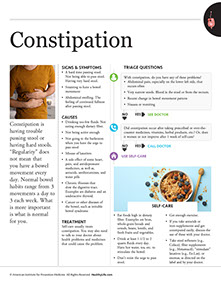
    Constipation is having trouble passing stool or having hard stools. “Regularity” does not mean that you have a bowel movement every day. Normal bowel habits range from 3 movements a day to 3 each week. What is more important is what is normal for you.

    Signs & Symptoms

    *  A hard time passing stool. Not being able to pass stool. Having very hard stool.

    *  Straining to have a bowel movement.

    *  Abdominal swelling. The feeling of continued fullness after passing stool.

    Causes

    *  Drinking too few fluids. Not eating enough dietary fiber.

    *  Not being active enough.

    *  Not going to the bathroom when you have the urge to pass stool.

    *  Misuse of laxatives.

    *  A side effect of some heart, pain, and antidepressant medicines, as well as, antacids, antihistamines, and water pills.

    *  Chronic illnesses that slow the digestive tract. Examples are diabetes and an underactive thyroid.

    *  Cancer or other diseases of the bowel.

    Treatment

    Self-care usually treats constipation. You may also need to talk to your doctor about health problems and medicines that could cause the problem.

    Questions to Ask

    Self-Care / Prevention

    *  Eat foods high in dietary fiber. Examples are bran, whole-grain breads and cereals, and fresh fruits and vegetables.

    *  Drink at least 1-1/2 to 2 quarts fluids every day. Have hot water, tea, etc. to stimulate the bowel.

    *  Get enough exercise.

    *  Don’t resist the urge to pass stool.

    *  If you take antacids or iron supplements and get constipated easily, discuss the use of these with your doctor.

    *  Take stool softeners (e.g., Colace), fiber supplements (e.g., Metamucil), “stimulant” laxatives (e.g., Ex-Lax), or enemas, as directed on the label and by your doctor.
    Healthier at Home book by the American Institute for Preventive Medicine. www.HealthyLife.com. All rights reserved.

    © American Institute for Preventive Medicine

  • How Aging Affects Digestion

    Abdominal & Urinary Conditions

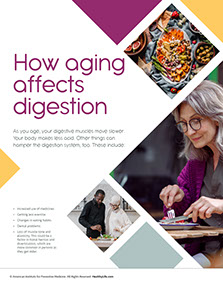
    Image of elderly man.

    As you age, your digestive muscles move slower. Your body makes less acid. Other things can hamper the digestive system, too. These include:

    *  Increased use of medicines

    *  Getting less exercise

    *  Changes in eating habits

    *  Dental problems

    *  Loss of muscle tone and elasticity. This could be a factor in hiatal hernias and diverticulosis, which are common in persons as they get older.

    Health at Home Lifetime book by the American Institute for Preventive Medicine. www.HealthyLife.com. All rights reserved.

    © American Institute for Preventive Medicine
  • How To Prevent Bowel Problems

    Mature Health: Over Age 50

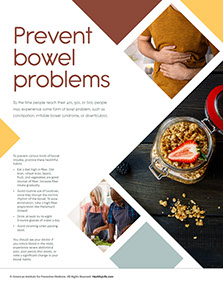
    Image of fiber rich grains and berries.

    By the time people reach their forties, fifties, or sixties, they will usually experience some form of bowel trouble such as diverticulosis, irritable bowel, and constipation.

    To prevent various kinds of bowel trouble, practice these healthful habits.

    *  Eat a diet high in fiber. (Oat bran, wheat bran, beans, fruit, and vegetables are good sources of fiber.)

    *  Avoid routine use of laxatives, since they disrupt the normal rhythm of the bowel. To ease elimination, take a high-fiber preparation like Metamucil instead.

    *  Drink at least six to eight 8-ounce glasses of water a day.

    *  Avoid straining when passing stool.

    You should see your doctor if you notice blood in the stool, experience severe abdominal pain, pass pencil-thin stools, or note a significant change in your bowel habits.

    A Year of Health Hints book by the American Institute for Preventive Medicine. www.HealthyLife.com. All rights reserved.

    © American Institute for Preventive Medicine