Tag: contagious

  • Pink Eye (Conjunctivitis)

    Eye Conditions

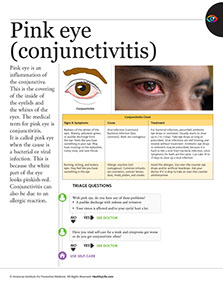
    Pink eye is an inflammation of the conjunctiva. This is the covering of the inside of the eyelids and the whites of the eyes. The medical term for pink eye is conjunctivitis. It is called pink eye when the cause is a bacterial or viral infection. This is because the white part of the eye looks pinkish-red. Conjunctivitis can also be due to an allergic reaction.

    Signs & Symptoms

    Questions to Ask

    Self-Care / Prevention

    For Pink Eye

    *  Wash your hands often. Don’t share towels, washcloths, etc.

    *  Avoid contact with other people as much as you can until you have used the prescribed antibiotic eye drops, etc. for 24 hours. Follow the rules of your workplace about pink eye. For children, follow the rules of their school.

    *  With your eyes closed, apply a cotton ball soaked in warm (not hot) water to the affected eye 3 to 4 times a day. Do this for at least 5 minutes at a time. Use a clean cotton ball each time.

    *  Throw away any makeup that could be contaminated. Don’t wear eye makeup until the infection is all cleared up. Don’t share makeup with others.

    *  Don’t share eye drops with others.

    *  Don’t put a cover or patch over the eye. This can make the infection grow.

    *  Don’t wear contact lenses while your eyes are infected. Replace contact lenses or disinfect them twice before re-using.

    For Allergic Conjunctivitis

    *  Avoid things you know you are allergic to.

    *  Use over-the-counter eye drops. These soothe irritation and help relieve itching.

    *  Apply a washcloth rinsed in cold water to the eyes. Do this several times a day.

    *  Use protective eyewear when you work with chemicals and fumes.
    Healthier at Home book by the American Institute for Preventive Medicine. www.HealthyLife.com. All rights reserved.

    © American Institute for Preventive Medicine
  • Sick Days: When To Stay Home

    WORK LIFE

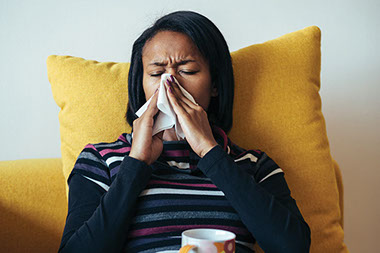
    Image of young women in bed sick.

    You’re feeling under the weather, but you don’t want to miss work. What should you do? In some cases, it may be okay to go to work when you’re not feeling 100 percent. But other times, you should make your wellness a priority. These guidelines can help you decide if you’re well enough to work:

    Fever:

    The CDC recommends you stay home for 24 hours after your fever is gone. This helps minimize the spread of illness to others. You should also skip social gatherings, shopping, and other outings.

    Sniffles and sneezing:

    Many people simply can’t miss work every time they have a minor cold. Let your symptoms be your guide. If you’re feeling well enough to work and don’t have other symptoms, such as a fever or body aches, you can go to work if necessary. But, if you have fatigue or feel that you won’t be able to safely do your job, consider using sick time.

    Vomiting or diarrhea:

    Stomach-related illnesses such as norovirus are highly contagious. Even after you stop vomiting, you could get other people sick. If you serve or prepare food as part of your job, the CDC says you should stay home for at least 48 hours after your symptoms stop.

    Remember that staying home from work may help you to recover more quickly, as your body needs rest to fight an illness. In addition, staying home will help avoid spreading illness to co-workers, customers, and others you encounter.

    Choosing to stay home may also depend on your employer’s sick day policies. Make sure you are familiar with these and abide by them.

    © American Institute for Preventive Medicine

  • Too Sick For School?

    SELF-CARE CORNER

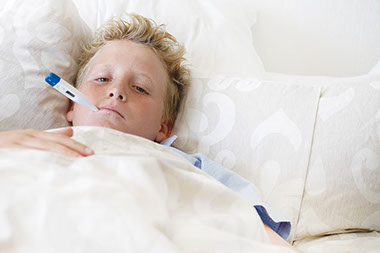
    Image of sick boy in bed.

    Colds? Flu? What to do? Sending a sick child to school can make matters worse and spread the illness to others. Follow these guidelines from pediatrician Dr. Jacqueline Kaari, University of Medicine and Dentistry of New Jersey, who said, “Parents need to be able to quickly assess their child and determine if he or she is well enough to go to school or needs to stay home, or if it’s time to call the pediatrician. Sometimes, parents will guess wrong, but if there’s one rule of thumb, it should be to always err on the side of caution.”

    Colds.What to do: Use over-the-counter saline nose drops or spray and a cool mist humidifier to relieve symptoms. Because colds are caused by viruses, antibiotics are not effective. Instead, the cold just needs to run its course until the child recovers. Contact your child’s doctor if a cough suddenly worsens or a fever develops.

    Fever.What to do: Give acetaminophen or ibuprofen for fevers. Encourage the child to drink lots of fluids and avoid fatty or fried foods that are hard to digest because fevers decrease stomach activity. Keep children at home if their fever is above 100.4ºF. Call a doctor if a high fever lasts more than 24 hours or does not respond to medication, or if the child’s condition worsens.

    Flu.Striking more suddenly and more intensely than a cold, the flu causes a sudden, high fever with body aches. What to do: Have your child vaccinated early in the flu season to protect against this illness. A child who comes down with the flu should stay home for several days, rest, and drink lots of fluids.

    Conjunctivitis (“pink eye”).A red, weeping eye(s) with a thick discharge that could become crusty when sleeping. What to do: Contact your child’s doctor for treatment, which may include antibiotic eye drops. Conjunctivitis can be highly contagious. Follow the doctor’s advice. Children can usually return to school 24 to 48 hours after treatment begins. Check with the school’s policy.

    Head lice.Tiny, crawling bugs that live on the scalp and feed on blood. Itching and sores on the scalp can be signs of head lice. The insects cannot jump or fly and are spread by human contact. What to do. Under bright light, check the entire scalp closely for lice or tiny white eggs (called nits), starting at the upper neck and behind the ears. Lotions and shampoos that can kill the lice are available at the drug store. Keep the child home from school until the lice have completely gone away.

    Sore throat.What to do: Have the child drink a few sips of water. If that relieves the symptoms, you are likely dealing with, at worst, a viral infection that will go away with a few days of rest, plenty of liquids, and pain relievers. If you suspect strep throat, follow the fever guidelines and contact your child’s doctor.

    Stomach ache.What to do: Keep children who have been vomiting home from school. Wait an hour after the child vomits and encourage small drinks of water. Gradually introduce clear liquids and bland foods throughout the day. Contact your doctor if vomiting lasts beyond 24 hours, occurs with worsening pain at the belly button or lower right abdomen, or if the child vomits blood or green or yellow matter.

    © American Institute for Preventive Medicine
  • What To Know About Whooping Cough

    SELF-CARE CORNER

    Image of man coughing.

    Pertussis, or whooping cough, is more than just an annoying cough. It is a serious and highly contagious disease. The coughing is so severe it causes those affected to gasp for air in between coughs, which make a “whooping” sound that can last for weeks or months. The cough may cause a person to stop breathing temporarily, turn blue, and even vomit. Many people are unable to eat or sleep due to the severe coughing spells. It can lead to complications, such as pneumonia, cracked ribs, and seizures. It can also be life-threatening.

    Whooping cough is on the rise in the U.S. Here’s what you should know to protect yourself and those around you.

    You can spread it before you even know you have it.

    Whooping cough may feel like you have a cold at first. This stage lasts one to two weeks. It often includes a runny nose, sneezing, low-grade fever, and a mild cough. Unfortunately, many people don’t realize they have whooping cough during this stage and can spread it to others.

    Infants under 6 months of age are the most likely to die from pertussis.

    Babies are given whooping cough vaccine at two, four and six months of age. Until they have had all these vaccines, they are more likely to catch whooping cough. The Immunization Action Coalition says babies under six months of age are the most vulnerable because they don’t yet have strong immunity to protect against it.

    Adults are the most likely to pass the infection to young infants.

    The National Foundation for Infectious Diseases (NFID) says adults are the most common source of whooping cough infection in babies.

    Even if you already had a whooping cough vaccine, you might need another one.

    Vaccines aren’t just for babies and kids. Recommendations for whooping cough vaccination have changed in recent years.

    The NFID says the following adults should be vaccinated:

    *  All adults age 19 and older need a whooping cough booster. This is called a Tdap vaccine. It also protects against tetanus and diphtheria.

    *  Pregnant women need a Tdap vaccine during the third trimester (between 27 and 36 weeks of every pregnancy).

    *  Adults of any age who may be in close contact with babies younger than 1 year of age should get a Tdap vaccine. It should be given at least two weeks before being around the baby, if possible.

    *  Health care employees in hospitals and health centers should get the Tdap.

    *  After getting the Tdap vaccine, all other adults should get the Td (tetanus and diphtheria) booster every 10 years.

    © American Institute for Preventive Medicine