Tag: control

  • Control Portion Sizes

    Weight Control

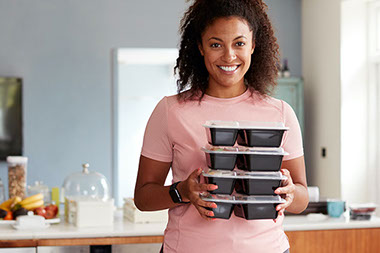
    Smiling women holding 4 pre-prepped meals.

    It’s all about portion control!

    *  First, learn how much food you need. Get a personalized MyPlate Plan atmyplate.gov/eat-healthy/what-is-myplatethat identifies how many cups, ounces, etc. of different foods you should eat for your daily needs.

    *  Use measuring cups, spoons, etc.

    *  Estimate portions. One cup of cereal is about the size of 2 hands, cupped. Three ounces of meat is about the size of a computer mouse. One Tbsp. is the size of 1 thumb.

    *  Limit second helpings, especially of foods high in fat and sugar.

    Page from HealthyLife Weigh book by the American Institute for Preventive Medicine. www.HealthyLife.com. All rights reserved.

    © American Institute for Preventive Medicine

  • Mend Your Spending

    Financial Health

    Use your money wisely.

    You have probably asked or heard the question, “Do you really need that?” It is a good question to ask when you are thinking of making a purchase. Buying on impulse can be a big budget buster. Getting by with less is a budget saver.

    Use credit cards wisely:

    *  Keep cards to a minimum.

    *  Pay your bill on time to avoid a late payment fee and a higher “penalty” interest rate. Stay below your credit limit.

    *  Pay the balance in full. If you can’t, make more than the minimum payment.

    *  Try to avoid getting cash advances, which have very high interest rates.

    *  Ask for a lower interest rate on credit cards you currently have.

    Trim costs for tech services:

    *  Choose a cellphone plan that avoids hefty fees for extra minutes and texts. Consider dropping your landline phone or just using it for basic services.

    *  Shop around for best prices and services for Internet, phone, and cable. Bundle services if this saves money. Contact your current provider and ask if it will match a competitor’s lower price.

    *  Evaluate your use of cable, especially premium channels. Check out cheaper ways to get movies and programs, such as through your local library, Netflix for movies, and Hulu for TV.

    Other savings tips:

    *  Refinance your mortgage if you can lower the interest rate enough to make it worth your while. Use the extra money for other bills or to apply to the principal to pay your mortgage off sooner.

    *  Shop for items, even cars, online. Compare prices.

    *  Take advantage of employer sponsored programs and services. Examples are matching your 401(k) contributions and flexible spending accounts (FSAs), which allow you to use pre-tax dollars to pay for medical and child care expenses.

    *  Clip and download coupons for free, as well as reduced prices on groceries, restaurant meals, retail items, and home improvement services. Send in rebates that come with products you buy.

    *  Eat out less. Take your lunch to work.

    Action Step

    Have fun at little or no cost. Attend free community events, such as concerts and picnics. See movies at discount theaters or swap DVDs with family and friends. Go for hikes and bike rides as a family.

    Ways to Well-Being book by the American Institute for Preventive Medicine. www.HealthyLife.com. All rights reserved.

    © American Institute for Preventive Medicine

  • Know How To Use A Fire Extinguisher

    Home Safety

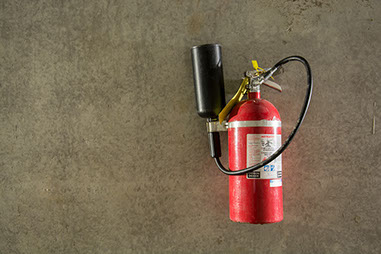
    Image of fire extinguisher.

    Every home should have at least one fire extinguisher. Extinguishers should be mounted in plain sight and be simple for all family members (except small children, of course) to use in an emergency. Show the babysitter how it works, too.

    *  Buy a multipurpose extinguisher rated 2A10BC or higher. The letters indicate the type of fire the extinguisher will douse. “A” units are for combustible materials like paper or wood, “B” units are for flammable liquids like gasoline, and “C” units are for electrical fires. The numbers relate to the size of the fire. The higher the number, the greater the capacity to extinguish that fire.

    *  Check for a UL (Underwriters Laboratory) or FM (Fire Mutual) code. They tell you the product is effective, safe, and reliable.

    *  Be sure the directions are simple to understand. Mount the fire extinguisher securely, in plain sight.

    *  Be sure you understand how the firing mechanism works. Check to see whether you need to push a button or pull a lever. Don’t activate the extinguisher, though. Once you do, it must be serviced and recharged, even if you only use it for a few seconds and the gauge indicates it’s full.

    *  Check the pressure indicator once a month to be sure the extinguisher works.

    To use a fire extinguisher, remember the acronym PASS.

    *  Pull the pin.

    *  Aim the nozzle or barrel at the base of the fire, not at the flames.

    *  Squeeze the handle.

    *  Sweep back and forth at the base of the fire.

    A Year of Health Hints book by the American Institute for Preventive Medicine. www.HealthyLife.com. All rights reserved.

    © American Institute for Preventive Medicine

  • Address Anxiety 2

    Healthylife® QuitWell™

    Part 2

    Zen garden with massage stones and waterlily.

    Anxiety is a feeling of dread, fear, or distress over a real or imagined threat to your mental or physical well-being. Smoking, chewing, or vaping may be a way that you have coped in the past with these feelings. At all stages of change, you can learn to address anxiety in healthy ways.

    First, try to calm your body physically. Calming the physical body can make working through what is in your mind easier.

    *  Breathe deeply and evenly.

    *  Take a walk or get some other form of exercise.

    *  Take a long, warm bath or shower. Or, go for a swim.

    *  Listen to soothing music. Or, go somewhere quiet.

    *  Connect with people. Visit or call someone who will listen to you and support you.

    *  Drink a warm cup of decaf coffee or tea-avoid caffeine, which can make anxiety worse.

    As you take a step back, use these tips to manage the thoughts that are causing your anxiety:

    *  Ask: is your thought based on facts?

    *  Identify what you are trying to do. Know your purpose.

    *  Consider many different outcomes and their effects.

    *  View the situation from many perspectives.

    *  Don’t assume a situation will have the same outcome as it did in the past.

    *  Have good evidence for a generalization before you make it.

    *  Avoid assuming one event caused another just because they happened at the same time.

    You will likely feel calmer after you quit. Nicotine only makes you more nervous. Nicotine is a stimulant. After you get over the initial stress of quitting, you’ll find that without all that nicotine in your body, you feel calmer and more relaxed.

    © American Institute for Preventive Medicine

  • Understanding Epilepsy

    MEDICAL NEWS

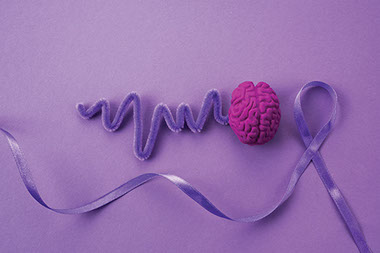
    Purple ribbon and brain to represent epilepsy awareness.

    Epilepsy is a broad term that encompasses a variety of brain disorders that cause seizures. It is one of the most common brain conditions and can affect people of any age.

    Signs & symptoms

    The primary symptom of epilepsy is seizures. A seizure is a brief change in brain activity. It can last anywhere from a few seconds to several minutes.

    Someone may be diagnosed with epilepsy if they have two or more seizures unrelated to another cause, such as a fever or low blood sugar.

    Seizures can look different in different people. Signs may include:

    *  Confusion

    *  Staring

    *  Rapid blinking

    *  Twitching or shaking

    *  Falling to the ground

    *  Loss of consciousness

    *  Body stiffening

    Causes

    While the cause of epilepsy is unknown for many people, certain conditions impact the brain and may lead to the development of epilepsy:

    *  Brain tumor

    *  Traumatic brain injury

    *  Infection in the brain from a virus, bacteria, or parasite

    *  Stroke

    *  Oxygen deprivation of the brain

    *  Certain genetic disorders

    *  Certain neurological diseases

    Treatment

    If left untreated, recurring seizures impact quality of life, increase the risk of injury, and may shorten life expectancy.

    Common treatments include:

    *  Medicine: Anti-seizure medication works by controlling improper brain signals.

    *  Surgery: This can remove the affected area if seizure activity occurs in only one part of the brain.

    *  Diet: A specialized ketogenic diet may be effective for some types of epilepsy, especially in children.

    *  Nerve stimulation: An implanted device stimulates the vagus nerve to reduce seizures.

    Self-care

    Successful epilepsy treatment takes the combined efforts of healthcare professionals and the person with epilepsy. Many self-care practices aid in reducing seizure triggers and keeping the body healthy:

    *  Take all medications as prescribed.

    *  Keep a record of seizures and any potential triggers.

    *  Get plenty of sleep every night.

    *  Eat a healthy, well-balanced diet.

    *  Get regular physical activity and movement.

    © American Institute for Preventive Medicine

  • Address Anger

    Healthylife® Weigh

    Part 6

    Women with hands on head screaming.

    Ways you can deal with anger, without eating:

    *  Count to ten at the first twinge of anger. Then count back down to zero.

    *  Take three or four slow, deep breaths. Picture the angry impulse passing you by.

    *  Take a walk until you can calm down. Or, do some other form of exercise. If you cannot exercise right away, plan to do it as soon as possible. Look forward to this opportunity to blow off some steam.

    *  If someone says or does something that bothers you, discuss it calmly or wait until you feel you can discuss it calmly. Use assertive communication tools.

    *  Distract yourself. Do a task that has to get done today or in the near future.

    *  Repeat to yourself or out loud, “I’m angry because: ____.” List what is making you angry. Ask yourself, “Are these rational thoughts?”

    *  Listen to music. Make a playlist of songs you know help to calm you down. Or, turn to a radio station that plays soothing music or music you can sing to.

    *  Help someone in need.

    © American Institute for Preventive Medicine

  • Address Anxiety

    Healthylife® Weigh

    Part 6

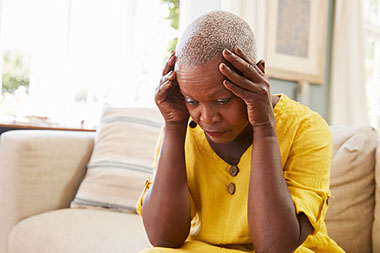
    Women at home coping with anxiety.

    Anxiety is a feeling of dread, fear, or distress over a real or imagined threat to your mental or physical well-being. Avoid eating as a way to cope with anxiety. Try the strategies listed below.

    Strategy

    *  Take a long, warm bath or shower. Or, go for a swim.

    *  Focus on relaxing through exercise, soothing music, helping others, etc.

    *  Connect with people. Visit or call someone who will listen to you and support you.

    *  Drink a warm cup of decaf coffee or tea – avoid caffeine, which can make anxiety worse.

    *  Practice mindfulness and other relaxation techniques.

    Wash, Peel & Chop Away Anxiety

    Get your meal prep done and work away anxious feelings at the same time!

    Gently wash fruits and vegetables. Chop foods slowly and evenly. Prepare all of the ingredients for a meal neatly before starting to cook.

    Take your time to cook. Clean as you go, keeping your space tidy. Slowly wash and dry dishes by hand. Take breaks if you need to.

    Other Causes of Anxiety

    Anxiety could be a symptom of low blood sugar. Other symptoms of low blood sugar include shakiness, feeling faint, headache, rapid heartbeat, and sweating. In this case, you will need to have something to drink or eat, such as orange juice, a piece of hard candy, or crackers. Anxiety can also be a symptom of an anxiety disorder or other health condition. Check with your doctor if the symptoms above happen often.

    Take a Step Back

    Write down what you are anxious about. Step back and look at your concern from an outsider’s point of view. Imagine how others might handle these issues. You can also use this technique to look at your job or family duties. Ask yourself these questions:

    *  What can I expect of myself in this situation?

    *  Are my expectations realistic, given my abilities, strengths, and weaknesses?

    *  What do others expect of me?

    *  What ideas would others have for me? When you imagine how someone else might respond to a situation, you may come up with helpful ideas!

    If you struggle to answer these questions, wait at least an hour or sleep on it. When you come back to this worry, you may see things in a different way and feel more ready to address the issue.

    © American Institute for Preventive Medicine