Tag: cooking tips

  • Give Swiss Chard A Try

    HEALTHY EATING

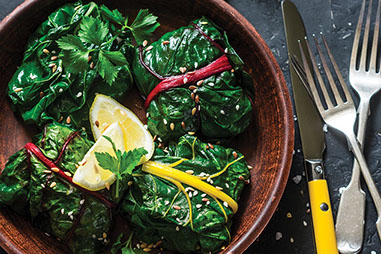
    Swiss chard wraps.

    When it comes to leafy greens, spinach and kale get most of the attention. But leafy greens are so nutritious. Why limit yourself to just two types?

    Swiss chard has less bitterness than kale, and offers plenty of important nutrients. Plus, this time of year, swiss chard is plentiful at farmers’ markets or the local grocery store. It can be used like any greens:

    *  Raw in a salad

    *  Sautéed or steamed

    *  Added to pasta  and soups

    Here’s more about swiss chard’s nutritional benefits:

    *  Rich in magnesium, potassium, vitamin A, vitamin C, several B vitamins and iron.

    *  One cup (chopped) contains more than 700 percent of your recommended daily intake of vitamin K, which is needed for bone health and blood clotting.

    *  Each cup contains only 35 calories and nearly 4 grams of fiber. Talk about a low-calorie and nutritious punch!

    Source: USDA Nutrient Database

    © American Institute for Preventive Medicine
  • Simple Steps For A Safe Thanksgiving Turkey

    HEALTHY EATING

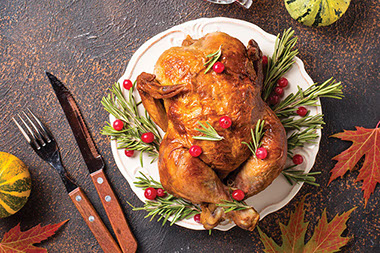
    Cooked turkey on plate.

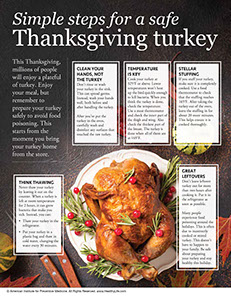
    This Thanksgiving, millions of people will enjoy a plateful of turkey. Enjoy your meal, but remember to prepare your turkey safely to avoid food poisoning. This starts from the moment you bring your turkey home from the store.

    Think thawing

    Never thaw your turkey by leaving it out on the counter. When a turkey is left at room temperature for 2 hours, it can grow bacteria that make you sick. Instead, you can:

    *  Thaw your turkey in the refrigerator.

    *  Put your turkey in a plastic bag and thaw in cold water, changing the water every 30 minutes.

    Clean your hands, not  the turkey

    Don’t rinse or wash your turkey in the sink. This can spread germs. Instead, wash your hands well, both before and after handling the turkey. After you’ve put the turkey in the oven, carefully wash and disinfect any surfaces that touched the raw turkey.

    Temperature is key

    Cook your turkey at 325°F or above. Lower temperatures won’t heat up the bird quickly enough to kill bacteria. When you think the turkey is done, check the temperature. Use a meat thermometer and check the inner part of the thigh and wing. Also check the thickest part of the breast. The turkey is done when all of them are at 165°F.

    Stellar stuffing

    If you stuff your turkey, make sure it is completely cooked. Use a food thermometer to check that the stuffing reaches 165°F. After taking the turkey out of the oven, leave the stuffing in for about 20 more minutes. This helps ensure it is cooked thoroughly.

    Great leftovers

    Don’t leave leftover turkey out for more than two hours after cooking it. Put it in the refrigerator as soon as possible.

    Many people experience food poisoning around the holidays. This is often due to incorrectly cooked or stored turkey. This doesn’t have to happen to your family. Be safe about preparing your turkey and stay healthy this holiday.

    © American Institute for Preventive Medicine
  • Spice Up Your Life

    HEALTHY EATING

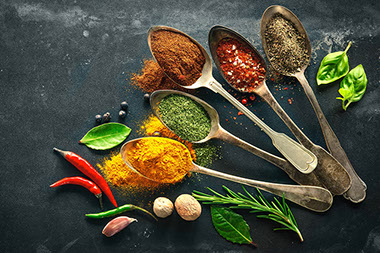
    Image of different spices.

    If you’re cutting back on salt to control blood pressure, the Spice Islands Test Kitchen has developed 5 tips to boost flavor in food:

    *Increase the amount of herbs when reducing salt.For a great flavor punch, increase your spice and herbs by 25% when reducing or eliminating salt in a recipe.

    *Crush herbs to release all flavor.For leafy herbs such as rosemary and leaf oregano, lightly crush the herbs to bring out maximum flavor.

    *For soups and stews, reduce the salt and add spices last.For long-cooking soups and stews, reduce the salt. Save about a fourth of the spices called for and add them at the end of cooking. This will give a more intense flavor to the dish.

    *Add herbs early in no-cook meals.For salad dressings, fruit dishes, or other no-cook foods, add herbs and spices several hours before serving so flavors can develop and blend. For salad dressings, add seasonings to the vinegar and let stand before adding the oil.

    *Give dried spices a boost.If a recipe calls for fresh herbs and you have dried on hand, simply use a third to a half as much dry for fresh.

    © American Institute for Preventive Medicine