Tag: coping

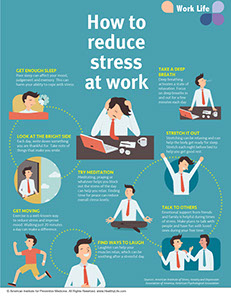
  • How To Reduce Stress At Work

    WORK LIFE

    Image of smiling employee.

    Get enough sleep:Poor sleep can affect your mood, judgement and memory. This can harm your ability to cope with stress.

    Look at the bright side:Each day, write down something you are thankful for. Take note of things that make you smile.

    Get moving:Exercise is a well-known way to reduce stress and improve mood. Walking just 20 minutes a day can make a difference.

    Try meditation:Meditating, praying or whatever helps you block out the stress of the day can help you relax. Finding time for peace can reduce overall stress levels.

    Find ways to laugh:Laughter can help your muscles relax, which can be soothing after a stressful day.

    Take a deep breath:Deep breathing activates a state of relaxation. Focus on deep breaths in and out for a few minutes each day.

    Stretch it out:Stretching can be relaxing and can help the body get ready for sleep. Stretch each night before bed to help you get good rest.

    Talk to others:Emotional support from friends and family is helpful during times of stress. Make plans to talk with people and have fun with loved ones during your free time.

    Sources: American Institute of Stress, Anxiety and Depression Association of America, American Psychological Association

    © American Institute for Preventive Medicine

  • How To Stop Emotional Eating

    HEALTHY EATING

    Image of young women with thumbs up.

    There’s no doubt that food can be comforting. Our favorite foods can make us feel happy and relaxed. Sometimes when people feel sad, lonely, stressed, or even bored, they may turn to food for comfort. This is known as emotional eating, and most people don’t realize they are doing it. As a result, people eat when their body isn’t truly hungry, and this can lead to weight gain and health problems.

    The University of Rochester Medical Center says emotional eating can be harmful. It can cause type 2 diabetes, high blood pressure, heart disease, and obesity. But, emotional eating can be a hard habit to break. Here are some tips to help you stop:

    Learn to listen to your body.

    Are you truly hungry? If so, your stomach may be grumbling. With emotional eating, people often crave one specific food, such as a cookie. But if you’re really hungry, you’ll be willing to eat something healthier, such as fruits or vegetables.

    Wait a little while.

    If you’re not sure if you’re hungry, tell yourself to wait 15 minutes. In the meantime, do something else. Take a walk, have a glass of water, or call a friend. See if the urge to eat passes.

    Keep unhealthy foods away.

    Stock nutritious foods in your house, and don’t buy the foods you eat when you’re stressed. It’s easier to avoid the temptation if the food isn’t available to you.

    Don’t worry about past mistakes.

    When you’re trying to break a habit, setbacks can happen. Forgive yourself if you end up eating too much or giving in to a craving. Tell yourself you’ll start fresh again tomorrow. Don’t give up.

    Find healthy ways to deal with stress.

    Go for a walk, listen to music, or do deep breathing exercises to help you deal with stress. Then you’re less likely to turn to food for comfort.

    If you have a problem with emotional eating, don’t be afraid to ask for help. Talk with your doctor about the problem. Ask about support groups and mental health experts who help people with emotional eating.

    © American Institute for Preventive Medicine

  • Managing Financial Stress

    FINANCIAL HEALTH

    Image of hands holding money.

    Do finances keep you awake at night? If so, you’re not alone. More than 75 percent of Americans say money is a big source of stress, according to the American Psychological Association (APA).

    Although we can’t always change our financial problems right away, we can learn to cope with this type of stress. This can help you stay healthier and learn to deal with challenges in a positive way.

    If you’re stressed about money, try these tips:

    *Remain calm and make a plan.It can be easy to get caught up in the panic of the moment when a problem arises. A sudden expense needed for an emergency or stories about a “bad economy” in the news can make things feel hopeless. Instead, think about small steps you can take now to improve your budget. This may be writing down a few specific ways you can cut back on expenses. Or, look at your past spending and make a plan to cut back on things you can do without for now.

    *Look at the positive side of being thrifty.Eating meals at home instead of at a restaurant can be a fun family bonding time. Have everyone help prepare the meal or pick out their favorite dish for the weekly menu. Can’t afford a fitness membership? Exercise with a family member or friend at home and make it fun.

    *Be proud of progress.If you saved $5 by making your coffee at home rather than buying it at a coffee shop, that’s a step in the right direction. Think about the little ways you can save money and how they add up over time. These small successes can get you to your goal.

    *If you can’t pay your bills, ask for help.Banks, utilities and credit card companies will often give you extra time to pay if you’re in a financial crisis. It doesn’t hurt to call and ask.

    *Identify unhealthy behaviors.If you deal with stress by drinking alcohol, smoking or gambling, this will often make matters worse. Not only do these habits cost more money, but they can cost you your health, job and relationships. Healthy ways to cope with stress include exercise, deep breathing, eating a balanced diet, listening to music or calling a friend. If you need help with unhealthy behaviors, ask your doctor or look into community support groups.

    Source: American Psychological Association

    © American Institute for Preventive Medicine

  • Recognize And Treat Early Signs Of Burnout

    SUCCESS OVER STRESS

    Image of business man with a notebook over his head.

    Burnout isn’t something that happens overnight. It occurs over time from repeated and unresolved frustration or constant pressure to perform or achieve. With burnout, you feel exhausted, worn out, and detached from others. You feel as if you have nothing more to give and simply do not care about anything. Burnout puts your job, your relationships and your health in jeopardy.

    Signs on the road to burnout

    *  Too much work, not enough relaxation

    *  Feeling as if you have no control over your job

    *  Anger

    *  Fatigue

    *  Sleep problems

    *  Escaping through alcohol, drugs, TV, eating or gambling

    *  Avoiding making decisions

    *  Negative view of yourself and the world

    Also, some traits increase the risk for burnout. These include the need to be in control, wanting everything to be perfect and being a workaholic.

    Ten tips to prevent burnout

    1. Set career and personal goals that can be achieved.

    2. Follow healthy eating and sleeping habits.

    3. Exercise daily – At least 30 minutes most days of the week.

    4. Try not to spread yourself too thin. Delegate tasks at work and at home.

    5. Reduce long work or study hours, if you can. The more you do and the less you rest, the more likely burnout will occur.

    6. Take regular five to 10 minute relaxation breaks. Take mental breaks from stressful situations, too.

    7. Make time for leisure activities that you enjoy and look forward to.

    8. Get creative with a hobby or activity that has nothing to do with work.

    9. Manage stress through meditation, yoga, or therapy.

    10. Plan a vacation one or more times a year. Leave your work at home!

    Discuss feelings and problems you are having with your family, friends, and coworkers. Talking helps ease feelings of frustration that can feed burnout. It things do not get better seek professional help.

    © American Institute for Preventive Medicine

  • Address Depression

    Healthylife® Weigh

    Part 6

    Man coping with depression.

    Signs & Symptoms

    *  Feeling sad, hopeless, helpless, and/or worthless

    *  Fatigue

    *  Loss of interest in daily activities, including sex

    *  Change in eating and sleeping patterns

    *  Anger, anxiety, or irritability

    *  Having a hard time concentrating or making decisions

    *  Thoughts of suicide or death

    Strategy

    *  Accept thoughts as they are. Focus on your response, rather than trying to shoo away the emotion.

    *  Be with and call relatives and friends who lift your morale and make you laugh.

    *  Do something to help someone else.

    *  Keep up with your regular exercise.

    *  Do something different. Walk or drive to someplace new.

    *  Challenge yourself with a new project. It doesn’t have to be difficult, but it should be enjoyable.

    *  Watch a funny TV show or movie.

    *  Reflect on your expectations and make adjustments –  it takes a long time to change habits and feel the new habits are “normal.”

    *  Change your clothes. Take a shower. Do small self-care activities.

    If you feel depressed for two weeks or longer, see a doctor.

    For a screening test for depression, contact:

    Mental Health America

    800-969-6642

    www.mhanational.org

    © American Institute for Preventive Medicine

  • Stress At The College Level

    SUCCESS OVER STRESS

    Image of stressed college student reading a text book.

    The American College Health Association says that 30 percent of college students feel that stress hurts their academic success. Difficult classes, important exams, internships and jobs, and social events are just a few of the issues that can cause stress for young adults. Georgetown University offers these tips for stressed out students:

    *  Avoid alcohol, smoking, and other substances. They harm the body and make you feel worse in the long-term.

    *  Rely on your friends for support or take advantage of counseling services on campus.

    *  Minimize caffeine intake and make sleep a priority. Most college students need eight hours or more per night. Stick to a regular sleep schedule.

    *  Write in a journal.

    *  Find time for fun activities, such as exercise classes or campus events.

    © American Institute for Preventive Medicine

  • Face Unsupportive Situations

    Healthylife® Weigh

    Part 4

    Couple using laptop computer at home on sofa.

    Apply the suggestions in the table below to your challenges. Not all strategies will be right for all scenarios. You can turn a negative situation into a positive one for everyone.

    *  Let others know what your goals are and why you are working to achieve them.

    *  Model trying new foods and being open to new tastes.

    *  Reduce the amount of time spent with negative people, if possible.

    *  Describe your efforts as a lifestyle change rather than a diet.

    *  Share how you are doing things differently this time if you have struggled in the past.

    *  Let supportive people know how much their support means to you. Send a sincere thank you card, email, or share a kind word in person. They will likely help you again.

    *  Enjoy treats every now and then. Plan to have a small amount. Don’t let guilt rob you of enjoying the treat!

    © American Institute for Preventive Medicine