Tag: core

  • Whittle Your Waist

    Weight Control

    Hidden belly fat poses silent health threats.

    When your waistline gets bigger, you need to buy larger pants and belts. Too large of a waist can also increase your risk for many diseases. These include some types of cancers, type-2 diabetes, heart disease, high blood pressure, and stroke. It’s not the fat under the skin that you can pinch that triggers these problems. It’s the fat you cannot see that is around body organs deep inside your abdomen. This is called visceral fat. It is absorbed into the bloodstream easily making it more likely to clog arteries to the heart.

    What is a healthy waist measurement?

    Whether you are overweight or not, you may have too much abdominal fat. To find out, place a measuring tape at the top of your hipbone. Then bring it all the way around, level with your naval. Keep the tape parallel to the floor. Make sure it’s not too tight. You have too much fat in your abdomen if your waist measures:

    *  35 inches or more if you are a woman

    *  40 or more inches if you are a man

    Three steps to whittle your waist:

    1.  Exercise −You can do a thousand sit-ups a day and still have visceral fat. To trim both the fat you can pinch and hidden fat, do 30 minutes of aerobic exercise every day. If you can’t fit in one 30 minute workout, break it down to three 10-minute sessions.

    2.  Diet − No diet targets visceral fat alone. But, when you lose weight overall, you lose abdominal fat.

    3.  Sleep – Get six to seven hours per night.

    Action Step

    Increase foods with soluble fiber. These include lentils, kidney and other beans, oat bran, oatmeal, and the fleshy parts of apples and carrots.
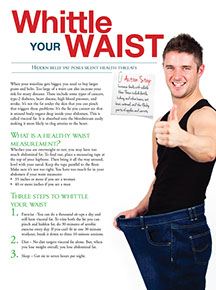
    Page from Ways to Well-Being book by the American Institute for Preventive Medicine. www.HealthyLife.com. All rights reserved.

    © American Institute for Preventive Medicine
  • Abs: The Core Of A Healthy Body

    BE FIT

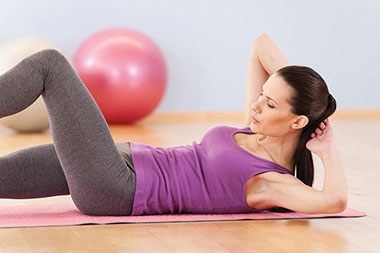
    Image of women doing abdominal exercises.

    Strong abdominal muscles can do more than just make you look slimmer. Healthy ab muscles can help you improve posture and alleviate back pain. For those who thought ab exercises were only for achieving a “six pack,” it’s time to discover all the benefits of a strong midsection.

    Your abdominal muscles are part of the body’s core muscles, which support your entire body when you sit, stand and move. For those who don’t like sit-ups or can’t get on the floor, there are other options to strengthen and tone these important muscles. In fact, “vertical” core exercises may be even more effective than sit-ups.

    Try this standing core exercise that’s suitable for beginners:

    *  Stand facing a wall. Place your feet shoulder-width apart and push your hands against the wall.

    *  Bend your knee and bring your leg toward the wall. Keep the other foot flat on the floor at all times.

    *  Step your leg across the other one in front. Then, step the same leg out to the side.

    *  Bend the knee again and open your leg to the outside, using your hip. Then, swing the leg to the inside.

    Repeat these exercises with the other leg. Concentrate on keeping your abs tight each time you lift and move your leg. Try to repeat them several times, and increase the number of reps as you get stronger.

    Source: American College of Sports Medicine

    © American Institute for Preventive Medicine