Tag: counseling

  • Where To Get Help For A Drinking Problem

    Substance Use & Abuse

    Image of man seeking help.

    Problem drinkers have many options to help conquer their problem.

    *  Psychotherapy. Counseling, one-on-one with a therapist or in group sessions, focuses on feelings and situations related to drinking. The goal is to help an individual cope with emotional problems and other stresses so that he or she no longer relies on alcohol.

    *  Support groups. Organized groups like Alcoholics Anonymous provide assistance, encouragement, and guidance (including a 12-step recovery plan) for members who share an alcohol problem.

    *  Medication. One type blocks the craving for alcohol and the pleasure of getting high. A second type reduces the physical distress and emotional effects people usually get when they quit drinking. A third type causes physical reactions, such as vomiting, when drinking alcohol.

    *  Alcohol treatment centers. Affiliated with hospitals, medical clinics, or community health centers, alcohol treatment centers generally combine more than one approach. People who need help are either treated as an outpatient or admitted as an inpatient, depending on how serious the problem is.

    For help, consult the following resources.

    *  Your family physician. A doctor who knows the drinker (and the drinker’s family) can determine what type of treatment would be appropriate. Also, anyone with a history of heavy drinking should have a thorough medical exam to uncover any medical conditions that may have been caused or aggravated by alcohol abuse.

    *  Family service agencies. Most communities have agencies that run outpatient alcoholic treatment programs or can refer you to one. Look in your telephone directory or contact your local social services department.

    *  Your religious adviser. Talk with your priest, minister, or rabbi.

    Page from A Year of Health Hints book by the American Institute for Preventive Medicine. www.HealthyLife.com. All rights reserved.

    © American Institute for Preventive Medicine

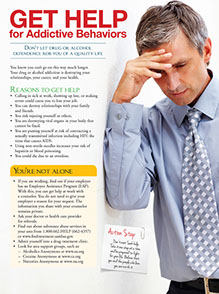
  • Get Help For Addictive Behaviors

    Substance Use & Abuse

    Image of counseling group.

    Don’t let drug or alcohol dependence rob you of a quality life.

    You know you can’t go on this way much longer. Your drug or alcohol addiction is destroying your relationships, your career, and your health.

    Reasons to get help:

    *  Calling in sick at work, showing up late, or making errors could cause you to lose your job.

    *  You can destroy relationships with your family and friends.

    *  You risk injuring yourself or others.

    *  You are destroying vital organs in your body that cannot be fixed.

    *  You are putting yourself at risk of contracting a sexually transmitted infection including HIV, the virus that causes AIDS.

    *  Using non-sterile needles increases your risk of hepatitis or blood poisoning.

    *  You could die due to an overdose.

    You’re not alone

    *  If you are working, find out if your employer has an Employee Assistance Program (EAP). With this, you can get help at work with a counselor. You do not need to give your employer a reason for your request. The information you share with your counselor remains private.

    *  Ask your doctor or health care provider  for referrals.

    *  Find out about substance abuse services in your area from 1.800.662.HELP (662-4357) orwww.findtreatment.samhsa.gov.

    *  Admit yourself into a drug treatment clinic.

    *  Look for area support groups, such as:

    – Alcoholics Anonymous atwww.aa.org

    – Cocaine Anonymous atwww.ca.org

    – Narcotics Anonymous atwww.na.org

    Action Step

    Don’t wait. Seek help. Take it one step at a time and be prepared to fight for your life. Believe that you and the people who love you are worth it.

    Page from Ways to Well-Being book by the American Institute for Preventive Medicine. www.HealthyLife.com. All rights reserved.

    © American Institute for Preventive Medicine

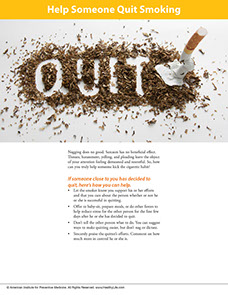
  • Help Someone Quit Smoking

    Tobacco Cessation

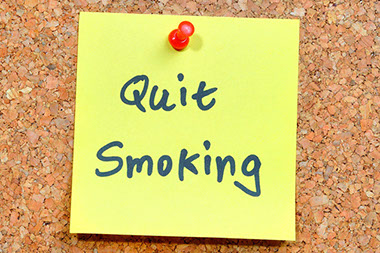
    Image of note with 'Quit Smoking' written on it.

    Nagging does no good. Sarcasm has no beneficial effect. Threats, harassment, yelling, and pleading leave the object of your attention feeling demeaned and resentful. So, how can you truly help someone kick the cigarette habit?

    If someone close to you has decided to quit, here’s how you can help.

    *  Let the smoker know you support his or her efforts and that you care about the person whether or not he or she is successful in quitting.

    *  Offer to baby-sit, prepare meals, or do other favors to help reduce stress for the other person for the first few days after he or she has decided to quit.

    *  Don’t tell the other person what to do. You can suggest ways to make quitting easier, but don’t nag or dictate.

    *  Sincerely praise the quitter’s efforts. Comment on how much more in control he or she is.

    Page from A Year of Health Hints book by the American Institute for Preventive Medicine. www.HealthyLife.com. All rights reserved.

    © American Institute for Preventive Medicine

  • Sexual Concerns

    Sexual Health

    Signs & Symptoms

    A lot of people have concerns about their sex life. Common concerns and problems that affect one or both sex partners include:

    *  Little or no desire for sexual relations

    *  Different levels of desire for sex between partners

    *  Disgust or distress with having sex or even thinking about it

    *  Failure to become aroused before sex and/or the inability to stay aroused until the sex act is completed

    *  Impotence in males. This means not being able to sustain an adequate erection.

    *  Premature ejaculation in males. Ejaculation comes too quickly and both partners are not satisfied.

    *  Delay in or absence of orgasm in either the female or male

    *  Pain during intercourse

    *  Painful, sustained erection

    Psychological factors.

    *  Sexual trauma from things, such as rape, incest, past sexual embarrassments or failures

    *  Worry or anxiety about sexual performance

    *  Guilt or inner conflicts about sex, such as when a person’s sexual needs, wishes or thoughts go against family, religious or cultural teachings

    *  Depression

    *  Relationship problems and/or lack of communication of wants and needs between sex partners

    Physical conditions that affect a person’s sexual response. Examples include disorders that involve:

    *  The heart and blood vessels. Less blood can flow to the genitals. Even the arteries and veins in the penis can be involved.

    *  The nervous system, with a condition like multiple sclerosis

    *  The body’s glands, such as with diabetes and/or any that alter the making or release of sex hormones

    *  The use of any substance that alters the sexual response. These include some medications including some anti-depressants, drugs, alcohol and/or smoking. For example, some anti-depressants may lead to impotence or failure to achieve orgasm.

    *  Surgery. For example, prostate surgery can  result in impotence.

    *  Injuries, such as ones that cause damage to nerves used in the sexual response or that result in scar tissue that interferes with sensations felt during sex.

    Treatment

    A medical evaluation is the first step. It can determine if physical conditions, medications, etc. are the cause of the problem(s). A physical exam and certain tests can be done. These include:

    *  Hormonal studies

    *  Ones that check for neurological problems

    *  Ones that measure the flow of blood and the conditions of the veins and arteries in the penis

    *  Blood and urine tests to detect diabetes, urinary tract infections, etc.

    *  X-rays and/or ultrasound, if needed, which can help detect endometriosis, vaginal scar tissue, ovarian tumors, etc. in women

    When a physical condition is found that causes the sexual concern or problem, treating it can get rid of or help with the problem. For example, several treatments exist for impotence. These include:

    *  Oral medications, such as Viagra, Levitra, and Cialis

    *  Special vacuum devices

    *  Self-injections of a prescription medicine and penile implant surgery for men

    If no physical condition is found to be at fault, measures to deal with psychological causes can help. These include therapies of many kinds:

    *  Individual counseling

    *  Counseling with both partners

    *  Sex therapy

    Questions to Ask: MEN ONLY

    Questions to Ask: WOMEN ONLY

    Questions to Ask: MEN & WOMEN

    Self-Help

    *  Follow your doctor’s advice for a chronic illness, if you have one, to help prevent possible problems with sexual satisfaction.

    *  Practice safe sex to prevent sexually transmitted diseases.

    *  Limit alcohol and other drugs. A little alcohol can act as an aphrodisiac. Too much, however, can lead to unsafe sex, an inability to become aroused, violent behavior, etc.

    The following things can help enhance the desire for sex. This is especially important for couples who both work outside the home and also have children. By the time they get into bed each night, sex seems like too much bother.

    *  Make a point to spend at least 15 minutes of uninterrupted time with your partner each day. If you can’t meet face to face, call each other on the telephone.

    *  Remember to express your affection for each other every day.

    *  Plan to spend part of a day alone together at least once a week. Make a date to take a walk in the park, go out for dinner or share other activities you both enjoy.

    *  Schedule a weekend away together every two months or so.

    *  Go to bed together at the same time. Tell yourself that what you haven’t accomplished by 11:00 p.m. can wait until the next day.

    *  Relax by giving each other a massage or taking a shower together.

    *  Keep the television out of the bedroom. Watching TV can be sexual suicide.

    Don’t worry if your sexual encounters occasionally fail. Fatigue and stress are known to cause temporary impotence, a decrease in vaginal lubrication or the inability to have an orgasm. Don’t let yourselves become preoccupied with performance; just take pleasure in being together. Enjoy hugging, kissing and caressing.

    For Premature Ejaculation

    *  The squeeze technique. If a man feels he’s about to ejaculate prematurely, he firmly pinches the penis directly below the head using the thumb and first two fingers of one hand and squeezes for 3 to 4 seconds.

    *  The start/stop method. The couple should abstain from intercourse for two weeks, but focus on touching. The man concentrates on the sensations in his penis as his partner touches his genitals and brings him to an erection. The man asks his partner to stop just before ejaculation. After a few minutes, his partner continues to arouse him, then stops again. This sequence is repeated two more times with ejaculation occurring the fourth time. Then each time the couple has sex, foreplay is prolonged.

    For Lack of Sexual Response in Women

    Couples can practice certain techniques to address sexual unresponsiveness in a woman. A few simple methods follow:

    *  For the first week, limit lovemaking to cuddling, kissing and nuzzling. Don’t touch the genitals or breasts.

    *  During the second week, the partner should gently touch the female’s vaginal area during lovemaking, but stop before she reaches orgasm to increase vaginal lubrication.

    *  During the third week, repeat the first two phases, then proceed with intercourse. If the vagina isn’t adequately lubricated, apply a water-soluble lubricant, such as K-Y Jelly to the penis to facilitate penetration. (Penetration may also be easier if the woman is on top.)

    If a tight vaginal opening still makes penetration painful or impossible, the following exercise may help:

    *  The woman should gently place the tip of her partner’s little finger against her vagina and gently push his finger into her vagina. If this feels uncomfortable, she should stop and wait a few minutes.

    *  The couple should continue this exercise until the partner can insert two fingers in their partner’s vagina without causing pain or discomfort. (It may take several attempts over a period of weeks for this technique to work.)

    (Note: The above techniques do not guarantee success. If they do not help improve your sexual concerns, consider professional help from a sex therapist.)

    Minding Your Mental Health Book. Published by the American Institute for Preventive Medicine. www.HealthyLife.com. All rights reserved.

    © American Institute for Preventive Medicine

  • Eap Is At Your Service

    WORK LIFE

    Image of 2 business women shaking hands.

    In an edition of Psychology Today, Steve Albrecht, doctor of business administration, encourages employees to find out about the many services available from their Employee Assistance Program (EAP) and reach out for help if needed. Dr. Albrecht has written or co-written 15 books, including Ticking Bombs: Defusing Violence in the Workplace, and Fear and Violence on the Job. He is also a former police officer and domestic violence investigator with the San Diego Police Department.

    Dr. Albrecht gave four reasons why employees do not use their EAP services:

    1. They do not think what they say or do will be held in confidence.

    2. They see reaching out for help as a weakness. This is especially true  for men.

    3. They think they need to get permission from their boss or Human Resources to seek services from their EAP.

    4. They do not know their EAP exists.

    First, according to Dr. Albrecht, services and discussions between employees and EAP providers are kept confidential. There is an exception-an EAP counselor has a duty to warn or intervene if the employee wants to harm himself or herself or others. The company gets no reports or records of employee use of EAP services.

    Second, employees need to be reassured that EAP offers help for many very common issues that affect most people. Examples are money worries, marital issues, raising children or step-children, blended families, sick kids, and dealing with parents with Alzheimer’s disease.

    Employees can also get help for financial problems, burnout, stress-related illnesses, cancer and mental health issues. These include substance abuse, workplace conflicts, depression and suicidal thoughts.

    Third, employees simply need to call the EAP phone number and make an appointment. They do not have to tell coworkers, their boss or Human Resources.

    Lastly, Dr. Albrecht is puzzled why employees do not know about their EAP. Companies with EAP programs list their services and contact numbers on posters and brochures in lunch rooms and break rooms. New employees receive EAP information.

    To find out if your company offers EAP services, check your benefits manual or website or ask your human resources manager. Help is just a phone call away.

    © American Institute for Preventive Medicine