Ask for freebies.
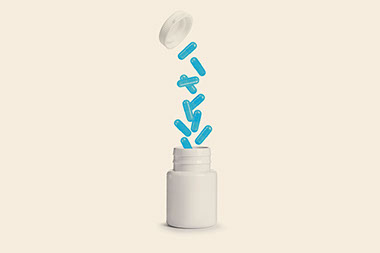
If you are prescribed a new medicine, ask your doctor if you can have free samples or a prescription for fewer tablets. This allows you to try the medicine before you pay for a full month’s supply.
No frills pills.
Instead of brand name drugs, ask for generic ones. These usually cost less. Co-pays for generics cost less, too. Even if your doctor gives you free samples to try, ask if a generic form of the medicine can be prescribed. If the sample medicine does not have a generic form, ask if you can get another generic medicine that has the same effects. Find out more about generic drugs from 888.INFO.FDA (463.6332) orwww.fda.gov/cder/ogd.
Split the pill, split the cost?
When your doctor prescribes medicines, ask if it would save money to prescribe pills that could be split in half. This means you would get two months of medicine for the cost of one. Use a pill splitter from a drug store to help keep the halves an equal size. Split one pill at a time so you take the halves in back-to-back doses.
Mail order your medicine.
Use a mail order pharmacy for prescribed medicines you take on a regular basis. You usually get a 3-month supply for the same cost you would pay for one month at a drug store. Your doctor needs to write a prescription for 3 months.
Shop around.
Medicine prices can vary a lot. Call large chains first. They can pass along the savings of buying in bulk. Even so, your local pharmacy may have a lower price on some drugs. Make sure the pharmacy takes your insurance. Some pharmacies offer 24-hour emergency and delivery services. Some keep track of all the drugs you buy. They can check for harmful mixtures of drugs. Think about helpful service and convenience, as well as cost.
Deal or no deal.
Costs for medicines from foreign Internet sites may or may not be cheaper. A study by the FDA showed that generic drugs sold in the U.S. are often cheaper than both Canadian brand-name and generic drugs. Factor in shipping and handling costs, too. {Note: Get safety information on imported drugs fromwww.fda.gov/importeddrugs. Before you buy prescriptions on the Internet, make sure the pharmacy has the VIPPS seal. This stands for Verified Internet Pharmacy Practice Sites. Also, check with the National Association of Boards of Pharmacy atwww.nabp.netor call 847.391.4406 to find out if a Web site is a licensed pharmacy in good standing.}
Medicare Part D may be free.
If you are eligible for Medicare, you may benefit from Medicare Part D Prescription Drug Savings Program. To find out, contact: Medicare Choices Helpline at 800.MEDICARE (633.4227) orwww.medicare.gov. Before you call, have a list of all the medicines you take, their dosages, and your zip code.
Take all of it.
If your doctor or pharmacist says to take a drug until it is gone, do it. Don’t stop taking the medicine even if you start to feel better. This also applies to medicines you take for high blood pressure, diabetes, and heart disease. You can also avoid the cost of getting sick again. If you stop taking medicines because you can’t pay for them, talk to your doctor.
Store OTC medicines in a good place.
The bathroom medicine chest is not a good place. Bathroom heat and humidity can make drugs lose their power faster. This means they would have to be replaced sooner. A kitchen cupboard or linen closet is better, especially if it has a lock.
The best medicine may be no medicine.
Don’t pressure your doctor to prescribe medicine if he or she doesn’t think you need it. For example, antibiotics treat bacterial infections, not viral ones, such as colds and flu.
Find out about prescription savings programs.
* The Partnership for Prescription Assistance at 888.4PPANOW (477.2669) orwww.pparx.org. This program offers a single point of access to more than 475 public and private patient assistance programs. This includes over 150 drug company programs.
* NeedyMeds at 215.625.9609 orwww.needymeds.com. This Web site gives information to help you find programs to help you with the cost of medicines and other health care expenses.
* PAP Advocates for Patient Assistance Programs at 870.873.4629 orwww.prescriptionmedicationhelp.com. This helps you enroll in programs to be able to get prescribed medicines for free.
* RxAssist at 401.729.3284 orwww.rxassist.org. With this, pharmaceutical companies provide free medicines to people who cannot afford to buy their medicine.
* Together Rx Access atwww.togetherrxaccess.com. This is a prescription savings program for people with no prescription coverage. Persons enrolled get a Together Rx Access Card to present at drug stores to save money on certain prescriptions.
* FRxEE Medicine™ Foundation.com atwww.freemedicinefoundation.com.
* NORDs Medication Assistance Program atwww.rarediseases.org/programs/medication.
Save money on store brands.
When you do buy OTC medicines, buy store brands instead of name brands. Like prescribed generic medicines, these have the same active ingredients, but cost less.
Keep it simple.
When you buy over-the-counter medicines, don’t buy combination ones, such as cold pills that have a decongestant and an antihistamine. There will be times when you need only one of these ingredients.
Read OTC labels.
Don’t waste your money on over-the-counter (OTC) medicines that you don’t need. Read the label to make sure it’s the right product to treat your symptoms. If you have questions about how useful a product is, ask the pharmacist and/or your doctor.
Simplify your home Rxs.
Keep some OTC medicines handy for common problems like fever or heartburn. Only buy OTC medicines you use often because they lose their effects over time. Most are good for three years or less. (Check the labels for the expiration dates.)