Tag: cramps

  • Abdominal Pain

    Abdominal & Urinary Conditions

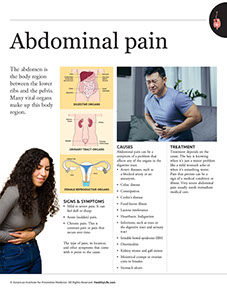
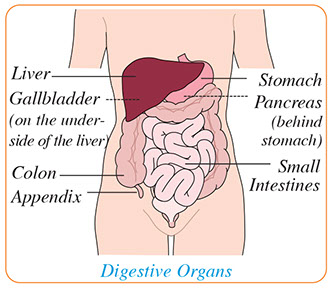
    The abdomen is the body region between the lower ribs and the pelvis. Many vital organs make up this body region.

    Signs & Symptoms

    The type of pain, its location, and other symptoms that come with it point to the cause.

    *  Mild to severe pain. It can feel dull or sharp.

    *  Acute (sudden) pain.

    *  Chronic pain. This is constant pain or pain that recurs over time.

    Illustration of digestive organs.
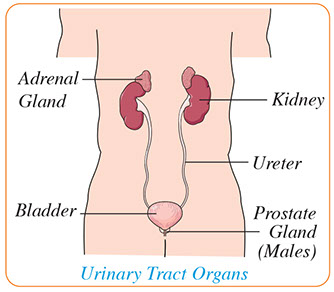
    Illustraion of urinary tract organs.
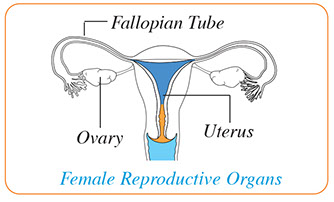
    Illustration of female reproductive organs.

    Causes

    Abdominal pain can be a symptom of a problem that affects any of the organs. Causes of abdominal pain include:

    *  Artery diseases, such as a blocked artery or an aneurysm.

    *  Celiac disease.

    *  Constipation.

    *  Crohn’s disease.

    *  Food poisoning.

    *  Gallstones.

    *  Heartburn. Indigestion.

    *  Infections, such as ones in the digestive tract and urinary tract.

    *  Irritable bowel syndrome (IBS).

    *  Kidney stones.

    *  Menstrual cramps or ovarian cysts in females.

    *  Reflux.

    *  Stomach ulcers.

    Treatment

    Treatment depends on the cause. The key is knowing when it’s just a minor problem like a mild stomach ache or when it’s something worse. Pain that persists can be a sign of a medical condition or illness. Very severe abdominal pain usually needs immediate medical care.

    Questions to Ask

    Self-Care / Prevention

    *  Find a comfortable position. Relax.

    *  Take an over-the-counter pain medicine as directed on the label.

    *  Apply a heating pad set on low (adults only).

    *  Don’t wear clothes that fit tight.

    *  Don’t exercise too hard.

    *  Use a hot water bottle on the area that aches.

    Crohn’s Disease

    Crohn’s Disease is a chronic problem that can cause abdominal pain and diarrhea. Other symptoms are fever, fatigue, and, at times, rectal bleeding or drainage. Symptoms occur when the disease flares up. This is followed by periods when symptoms go away or lessen.

    With Crohn’s disease, any part of the GI tract, from the mouth to the anus, can be inflamed. Usually, the colon and the last part of the small intestine, the ileum, are affected.

    Treatment for Crohn’s disease includes medicines, nutrition supplements, and surgery.

    Resources

    Crohn’s & Colitis Foundation of America

    www.ccfa.org

    Healthier at Home book by the American Institute for Preventive Medicine. www.HealthyLife.com. All rights reserved.

    © American Institute for Preventive Medicine

  • Food Poisoning

    Abdominal & Urinary Conditions

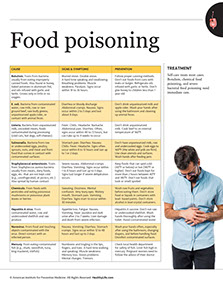
    Self-care treats most cases. Botulism, chemical food poisoning, and severe bacterial food poisoning need immediate care.

    Botulism

    Cause

    Toxin from bacteria usually from eating improperly canned foods. Also found in honey and oils infused with garlic. Grows only in little or no oxygen.

    Signs & Symptoms

    Blurred vision. Double vision. A hard time speaking and swallowing. Breathing problems. Muscle weakness. Paralysis. Signs occur within 4 to 36 hours.

    Prevention

    Follow proper canning methods. Boil home-canned food for 10 or more minutes. Don’t eat foods from cans with leaks or bulges. Refrigerate oils infused with garlic or herbs. Don’t give honey to children less than 1 year old.

    E. coli

    Cause

    Bacteria from contaminated water, raw milk, raw or rare ground beef, unpasteurized apple juice or cider, or contact with contaminated animal feces.

    Signs & Symptoms

    Diarrhea or bloody discharge. Abdominal cramps. Nausea. Signs occur within 2 to 5 days and last about 8 days.

    Prevention

    Don’t drink unpasteurized milk and apple cider. Wash your hands after using the bathroom and cleaning up animal feces.

    Listeria

    Cause

    Bacteria from unpasteurized milk, uncooked meats, foods contaminated during processing (cold cuts, hot dogs, soft cheeses).

    Signs & Symptoms

    Fever. Chills. Headache. Backache. Abdominal pain. Diarrhea. Often, signs occur within 48 to 72 hours, but can take up to 3 weeks to occur.

    Prevention

    Don’t drink unpasteurized milk. Cook beef to an internal temperature of 160ºF.

    Salmonella

    Cause

    Bacteria from raw or undercooked eggs, poultry, and meat and from food that comes in contact with contaminated surfaces.

    Signs & Symptoms

    Stomach pain. Diarrhea. Nausea. Chills. Fever. Headache. Signs occur within 8 to 12 hours and last up to 1 or 2 days.

    Prevention

    Don’t have unpasteurized milk, raw and undercooked eggs. Cook eggs to 160ºF (the white and yolk are firm). Use clean utensils and surfaces.

    Staphylococcal enterotoxin

    Cause

    Toxin from bacteria usually from meats, dairy foods, eggs, etc. that are not kept cold (e.g., unrefrigerated, at picnics, etc.) Also spread by human contact.

    Signs & Symptoms

    Severe nausea. Abdominal cramps. Diarrhea. Vomiting. Signs occur within 1 to 6 hours and last up to 3 days. Signs last longer if severe dehydration occurs.

    Prevention

    Keep foods that can spoil cold (40ºF or below) or hot (140ºF or higher). Don’t eat foods kept for more than 2 hours between 40ºF and 140ºF. Don’t eat foods that look or smell spoiled. Wash your hands often. Use clean utensils and surfaces.

    Chemicals

    Cause

    From foods with pesticides and eating poisonous mushrooms or poisonous plant leaves or berries.

    Signs & Symptoms

    Sweating. Dizziness. Mental confusion. Very teary eyes. Watery mouth. Stomach pain. Vomiting. Diarrhea. Signs start to occur within 30 minutes.

    Prevention

    Wash raw fruits and vegetables before eating them. Don’t store food or liquids in containers with lead- based paints. Don’t store alcohol in lead crystal containers.

    Hepatitis A virus

    Cause

    From contaminated water, raw and undercooked shellfish, oysters, clams, mussels, scallops, etc.

    Signs & Symptoms

    Appetite loss. Nausea. Vomiting. Fever. Jaundice and dark urine after 3 to 10 days. Liver damage and death from severe infection.

    Prevention

    Hepatitis A vaccine. Don’t eat raw or undercooked shellfish, oysters, etc.

    Norwalk-like viruses

    Cause

    From food and touching objects contaminated with the virus. Direct contact with an infected person.

    Signs & Symptoms

    Nausea. Vomiting. Diarrhea. Stomach cramps. Signs occur within 12 to 48 hours and last up to 2 days.

    Prevention

    Wash your hands often, especially after using the bathroom, changing diapers, and before handling food. Disinfect contaminated surfaces.

    Mercury

    Cause

    From eating contaminated fish (e.g., shark, swordfish, tuna, king mackerel, tilefish).

    Signs & Symptoms

    Numbness and tingling in the lips, fingers, and toes. A hard time walking and speaking. Muscle weakness. Memory loss. Mental changes. Tremors.

    Prevention

    Check local health department for safety of fish. Limit fish high in mercury. Pregnant women need to follow the advice of their doctor.

    Questions to Ask

    Self-Care / Prevention

    *  For chemical food poisoning, call the Poison Control Center (800.222.1222).

    *  Heed warnings for food products that could be harmful. News reports list these items. So does the FDA atwww.fda.gov.

    Healthier at Home book by the American Institute for Preventive Medicine. www.HealthyLife.com. All rights reserved.

    © American Institute for Preventive Medicine

  • Heat Exhaustion & Heat Stroke

    First Aid

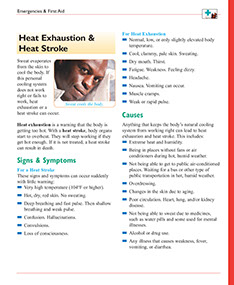
    Sweat evaporates from the skin to cool the body. If this personal cooling system does not work right or fails to work, heat exhaustion or a heat stroke can occur.

    Heat exhaustion is a warning that the body is getting too hot. With a heat stroke, body organs start to overheat. They will stop working if they get hot enough. If it is not treated, a heat stroke can result in death.

    Signs & Symptoms

    For a Heat Stroke

    These signs and symptoms can occur suddenly with little warning:

    *  Very high temperature (104ºF or higher).

    *  Hot, dry, red skin. No sweating.

    *  Deep breathing and fast pulse. Then shallow breathing and weak pulse.

    *  Confusion. Hallucinations.

    *  Convulsions.

    *  Loss of consciousness.

    For Heat Exhaustion

    *  Normal, low, or only slightly elevated body temperature.

    *  Cool, clammy, pale skin. Sweating.

    *  Dry mouth. Thirst.

    *  Fatigue. Weakness. Feeling dizzy.

    *  Headache.

    *  Nausea. Vomiting can occur.

    *  Muscle cramps.

    *  Weak or rapid pulse.

    Causes

    Anything that keeps the body’s natural cooling system from working right can lead to heat exhaustion and heat stroke. This includes:

    *  Extreme heat and humidity.

    *  Being in places without fans or air conditioners during hot, humid weather.

    *  Not being able to get to public air-conditioned places. Waiting for a bus or other type of public transportation in hot, humid weather.

    *  Overdressing.

    *  Changes in the skin due to aging.

    *  Poor circulation. Heart, lung, and/or kidney disease.

    *  Not being able to sweat due to medicines, such as water pills and some used for mental illnesses.

    *  Alcohol or drug use.

    *  Any illness that causes weakness, fever, vomiting, or diarrhea.

    Treatment

    A heat stroke is a medical emergency.

    Heat exhaustion may respond to self-care measures. If not, medical care is needed.

    Prevention

    *  Drink lots of liquids, especially if your urine is dark yellow. Drink water, sport drinks, such as Gatorade, etc.

    *  Do not stay in or leave anyone in a closed, parked car during hot weather.

    *  Don’t have drinks with alcohol or caffeine.

    *  Use caution when you are in the sun. At the first sign of heat exhaustion, get out of the sun. If you can, avoid midday heat. Do not do vigorous activity during the hottest part of the day (11:00 a.m. to 4:00 p.m.).

    *  Wear light, loose-fitting clothing, such as cotton, so sweat can evaporate. Wear a wide-brimmed hat with vents. Use an umbrella for shade.

    *  If you feel very hot, try to cool off. Open a window. Use a fan. Go to an air-conditioned place.

    *  Check with your doctor about sun exposure if you take:

    – Water pills.

    – Mood-altering medicines.

    – Some antibiotics, such as tetracycline.

    Questions to Ask

    Self-Care / First Aid

    First Aid for a Heat Stroke

    Call 9-1-1!

    Before Emergency Care Arrives

    *  Move the person to a cool place indoors or under a shady tree. Place the feet higher than the head to avoid shock.

    *  Remove clothing. Either wrap the person in a cold, wet sheet; sponge the person with towels or sheets that are soaked in cold water; or spray the person with cool water. Fan the person.

    *  Put ice packs or cold compresses on the neck, under the armpits, and on the groin area.

    *  Once the person’s temperature gets to 101ºF, place him or her in the Recovery Position. Do not lower the temperature further.

    *  Don’t give fever reducing medicine.

    *  Don’t use rubbing alcohol.

    First Aid for Heat Exhaustion

    *  Move to a cool place indoors or in the shade. Lie down.

    *  Loosen clothing.

    *  Drink fluids, such as cool or cold water. Add 1/2 teaspoon of salt to 1 quart of water. Sip this. Or, drink sport drinks, such as Gatorade, etc.

    *  Have salty foods, such as saltine crackers, if you tolerate them.

    *  Massage and stretch cramped muscles.

    Healthier at Home book by the American Institute for Preventive Medicine. www.HealthyLife.com. All rights reserved.

    © American Institute for Preventive Medicine

  • Irritable Bowel Syndrome (Ibs)

    Abdominal & Urinary Conditions

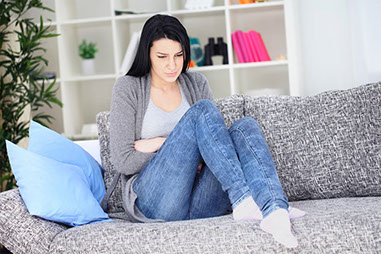
    Image of women sitting holding stomach in pain.

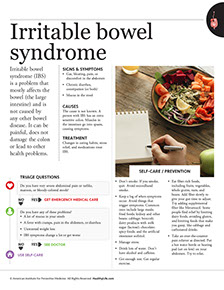
    Irritable bowel syndrome (IBS) is a problem that mostly affects the bowel (the large intestine) and is not caused by any other bowel disease. It can be painful, does not damage the colon or lead to other health problems.

    Signs & Symptoms

    *  Gas, bloating, pain, or discomfort in the abdomen.

    *  Chronic diarrhea, constipation (or both).

    *  Mucus in the stool.

    Causes

    The cause is not known. A person with IBS has an extra sensitive colon. Muscles in the intestines go into spasm, causing symptoms.

    Treatment

    Changes in eating habits, stress relief, and medications treat IBS.

    Questions to Ask

    Self-Care / Prevention

    *  Don’t smoke. If you smoke, quit. Avoid secondhand smoke.

    *  Maintain a healthy diet. Lose weight if you are overweight.

    *  Avoid constipation. Don’t strain to pass stool.

    *  Exercise to keep abdominal muscles strong. Follow your doctor’s advice.

    *  When you do sit ups, keep your knees bent and your feet flat on the floor.

    *  Follow proper lifting techniques.

    *  Wear a weight lifting belt to support the back when lifting.

    *  Wear a truss. This is a device that holds a hernia in place.

    *  For mild pain, take an over-the-counter medicine for pain. If even mild pain lasts longer than a week, see your doctor.

    Resources

    National Institute of Diabetes and Digestive and Kidney Diseases (NIDDK)

    www.niddk.nih.gov

    Healthier at Home book by the American Institute for Preventive Medicine. www.HealthyLife.com. All rights reserved.

    © American Institute for Preventive Medicine

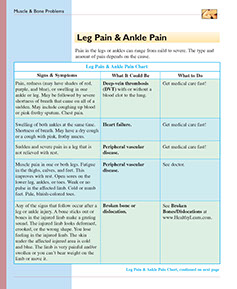
  • Leg Pain & Ankle Pain

    Bone & Muscle Problems

    Pain in the legs or ankles can range from mild to severe. The type and amount of pain depends on the cause.

    For Pain, in General

    *  Take an over-the-counter medicine for pain as directed on the label. If the pain is not better after a few doses, call your doctor.

    *  Use a heating pad (set on low), a hot pack, or a moist, warm towel on the area of pain. If the pain is due to an injury, don’t use heat for 48 hours. Use R.I.C.E.

    To Help Prevent Leg Pain & Ankle Pain

    *  Get to and stay at a healthy weight.

    *  Get regular exercise. This helps to keep ankle and leg muscles strong.

    *  Before you exercise, stretch and warm up your muscles. When you are done, cool them down.

    *  Protect your knees. Use knee pads when you garden or kneel. Always land on bent knees when jumping. Avoid deep knee bend exercises.

    *  Don’t wear high-heeled shoes. Keep your shoes in proper shape.

    *  Take good care of your feet.

    R.I.C.E.

    *  Rest the injured area for 24 to 48 hours.

    *  Ice the area as soon as possible. Keep doing this for 10 minutes every 2 hours for the first 48 hours. Use an ice pack, ice in a heavy plastic bag with a little water, a bag of frozen vegetables, etc. Put a thin towel between the ice pack and the skin.

    *  Compress the area. Wrap with an elastic bandage. Do not cut off circulation. Remove the bandage every 3 to 4 hours, for 15 to 20 minutes each time.

    *  Elevate the area above heart level, if possible. Place it on a pillow, folded blanket, stack of newspapers, etc.

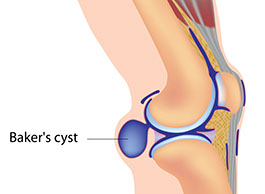
    Baker’s Cyst

    Illustration of baker's cyst.

    Signs & Symptoms

    Painless or painful swelling behind the knee. May feel like a water-filled balloon.

    What to Do

    Call doctor.

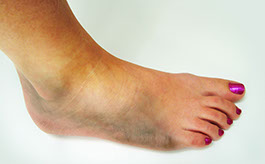
    Broken Bone or Dislocation

    Image of broken foot bone.

    Signs & Symptoms

    Any of the signs that follow occur after a leg or ankle injury. A bone sticks out or bones in the injured limb make a grating sound. The injured limb looks deformed, crooked, or the wrong shape. You lose feeling in the injured limb. The skin under the affected injured area is cold and blue. The limb is very painful and/or swollen or you can’t bear weight on the limb or move it.

    Bursitis

    Signs & Symptoms

    Pain and swelling around a knee or hip joint. The pain gets worse with movement. Fever (maybe).

    What to Do

    See doctor.

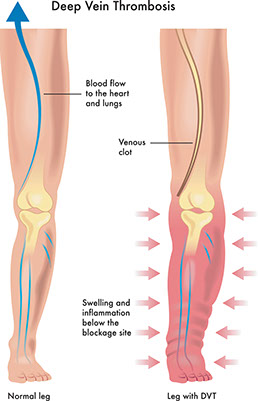
    Deep-vein thrombosis (DVT) with or without a blood clot to the lung

    Illustration of deep vein thrombosis.

    Signs & Symptoms

    Pain, redness (may have shades of red, purple, and blue), or swelling in one ankle or leg. May be followed by severe shortness of breath that came on all of a sudden. May include coughing up blood or pink-frothy sputum. Chest pain.

    What to Do

    Get medical care fast!

    Flu

    Signs & Symptoms

    Aches in leg muscles and joints with fever and/or chills. Headache. Dry cough. Sore throat. Fatigue.

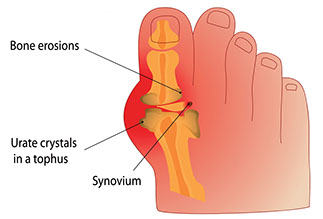
    Gout

    Illustration of gout.

    Signs & Symptoms

    Sudden, severe pain in a toe, knee, or ankle joint. The pain can be felt even when clothing is rubbed against the joint. The joint area is swollen, red, or purplish in color. It also feels warm, and is very tender to the touch.

    What to Do

    See doctor.

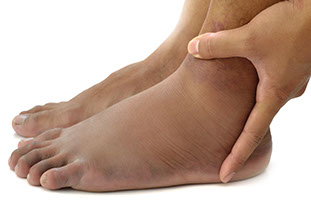
    Heart Failure

    Image of swollen feet.

    Signs & Symptoms

    Swelling of both ankles at the same time. Shortness of breath. May have a dry cough or a cough with pink, frothy mucus.

    What to Do

    Get medical care fast!

    Infection. Could also be Cellulitis.

    Signs & Symptoms

    Pain with fever, redness, tenderness, warmth and pus at a wound site. A red streak up the leg (rarely).

    What to Do

    See doctor.

    Leg Cramp

    Signs & Symptoms

    Sudden, sharp, tightening pain in the leg, often the calf. The muscle feels hard to the touch. The pain subsides after a minute or so and the muscle relaxes.

    Self-Care

    *  Walk on the leg.

    *  Shake the leg and then elevate it.

    *  Sit with your leg flat on the floor. Flex your foot upward, then toward your knee. Reach for your toes and pull them toward your knee. This stretches the calf muscles.

    *  Have someone massage the cramped muscle gently, but firmly.

    *  Apply a heating pad (set on low), a hot pack, or moist, warm towel to the muscle cramp.

    *  Rub the muscle that is cramping. Rub upward from the ankle toward the heart.

    (Note: Do not rub a leg if you suspect phlebitis or thrombosis.)

    To Prevent Leg Cramps

    *  Get good sources of calcium, potassium, and magnesium. See lists at left. Take calcium, potassium, and magnesium as advised by your doctor.

    *  Drink plenty of water and other fluids. Limit drinks with caffeine. Avoid drinks with alcohol. Doing these things can help prevent dehydration which could cause leg cramps.

    *  Warm up your muscles before you exercise. Cool down your muscles when you are done.

    *  With your doctor’s okay, wear elastic stockings while you are awake.

    *  Another way to stretch your calf muscles is to ride a stationary bicycle for a few minutes.

    *  Take a warm bath before bedtime.

    *  Sleep with loose-fitting blankets and night clothes. Keep your legs warm.

    *  If you have severe leg cramps or get them often, tell your doctor. Ask if any medication you take could cause your leg cramps. Ask for ways to treat your leg cramps.

    *  Before you go to bed, stretch your calf muscles. Here’s one way to do this:

    – Stand an arm’s length away from a wall. Lean against it with the palms of your hands.

    – Bend your left knee. Keep your right leg straight behind you. Keep both feet flat on the floor and your back straight.

    – Lean forward. Feel your right calf muscle stretch. Hold the stretch as you count to 10 slowly.

    – Repeat, switching leg positions.

    Lyme Disease

    Signs & Symptoms

    Muscle or joint pain and chronic swelling of the knee joints. These problems develop months or years after a deer-tick bite and a bulls-eye red rash with pale centers.

    What to Do

    See doctor.

    Osteoarthritis

    Signs & Symptoms

    Pain, stiffness, and sometimes swelling of the knee or ankle joints. Often, the joint has gotten tender over months or years and may look enlarged or deformed.

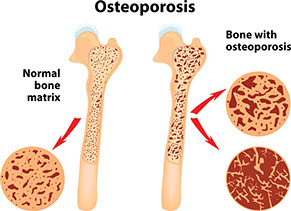
    Osteoporosis

    Illustration of osteoporosis.

    Signs & Symptoms

    Leg or ankle pain with gradual loss of height; stooped posture; backache; and/or past bone fractures, especially in the wrists and hips.

    Paget’s Disease

    This is a bone disorder that progresses slowly. Most persons with this disease do not develop symptoms.

    Signs & Symptoms

    Leg pain that radiates from the lower back. Pain or stiffness in the knees. Bowing of the legs or other bone deformity. Unexplained bone fractures. May have headache, dizziness, hearing loss, and/or ringing in the ears.

    What to Do

    See doctor.

    Self-Care / Prevention

    *  If needed, take an over-the-counter medicine for pain as directed on the label.

    *  Take other medicines as prescribed by your doctor.

    *  Get regular checkups to detect hearing loss.

    Peripheral Vascular Disease

    Signs & Symptoms

    Sudden and severe pain in a leg that is not relieved with rest.

    What to Do

    Get medical care fast!

    Signs & Symptoms

    Muscle pain in one or both legs. Fatigue in the thighs, calves, and feet. This improves with rest. Open sores on the lower leg, ankles, or toes. Weak or no pulse in the affected limb. Cold or numb feet. Pale, bluish-colored toes.

    What to Do

    See doctor.

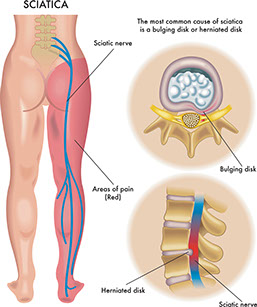
    Sciatica

    Illustration of sciatica.

    Signs & Symptoms

    Sharp pain from the buttocks down the leg. Numbness and tingling in the leg.

    Sprain, Strain, or Sport Injury

    Signs & Symptoms

    Pain in the leg or ankle after an injury that does not keep you from moving the limb.

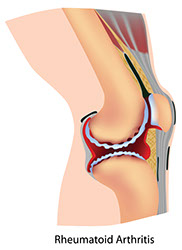
    Rheumatoid Arthritis

    Illustration of rheumatoid arthritis.

    Signs & Symptoms

    Pain, stiffness, and swelling, usually in both knees or ankle joints. The joint looks deformed. Weakness and fatigue. Dry mouth and dry, painful eyes.

    Varicose Veins

    Signs & Symptoms

    Pain or itching in the legs with swollen and twisted veins that look blue and are close to the surface of the skin. The veins bulge and feel heavy. Swelling in the legs and ankles.
    Healthier at Home book by the American Institute for Preventive Medicine. www.HealthyLife.com. All rights reserved.

    © American Institute for Preventive Medicine

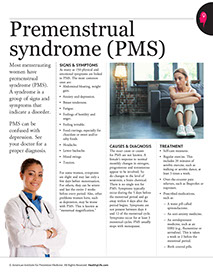
  • Premenstrual Syndrome (Pms)

    Women’s Health

    Four out of 10 menstruating women have premenstrual syndrome (PMS). A syndrome is a group of signs and symptoms that indicate a disorder.

    Signs & Symptoms

    As many as 150 symptoms are linked to PMS. The most common ones are:

    *  Abdominal bloating. Weight gain.

    *  Anxiety. Depression.

    *  Breast tenderness.

    *  Fatigue.

    *  Feelings of hostility and anger.

    *  Feeling cranky.

    *  Food cravings, especially for chocolate or sweet and/or salty foods.

    *  Headache.

    *  Mood swings.

    *  Tension.

    For some women, symptoms are slight and may last only a few days before menstruation. For others, they can be severe and last the entire 2 weeks before every period. Also, other problems women have, such as depression, may be worse with PMS. This is known as “menstrual magnification.”

    Causes

    The exact cause or causes for PMS are not known. A female’s response to normal monthly changes in estrogen, progesterone, and testosterone appear to be involved. So do changes in the level of seratonin, a brain chemical. With PMS, symptoms must occur within 2 weeks before the menstrual period and go away shortly after the period begins. Symptoms are not present between days 4 and 12 of the menstrual cycle. True PMS usually stops with menopause.

    Treatment

    *  Self-care measures.

    *  Regular exercise. This includes 20 minutes of aerobic exercise, such as walking or aerobic dance, at least 3 times a week.

    *  Medications. These include:

    – A water pill called spironolactone.

    – An anti-anxiety medicine.

    – An antidepressant medicine, such as an SSRI (e.g., fluoxentine or sertraline). This is taken a week or 2 before the menstrual period.

    – Birth control pills.

    Questions to Ask

    Self-Care / Prevention

    *  Get emotional support.

    *  Do aerobic exercises. Swim. Walk. Bicycle.

    *  Rest. Take naps if you need to.

    *  Learn to relax. Try deep breathing. Meditate. Do yoga. Take a warm bath. Get a massage.

    *  Eat carbohydrate-rich foods. Examples are whole grain breads and cereals, fruits, and vegetables.

    *  Have good sources of calcium, such as skim milk, nonfat yogurt, collard greens, and kale. Choose cereals and juices that have added calcium. Get good sources of magnesium, too. These include spinach; other green, leafy vegetables; and whole grain cereals.

    *  Try to avoid stress when you have PMS.

    *  Limit or avoid caffeine, alcohol, and cigarettes 2 weeks before your period is due.

    *  Limit salt, fat, and sugar.

    *  If you need to satisfy a food craving, do so with a small serving. For example, if you crave chocolate, have a small chocolate bar or add chocolate syrup to skim milk. If you crave salt, eat a small bag of pretzels.

    *  The vitamin and minerals listed below seem to help some females with PMS. Ask your doctor if you should take any of them and in what amounts.

    – Calcium.

    – Magnesium.

    – Vitamin E.

    Resources

    National Women’s Health Information Center

    www.womenshealth.gov

    Women's Self-Care book by the American Institute for Preventive Medicine. www.HealthyLife.com. All rights reserved.

    © American Institute for Preventive Medicine