Tag: cream

  • Eczema

    Skin Conditions

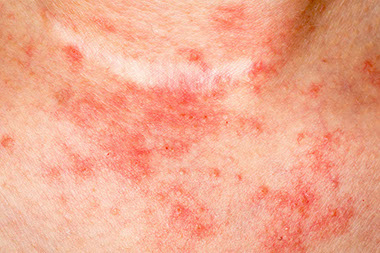
    Image of an eczema rash.

    Eczema (atopic dermatitis) is a chronic skin condition. It usually appears on the scalp, face, neck, or creases of the elbows, wrists, and knees. It usually improves as you get older, but can be a lifetime problem.

    Signs & Symptoms

    Patches of skin that are:

    *  Dry, red, and scaly

    *  Blistered and swollen

    *  Sometimes thick, discolored, or oozing and crusting

    Causes, Risk Factors & Care

    Eczema tends to run in families. It is also more common in persons who have allergies or asthma. Contact with cosmetics, dyes, deodorants, skin lotions, permanent press fabrics, and other allergens can aggravate eczema; so can wool fabrics, stress, exposure to extreme weather conditions, and eating foods, such as eggs, milk, seafood, or wheat products.

    Your doctor may prescribe antibiotics for skin infections and/or other medicines if self-care does not relieve symptoms.

    Self-Care

    *  Don’t scratch! This makes eczema worse. Your skin can get infected. Keep your fingernails cut short.

    *  Don’t take baths too often. Add bath oil to the water. Sponge bathe in between tub baths. Take quick showers.

    *  Use warm (not hot) water when you take a bath or shower.

    *  Use a mild soap or no soap at all on the areas of eczema.

    *  Don’t use wool clothes and blankets.

    *  Use a light, nongreasy and unscented lotion on your skin after you wash. Don’t use lotions that have alcohol. They can dry the skin.

    *  Try to keep from sweating. For example, don’t wear too many clothes for the weather.

    *  Wear rubber gloves when you do housework. Put talcum powder or cornstarch inside the gloves, or use latex gloves lined with cotton.

    *  Avoid foods, chemicals, cosmetics, and other things that make your eczema worse.

    When to Seek Medical Care

    Contact Doctor When:

    *  You have signs of an infection: Fever; and/or large amount of weeping or crusting skin areas.

    *  Your skin is red, you can’t stop scratching, and this keeps you from sleeping.

    *  You get no relief from self-care.
    Health at Home Lifetime book by the American Institute for Preventive Medicine. www.HealthyLife.com. All rights reserved.

    © American Institute for Preventive Medicine

  • Jock Itch

    Men’s Health

    Jock itch is an infection of the skin on the groin and upper inner thigh areas.

    Signs & Symptoms

    *  Redness.

    *  Itching.

    *  Raised red rash with borders. Center areas of the rash are dry with small scales.

    Causes

    Jock itch is usually caused by a fungus. It can also result from garments that irritate the skin. Jock itch is more likely to occur after taking antibiotics or steroids, or in persons who have diabetes or a weakened immune system.

    Treatment

    Over-the-counter antifungal creams treat most cases of jock itch. Stronger creams or an oral medicine can be prescribed, if needed.

    Questions to Ask

    Self-Care / Prevention

    To Treat Jock Itch

    *  Use over-the-counter antifungal cream, powder, or lotion for jock itch. Follow package directions.

    To Prevent Jock Itch

    *  Don’t wear tight, close-fitting clothing. Wear boxer shorts, not briefs. Put socks on before underwear. Fungus on the feet, such as from athlete’s foot can transfer to the groin. Change underwear often, especially after tasks that leave you hot and sweaty.

    *  Bathe or shower right after a workout. Don’t use antibacterial soaps. Dry the groin area well.

    *  Apply talc or other powder to the groin area to help keep it dry. If you sweat a lot or are very overweight, use a drying powder with miconazole nitrate.

    *  Wash workout clothes after each wearing. Don’t store damp clothing in a locker or gym bag.

    *  Sleep in the nude or in a nightshirt.

    *  Don’t share towels or clothes that have come in contact with the rash.

    Healthier at Home book by the American Institute for Preventive Medicine. www.HealthyLife.com. All rights reserved.

    © American Institute for Preventive Medicine