Tag: creativity

  • Move Outside The Exercise Box

    BE FIT

    Family dancing around.

    The more you move, the stronger your body will be and the better your heart, lungs, and other organs function. Any movement that gets your heart rate up counts as physical activity.

    At home

    *  Walk the dog.

    *  Play a family game of catch or frisbee.

    *  Add in some squats or lunges while you work in the kitchen.

    *  Do some light bodyweight exercises while you watch TV.

    At work

    *  Park farther away to get more walking time.

    *  Take the stairs.

    *  Set a timer for a five-minute movement break every 30 to 90 minutes.

    *  Walk at lunch or go up and down the stairs a few times.

    The weekend

    *  Choose a hobby that gets you moving, like an outdoor activity.

    *  Plan social gatherings that include movements like hiking or active games.

    *  Put on some music and make chore time fun and full of movement.

    *  Go sightseeing or choose a family outing that includes a long walk or hike.

    © American Institute for Preventive Medicine
  • Why You Need A Vacation

    WORK LIFE

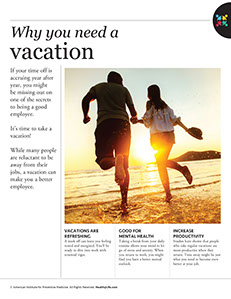
    Couple holding hands running into the ocean.

    If your time off is accruing year after year, you might be missing out on one of the secrets to being a good employee.

    It’s time to take a vacation! While many people are reluctant to be away from their jobs, a vacation can make you a better employee.

    Vacations are refreshing

    A week off can leave you feeling rested and energized. You’ll be ready to dive into work with renewed vigor.

    Good for mental health

    Taking a break from your daily routine allows your mind to let go of stress and anxiety. When you return to work, you might find you have a better mental outlook.

    Increase productivity

    Studies have shown that people who take regular vacations are more productive when they return. Time away might be just what you need to become even better at your job.

    © American Institute for Preventive Medicine
  • Forget The Ipad, Let Kids Play In Sand Or With Blocks

    FAMILY LIFE

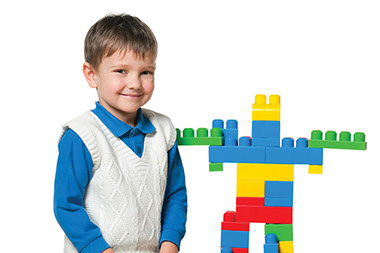
    Image of young boy playing with blocks.

    When it comes to finding toys to encourage a child’s interest in science, sometimes simpler can be better and yet more sophisticated.

    Creighton University professor of physics Dr. Gintaras Duda suggests looking at toys with a tactile, kinesthetic component that can help illustrate scientific principles while allowing a child to come up with new ways to play.

    “If you can get kids to be creative, that’s the main thing,” Dr. Duda said. “Let them sort of figure out how these things work. It’s great scientific learning. Yes, kids love to play with the iPad, but if you dump a bin of Legos out in front of them and let them go, you’ll always be surprised at what they come up with.”

    Hands-on building blocks, tower sets, and a strangely behaving substance known as kinesthetic sand, which shares certain properties with regular sand but performs differently as it’s being molded, have all captured children’s attention and imagination.

    © American Institute for Preventive Medicine

  • Summer With Less Screens

    FAMILY LIFE

    Image of grandparents playing basketball with grandkids.

    When the kids are home from school for the summer, it can be hard to avoid technology. Kids (and adults) are used to constant entertainment from the television, computer, smartphones and tablets. But, reducing screen time can have many benefits for families:

    *  Boredom is a great way for kids to learn to be creative. If they’re always entertained by a screen, kids don’t have a chance to be bored and to learn how to entertain themselves.

    *  Sitting in front of a screen means time not spent getting exercise.

    *  Some studies suggest that too much screen time can lead to behavior problems, lack of good thinking skills, and sleep problems.

    It’s not always realistic to avoid screens completely. If you can’t, look for ways to limit screen time. Try these tips:

    *  Choose certain times of day to be screen-free. For instance, you can choose to let kids have 30 minutes of screens after lunch, but morning is for screen-free play.

    *  Watch the clock. Decide on a daily limit of screen time, such as two hours, and stick with it. Consistent rules help kids know what they can expect each day, so there is less complaining.

    *  Visit the library. If you can get kids to read books they like, they won’t miss screens as much.

    *  When you do watch TV, watch shows together as a family. Choose educational shows when possible.

    Have a plan

    A family media plan can help you stay on track with screen time. Create yours atwww.healthychildren.org/English/media.

    © American Institute for Preventive Medicine