Tag: cues

  • Breaking Bad Habits Now

    WELL-BEING

    Doctor holding an apple in hand wrap with a tape measure.

    If you’re hoping to make a change, these tips may help:

    Avoid.If certain places or people make you want to engage in unhealthy habits, try your best to stay away.

    Replace.Focus on what you can do instead of the bad habit. For instance, take a walk or drink a glass of water.

    Plan.If you know you’ll be tempted with a bad habit, practice what you can do. Picture yourself not giving in. Have a plan for yourself.

    Buddy up.Ask a friend or family member to support you. They can cheer you on and encourage you when you need it.

    Source: National Institutes of Health

    © American Institute for Preventive Medicine

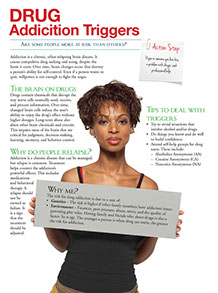
  • Drug Addiction Triggers

    Substance Use & Abuse

    Are some people more at risk than others?

    Addiction is a chronic, often relapsing brain disease. It causes compulsive drug seeking and using, despite the harm it costs. Over time, brain changes occur that destroy a person’s ability for self-control. Even if a person wants to quit, willpower is not enough to fight the urges.

    The brain on drugs

    Drugs contain chemicals that disrupt the way nerve cells normally send, receive, and process information. Over time, changed brain cells reduce the user’s ability to enjoy the drug’s effect without higher dosages. Long-term abuse also alters other brain chemicals and circuits. This impairs areas of the brain that are critical for judgment, decision-making, learning, memory, and behavior control.

    Why do people relapse?

    Addiction is a chronic disease that can be managed, but relapse is common. Treatment helps counter the addiction’s powerful effects. This includes medications and behavioral therapy. A relapse should not be viewed as failure. It is a sign that the treatment should be adjusted.

    Why me?

    The risk for drug addiction is due to a mix of:

    *  Genetics – The risk is higher if other family members have addiction issues.

    *  Environment – Finances, peer pressure, abuse, stress, and the quality of parenting play roles. Having family and friends who abuse drugs is also a factor. So is age. The younger a person is when drug use starts, the greater the risk for addiction.

    Tips to deal with triggers:

    *  Try to avoid situations that involve alcohol and/or drugs.

    *  Do things you know and do well to build confidence.

    *  Attend self-help groups for drug users. These include:

    – Alcoholics Anonymous (AA)

    – Cocaine Anonymous (CA)

    – Narcotics Anonymous (NA)

    Action Step

    If you or someone you love has a problem with drugs, seek professional help.

    Page from Ways to Well-Being book by the American Institute for Preventive Medicine. www.HealthyLife.com. All rights reserved.

    © American Institute for Preventive Medicine

  • Alter Your Eating Cues

    Healthylife® Weigh

    Part 4

    Rye sandwich with ricotta, herbs and basil.

    Eating cues are things that prompt you to eat. They come from links your brain has made between eating and other events. When done over and over again, the event itself triggers eating. Some examples of events that trigger eating are:

    *  Morning coffee breaks: Doughnuts, sweet rolls

    *  Watching football on TV: Potato chips, beer

    *  Shopping at the mall: Big cookies, soft pretzels, soda, specialty coffee

    *  Going to a movie: Buttered popcorn, soda, candy

    *  Going out to celebrate: Large meals, desserts, alcoholic beverages

    *  Attending sporting events: Beer, hot dogs, nachos with cheese, peanuts

    Focus on triggers that you face most often and that lead you to eat foods high in added sugar, saturated fat, and/or sodium.

    It is possible to break these links. The more you practice a new behavior, the stronger it becomes. You may want to replace eating with a non-eating behavior. Or, you may want to practice choosing a healthier food or drink at that time.

    Ways to Alter Eating Cues

    *  Eat a snack before going somewhere (including out to eat).

    *  If allowed, bring your own healthy snack.

    *  Bring or buy a “fun-sized” or small portion of the treat you are craving (if available).

    *  Eat meals and snacks in one specified place at home, such as the kitchen or dining room table.

    *  Never eat while standing-always be seated.

    *  Do no other activity, such as watching TV, while eating.

    *  Try to eat meals at the same time each day.

    *  Take along bottled water and high fiber snacks to places that trigger high-calorie drinking and eating.

    *  Take a walk break instead of a morning coffee break.

    *  Avoid walking by places that tempt you to eat while you shop.

    *  Go to places, be with people and/or do things not associated with eating.

    *  Take longer to eat a meal.

    *  Use utensils to eat.

    *  Put your fork or spoon down between bites.

    *  Chew & swallow each bite before taking another one.

    *  Take sips of water between bites.

    *  Split a meal or snack with someone else.

    © American Institute for Preventive Medicine

  • Physical Vs. Emotional Hunger

    Healthylife® Weigh

    Part 6

    Close up shot of pizza on table, with group of people sitting around and picking up a portion.

    Eat when you are physically hungry. Know the difference between physical and emotional hunger.

    Physical Hunger

    *  Your stomach feels empty.

    *  Comes on gradually and can be postponed.

    *  You feel sluggish and need energy.

    *  You haven’t eaten for several hours.

    * You are hungry enough to eat anything.

    Emotional Hunger

    *  You have a psychological desire to eat.

    *  Comes on suddenly and feels urgent.

    *  You only want certain foods.

    *  You eat something because it looks or smells good, even though your hunger is satisfied.

    *  You eat as a response to boredom, not the physical need to eat.

    Q: Is my hunger physical or emotional?

    A: Yes, I am physically hungry

    Ways to Manage Hunger

    *  Eat meals at regular times and intervals every day.

    *  Exercise regularly.

    *  Eat snacks that are high in fiber and/or protein:

    – Raw and cooked veggies

    – A piece of fruit

    – Unbuttered popcorn

    – Trail mix with nuts, seeds and  dried fruit

    *  Drink water throughout the day.

    A: No, I am emotionally hungry

    Ways to Manage a Craving

    *  Do an activity that takes your mind off of food. Walk to another room.

    *  Go for a walk or do your favorite exercise.

    *  Do a burst of exercise, like 10 jumping jacks, squats, or lunges.

    *  Take 10 deep breaths as you stretch.

    *  Drink a glass of water.

    *  Wait 10 minutes. Re-evaluate the hunger.

    *  Have a small amount of the specific food you are craving. If you are worried you can’t control your portion, skip this tip.

    *  Use the tips in this section for managing the emotion.

    © American Institute for Preventive Medicine

  • Recognize When Something Is Bothering You

    Healthylife® Weigh

    Part 6

    Couple having dinner at restaurant.

    Identify what forces are at play. These may be positive or negative emotions that are pushing you to do something you don’t need or want to do.

    The following emotions that trigger less healthy eating.

    *  Anger

    *  Anxiety

    *  Boredom

    *  Depression

    *  Frustration

    *  Insecurity

    *  Stress

    *  Celebration

    Write other feelings you have that trigger feelings of hunger:

    *  Accept that you are having these feelings. Rather than trying to change how you feel, focus on changing your response to these feelings.

    *  Keep a journal to determine what triggers lead you to emotional eating.

    For negative emotions, did eating food solve the situation? Chances are it did not. Food does not solve emotional problems. It never has and it never will. Food simply keeps you from dealing with the issue at hand. When the last bite is eaten, the problem is still there.

    Positive emotions, like joy and comradery, may cause you to overeat. Think of a time when you were celebrating and over-ate.

    Avoid feeling guilty if you have overeaten or chosen less healthy foods. The feeling of guilt can make digestion difficult or lead to more overeating.

    © American Institute for Preventive Medicine