Tag: daily

  • Eat Your Greens

    HEALTHY EATING

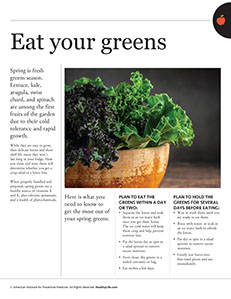
    Variety of greens.

    Spring is fresh greens season. Lettuce, kale, arugula, swiss chard, and spinach are among the first fruits of the garden due to their cold tolerance and rapid growth.

    While they are easy to grow, their delicate leaves and short shelf life mean they won’t last long in your fridge. How you clean and store them will determine whether you get a crisp salad or a bitter bite.

    When properly handled and prepared, spring greens are a healthy source of vitamins A and K, plus calcium, potassium, and a wealth of phytochemicals.

    Here is what you need to know to get the most out of your spring greens:

    Plan to eat the greens within a day or two:

    *  Separate the leaves and soak them in an ice-water bath once you get them home. The ice-cold water will keep them crisp and help prevent nutrient loss.

    *  Pat the leaves dry or spin in a salad spinner to remove excess moisture.

    *  Store clean, dry greens in a sealed container or bag.

    *  Eat within a few days.

    Plan to hold the greens for several days before eating:

    *  Wait to wash them until you are ready to eat them.

    *  Rinse with water, or soak in an ice water bath to refresh the leaves.

    *  Pat dry or spin in a salad spinner to remove excess moisture.

    *  Gently tear leaves into bite-sized pieces and use immediately.
    © American Institute for Preventive Medicine
  • Eat Your Vitamins For Good Health

    HEALTHY EATING

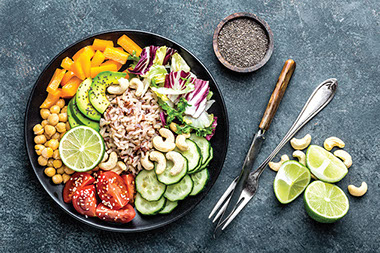
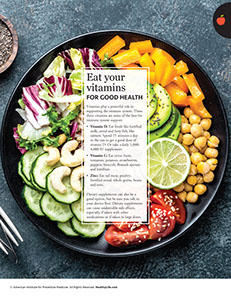
    Bowl of vegetables with rice and chickpeas.

    Vitamins play a powerful role in supporting the immune system. These three vitamins are some of the best for immune system support:

    *  Vitamin D: Eat foods like fortified milk, cereal and fatty fish, like salmon. Spend 15 minutes a day in the sun to get a good dose of vitamin D. Or take a daily 1,000-4,000 IU supplement.

    *  Vitamin C: Eat citrus fruits, tomatoes, potatoes, strawberries, peppers, broccoli, Brussels sprouts and kiwifruit.

    *  Zinc: Eat red meat, poultry, fortified cereal, whole grains, beans and nuts.

    Dietary supplements can also be a good option, but be sure you talk to your doctor first. Dietary supplements can cause undesirable side effects, especially if taken with other medications or if taken in large doses.

    © American Institute for Preventive Medicine
  • Walk Your Way To Fitness

    Fitness

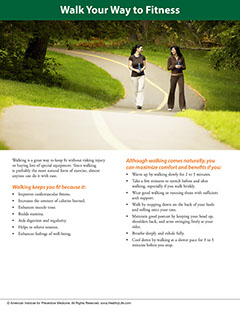
    Image of couple power walking.

    Walking is a great way to keep fit without risking injury or buying lots of special equipment. Since walking is probably the most natural form of exercise, almost anyone can do it with ease.

    Walking keeps you fit because it:

    *  Improves cardiovascular fitness.

    *  Increases the amount of calories burned.

    *  Enhances muscle tone.

    *  Builds stamina.

    *  Aids digestion and regularity.

    *  Helps to relieve tension.

    *  Enhances feelings of well-being.

    Although walking comes naturally, you can maximize comfort and benefits if you:

    *  Warm up by walking slowly for 2 to 3 minutes.

    *  Take a few minutes to stretch before and after walking, especially if you walk briskly.

    *  Wear good walking or running shoes with sufficient arch support.

    *  Walk by stepping down on the back of your heels and rolling onto your toes.

    *  Maintain good posture by keeping your head up, shoulders back, and arms swinging freely at your sides.

    *  Breathe deeply and exhale fully.

    *  Cool down by walking at a slower pace for 3 to 5 minutes before you stop.

    Page image from A Year of Health Hints book by the American Institute for Preventive Medicine. www.HealthyLife.com. All rights reserved.

    © American Institute for Preventive Medicine

  • 7 Daily Health Habits

    General Health Conditions

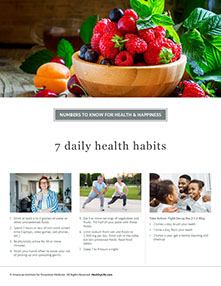
    A wooden bowl filled with berries.

    1.  Drink at least 6 to 8 glasses of water or other unsweetened fluids.

    2.  Spend 2 hours or less of non-work screen time (laptops, video games, cell phones, etc.).

    3.  Be physically active for 30 or more minutes.

    4.  Wash your hands often to lower your risk of picking up and spreading germs.

    5.  Eat 5 or more servings of vegetables and fruits. Fill half of your plate with these foods.

    6.  Limit sodium from salt and foods to 2,300 mg per day. Omit salt at the table. Eat less processed foods. Read food labels.

    7.  Sleep 7 to 9 hours a night.

    Take Action: Fight Decay the 2-1-2 Way

    *  2 times a day, brush your teeth

    *  1 time a day, floss your teeth

    *  2 times a year, get a dental cleaning and checkup

    Health at Home Lifetime book by the American Institute for Preventive Medicine. www.HealthyLife.com. All rights reserved.

    © American Institute for Preventive Medicine