Tag: dairy

  • Bone Up On Calcium & Vitamin D

    Nutrition

    Build and maintain healthy bones and teeth.

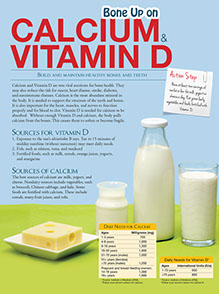
    Calcium and Vitamin D are two vital nutrients for bone health. They may also reduce the risk for cancer, heart disease, stroke, diabetes, and autoimmune diseases. Calcium is the most abundant mineral in the body. It is needed to support the structure of the teeth and bones. It is also important for the heart, muscles, and nerves to function properly and for blood to clot. Vitamin D is needed for calcium to be absorbed. Without enough Vitamin D and calcium, the body pulls calcium from the bones. This causes them to soften or become fragile.

    Sources for vitamin D:

    1.  Exposure to the sun’s ultraviolet B rays. Ten to 15 minutes of midday sunshine (without sunscreen) may meet daily needs.

    2.  Fish, such as salmon, tuna, and mackerel

    3.  Fortified foods, such as milk, cereals, orange juices, yogurts, and margarine

    Sources of calcium:

    The best sources of calcium are milk, yogurt, and cheese. Non dairy sources include vegetables, such as broccoli, Chinese cabbage, and kale. Some foods are fortified with calcium. These include cereals, many fruit juices, and tofu.

    Daily Needs for Calcium*

    Ages

    1-3 years

    4-8 years

    9-18 years

    19-50 years

    51-70 years (males)

    51+ years (females)

    >70 years (males)

    Pregnant and breast-feeding women:

    14-18 years

    19+ years

    Milligrams (mg)

    700

    1,000

    1,300

    1,000

    1,000

    1,200

    1,300

    1,000

    * Source: Institute of Medicine (IOM).

    * Follow your doctor’s advice for calcium.

    Daily Needs for Vitamin D*

    Ages

    1-70 years

    >70 years

    International Units (IUs)

    600

    800

    * Source: Institute of Medicine (IOM). The National Osteoporosis Foundation advises 400-800 IUs for adults under age 50 years; 800-1,000 IUs for adults age 50 years and older.

    * Follow your doctor’s advice for vitamin D.

    Action Step

    Have at least two servings of nonfat or low-fat milk, yogurt or cheese a day. Eat green leafy vegetables and foods fortified with Vitamin D.

    Page from Ways to Well-Being book by the American Institute for Preventive Medicine. www.HealthyLife.com. All rights reserved.

    © American Institute for Preventive Medicine

  • Easy Ways To Tolerate Milk

    Nutrition

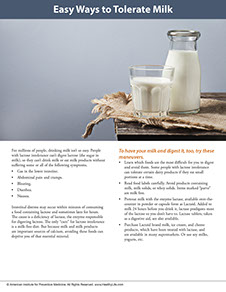
    For millions of people, drinking milk isn’t so easy. People with lactose intolerance can’t digest lactose (the sugar in milk), so they can’t drink milk or eat milk products without suffering some or all of the following symptoms.

    *  Gas in the lower intestine.

    *  Abdominal pain and cramps.

    *  Bloating.

    *  Diarrhea.

    *  Nausea.

    Intestinal distress may occur within minutes of consuming a food containing lactose and sometimes lasts for hours. The cause is a deficiency of lactase, the enzyme responsible for digesting lactose. The only “cure” for lactose intolerance is a milk-free diet. But because milk and milk products are important sources of calcium, avoiding these foods can deprive you of that essential mineral.

    To have your milk and digest it, too, try these maneuvers.

    *  Learn which foods are the most difficult for you to digest and avoid them. Some people with lactose intolerance can tolerate certain dairy products if they eat small portions at a time.

    *  Read food labels carefully. Avoid products containing milk, milk solids, or whey solids. Items marked “parve” are milk free.

    *  Pretreat milk with the enzyme lactase, available over-the-counter in powder or capsule form as Lactaid. Added to milk 24 hours before you drink it, lactase predigests most of the lactose so you don’t have to. Lactase tablets, taken as a digestive aid, are also available.

    *  Purchase Lactaid brand milk, ice cream, and cheese products, which have been treated with lactase, and are available in many supermarkets. Or use soy milks, yogurts, etc.

    Page from A Year of Health Hints book by the American Institute for Preventive Medicine. www.HealthyLife.com. All rights reserved.

    © American Institute for Preventive Medicine

  • Get Your Recommended Daily Calcium

    Nutrition

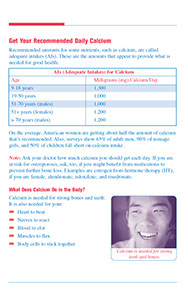
    Recommended amounts for some nutrients, such as calcium, are called adequate intakes (AIs). These are the amounts that appear to provide what is needed for good health.

    Note: Ask your doctor how much calcium you should get each day. If you are at risk for osteoporosis, ask, too, if you might benefit from medications to prevent further bone loss. Examples are estrogen from hormone therapy (HT), if you are female; alendronate; raloxifene; and risedronate.

    What Does Calcium Do in the Body?

    Calcium is needed for strong bones and teeth. It is also needed for your:

    *  Heart to beat

    *  Nerves to react

    *  Blood to clot

    *  Muscles to flex

    *  Body cells to stick together

    Milk, yogurt, cheese, soy milk, tofu, collard greens, and broccoli are good sources of calcium. (See “Calcium Content in Foods” chart.) If you don’t drink milk because you can’t digest the sugar in milk (lactose intolerance), do the following:

    *  Have milk products that already have lactase added to them.

    *  Drink milk fermented by certain bacteria (acidophilus milk), if tolerated.

    *  Take commercial preparations of lactase (which can be added as drops or taken as pills) when you have lactose-containing foods.

    *  Have soy milk and other food products with added calcium.

    Some persons who can’t digest milk sugar (lactose) can tolerate aged cheeses, yogurt with active cultures, and possibly small amounts of dairy foods if eaten with meals and snacks.

    If you can’t tolerate milk products at all, eat nondairy food sources of calcium (soymilk, beans, tofu, broccoli, kale, collard greens, spinach, fish with small bones). Have food items that are fortified with calcium, such as some orange and apple juices and calcium fortified cereal products. (See “Calcium Content in Foods” chart and check food labels.)

    Labels do not list calcium in milligrams (mg), but as a percentage of the daily value (DV). The DV for calcium is based on 1,000 mg of calcium per day. It’s easy to figure out calcium in mg. Just add zero to the % DV. Examples are given in the chart below.

    Calcium Content in Foods

    Calcium Supplements

    (Check with your doctor or dietitian about taking calcium supplements.)

    Calcium supplements should not be used in persons with a history of calcium-containing kidney stones. Supplemental calcium may also worsen chronic constipation and interfere with iron absorption.

    If you do take calcium supplements:

    *  Drink at least 6 to 8 glasses of water per day.

    *  Avoid taking more than 500 to 600 mg at one time. Take calcium with meals.

    *  Avoid bone meal or dolomite. These could contain lead or other toxic metals.

    *  Avoid taking calcium supplements with iron supplements and laxatives. These can reduce calcium absorption.

    There are many forms of calcium supplements. Look for the amount in milligrams of elemental calcium that a source provides. Choose calcium supplements that have calcium carbonate, calcium citrate, and/or calcium gluconate.

    {Note: Beware of marketing claims for “coral calcium” products which promote them to prevent or treat cancer, heart disease, lupus, and multiple sclerosis. The Federal Trade Commission (FTC) has charged some marketers of this with making false and unsubstantiated claims about the product’s health benefits.}

    Should I Take a Vitamin D Supplement If I Take a Calcium Supplement?

    Vitamin D helps the body absorb and use calcium. You can get vitamin D, daily, from vitamin D fortified dairy products. Other food sources are salt-water fish, egg yolks, and liver. You can also get vitamin D from direct exposure to sunlight on your skin. In general, about 15 minutes of direct sunlight per day gives you the amount of vitamin D needed for a day. Persons who are elderly or homebound often do not get adequate sun exposure to get enough vitamin D. Also, during winter, sunlight in the Northern U.S. is not intense enough to let the body build up enough vitamin D. Check with your doctor or health care provider about the need for a vitamin D supplement. Some calcium supplements also contain vitamin D.

    On the average, American women are getting about half the amount of calcium that’s recommended. Also, surveys show 65% of adult men, 90% of teenage girls, and 50% of children fall short on calcium intake.

    How Do I Get My Adequate Intake for Calcium?

    You can get your Adequate Intake (AI) for calcium by having good food sources of calcium and by taking calcium supplements, if necessary.

    Can I Get Too Much Calcium?

    Whether or not you tolerate milk products, if you use calcium supplements, do so wisely. You can easily consume too much calcium with the use of calcium-fortified foods, calcium supplements, and antacids. Long term excessive intakes of calcium might decrease the absorption of other minerals and promote kidney stone formation. Your goal should be to get adequate, rather than, excessive amounts of calcium. Aim to get your Adequate Intake (AI) amount or the amount recommended by your doctor.
    Page from HealthyLife Weigh book by the American Institute for Preventive Medicine. www.HealthyLife.com. All rights reserved.

    © American Institute for Preventive Medicine

  • Lactose Intolerance

    Abdominal & Urinary Conditions

    Image of various of different dairy products.

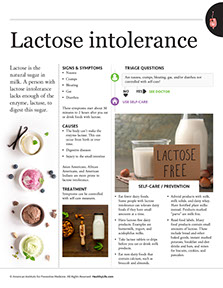
    Lactose is the natural sugar in milk. A person with lactose intolerance lacks enough of the enzyme, lactase, to digest this sugar.

    Signs & Symptoms

    *  Nausea.

    *  Cramps.

    *  Bloating.

    *  Gas.

    *  Diarrhea.

    These symptoms start about 30 minutes to 2 hours after you eat or drink foods with lactose.

    Causes

    *  The body can’t make the enzyme lactase. This can occur from birth or over time.

    *  Digestive diseases.

    *  Injury to the small intestine.

    Asian Americans, African Americans, and American Indians are more prone to lactose intolerance.

    Treatment

    Symptoms can be controlled with self-care measures.

    Questions to Ask

    Self-Care / Prevention

    *  Eat fewer dairy foods. Some people with lactose intolerance can tolerate dairy foods if they have small amounts at a time.

    *  Have lactose-free dairy products. Have ones that reduce lactose with bacterial cultures. Examples are buttermilk, yogurt, and acidophilus milks.

    *  Take over-the-counter drops or pills that have the enzyme lactase when you have dairy foods.

    *  If the above measures don’t help, don’t have products with milk, milk solids, and dairy whey. Have soy milk instead. Products marked “parve” are milk free.

    *  Read food labels. Many food products contain small amounts of lactose. These include bread and other baked goods, instant mashed potatoes, breakfast and diet drinks and bars, and mixes for biscuits, cookies, and pancakes.

    Healthier at Home book by the American Institute for Preventive Medicine. www.HealthyLife.com. All rights reserved.

    © American Institute for Preventive Medicine

  • Men Need Calcium, Too

    Men’s Health

    Image of calcium rich dairy products.

    Much has been written about the importance of calcium for women’s health, but men need calcium, too. Although osteoporosis is more prevalent in women, it can strike men. And studies have suggested that calcium may play some role in controlling blood pressure for some people-something worth asking your physician about.

    In addition to eating foods high in calcium-like fat-free or low-fat milk, cheese, and yogurt-you can protect your bones by performing a weight- bearing exercise like walking regularly, by avoiding over-consumption of alcohol, and by getting adequate vitamin D (from either fortified milk or sunshine).

    Medications like corticosteroids or Dilantin can interfere with calcium absorption, so if you’re taking these medications, find out if you should also take a calcium supplement.

    A Year of Health Hints book by the American Institute for Preventive Medicine. www.HealthyLife.com. All rights reserved.

    © American Institute for Preventive Medicine

  • Dairy

    Healthylife® Weigh

    Part 2

    Dairy products.

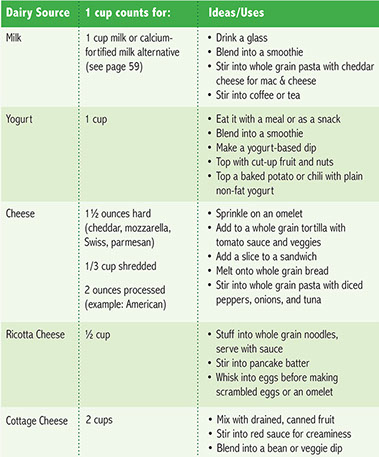
    The dairy group includes milk and foods made from milk. Dairy provides calcium, vitamin D (milk), healthy fats, and protein. Milk alternatives (such as those made from soy) are included if they are fortified with calcium.

    Chart showing dairy sources and ideas.

    Dairy Alternatives

    Many people avoid lactose-containing milk due to an intolerance or preference. Lactose is the sugar in milk that causes digestive problems if you are lactose intolerant. You can obtain many of the nutrients found in milk by eating or drinking lactose-free dairy or fortified dairy alternatives.

    Tips for Reducing Problems with Lactose

    You may be able to consume dairy by having it a different way.

    *  Choose smaller servings of dairy at each meal or snack.

    *  Consume dairy with other foods to slow the digestive process.

    *  Experiment with different dairy products. You may have problems with milk, but are okay with cultured milk products like yogurt.

    *  Take lactase enzyme tablets or drops to help you digest the lactose.

    Dairy alternatives include soy milk, almond milk, rice milk, cashew milk, oat milk, and coconut milk. These milks and products made with them (like yogurt) count toward your daily needs if they are fortified with calcium.

    Calcium

    Calcium is needed for strong bones and teeth. It is also needed for your:

    *  Heart to beat

    *  Nerves to react

    *  Blood to clot

    *  Muscles to flex

    *  Body cells to stick together

    If you cannot tolerate dairy, you can also obtain calcium from these foods:

    *  Calcium-fortified juices, cereals, and breads

    *  Tofu, tempeh, and other fortified soy products

    *  Small bones in canned fish (sardines, salmon with bones)

    *  Leafy greens (collard and turnip greens, kale, bok choy)

    Calcium-fortified foods and beverages may not provide the other nutrients found in dairy products. Try to fulfill your dairy group needs from dairy most of the time.

    © American Institute for Preventive Medicine

  • Dairy 2

    Healthylife® Weigh

    Menus & Recipes

    Dairy products.

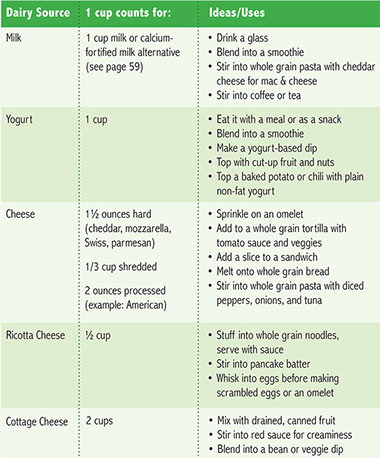
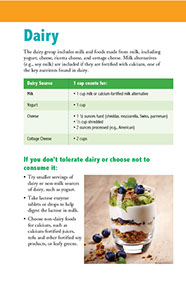
    The dairy group includes milk and foods made from milk, including yogurt, cheese, ricotta cheese, and cottage cheese. Milk alternatives  (e.g., soy milk) are included if they are fortified with calcium, one of the key nutrients found in dairy.

    Chart showing dairy sources and ideas.

    If you don’t tolerate dairy or choose not to consume it:

    *  Try smaller servings of dairy or non-milk sources of dairy, such as yogurt.

    * Take lactose enzyme tablets or drops to help digest the lactose in milk.

    * Choose non-dairy foods for calcium, such as calcium-fortified juices, tofu and other fortified soy products, or leafy greens.

    © American Institute for Preventive Medicine