Tag: Dental & Mouth

  • When To Consider Crowns

    Dental & Mouth Concerns

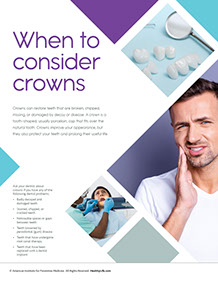
    Crowns can restore teeth that are broken, chipped, missing, or damaged by decay or disease. A crown is a tooth-shaped porcelain cap that fits over the natural tooth. Crowns improve your appearance, but they also protect your teeth and prolong their useful life.

    Ask your dentist about crowns if you have any of the following dental problems.

    *  Badly decayed and damaged teeth.

    *  Stained, chipped, or cracked teeth.

    *  Noticeable spaces or gaps between teeth.

    *  Teeth loosened by periodontal (gum) disease.

    *  Teeth that have undergone root canal therapy.

    image of dentist with patient.
    A Year of Health Hints book by the American Institute for Preventive Medicine. www.HealthyLife.com. All rights reserved.

    © American Institute for Preventive Medicine

  • Cold Sores

    Dental & Mouth Concerns

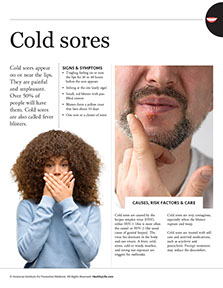
    Cold sores appear on or near the lips. They are painful and unpleasant. Nearly 1 in 3 people will have them. Cold sores are also called fever blisters.

    Signs & Symptoms

    *  Tingling feeling on or near the lips for 36 to 48 hours before the sore appears

    *  Itching at the site (early sign)

    *  Small, red blisters with pus-filled centers

    *  Blisters form a yellow crust that lasts about 10 days

    *  One sore or a cluster of sores

    Causes, Risk Factors & Care

    Cold sores are caused by the herpes sim- plex virus (HSV), either HSV-1 (this is most often the cause) or HSV-2 (the usual cause of genital herpes). The virus lies dormant in the body and can return. A fever, cold, stress, cold or windy weather, and strong sun exposure are triggers for outbreaks.

    Cold sores are very contagious, especially when the blisters rupture and weep.

    Cold sores are treated with self-care and antiviral medications, such as acyclovir and penciclovir. Prompt treatment may reduce the discomfort.

    Self-Care / Prevention

    *  Keep the sore clean and dry.

    *  Apply antiviral medication, if prescribed, to the affected area at the first sign of a cold sore.

    *  Try an over-the-counter treatment, such as Abreva antiviral cream, Campho-Phenique, Blistex, or make a paste with cornstarch and water. Dab some on the sore with a cotton swab.

    *  Dab aloe vera or petroleum jelly on the sore. Use a cotton swab.

    *  Apply ice to the sore or suck on a frozen popsicle.

    *  Take an over-the-counter medicine for pain.

    *  Learn to relax. Meditate, practice yoga, etc. Learn to deal with stress, too.

    *  Avoid foods that are sour, spicy, or acidic. These may irritate the sores.

    *  Take vitamin C and/or zinc supplements, as directed by your doctor.

    *  Apply cool compresses when the sores have crusted over.

    *  Try not to worry or be too self-conscious. This only makes the situation worse.

    Prevention

    To avoid getting or spreading cold sores:

    *  Don’t share drinking glasses, towels, or cooking utensils.

    *  Don’t touch cold sores with your fingers. If you do touch the cold sores, do not touch your eyes. This could cause a serious eye infection.

    *  Wash your hands often.

    *  Avoid kissing or direct skin contact with the sores. This includes oral sex. The virus that causes cold sores can cause genital herpes, too.

    *  When in the sun, wear a hat and use a sunblock with a sun-protective factor (SPF) of 15 or more on the lips.

    *  Use a lip balm on cold or windy days.

    *  Ask your doctor about a prescribed antiviral medicine to take or apply when you feel a cold sore coming on.

    *  Try to figure out what triggers the sores. Once you identify a trigger, do what you can to avoid it.

    *  Get regular exercise.

    Medical Care

    Contact Doctor When:

    *  You have eye pain with the cold sore. Pain from the sore limits normal activity.

    *  The cold sore has lasted longer than 2 weeks.

    *  Cold sores appear 4 or more times a year.

    *  Cold sores appeared after you started a new medicine or are present while taking steroid medicines.

    *  Eczema

    Healthier at Home book by the American Institute for Preventive Medicine. www.HealthyLife.com. All rights reserved.

    © American Institute for Preventive Medicine

  • 10 Dental Problems And What To Do About Them

    SELF-CARE CORNER

    Image of dentist.

    1.Bad breath:For fresh breath, brush twice a day, floss daily, drink plenty of water, see your dentist regularly, and don’t smoke. If bad breath persists, talk to your dentist or doctor.

    2.Tooth decay:When cavities are left untreated, they can get worse and lead to infections and loss of teeth. Get cavities filled quickly to prevent more extensive dental work and serious health problems.

    3.Gum disease:Without treatment, gum disease gets worse and can lead to tooth loss. Symptoms include bleeding, swollen, tender, and red gums, but it often has no signs in the early stages.

    4.Stained teeth:Some medications, foods, and drinks can yellow or discolor teeth. Many dentists offer whitening treatments that can help.

    5.Mouth sores:A salt water rinse can help with canker sores or irritation from braces or other dental appliances. But, if sores last a week or more, your dentist should take a look.

    6.Tooth sensitivity:Special toothpaste or dental procedures, such as crowns, can help relieve sensitivity to hot or cold. Look for the ADA (American Dental Association) seal of acceptance on products before buying.

    7.Enamel erosion:Acidic foods and drinks can wear away at the tooth’s protective enamel over time. This can lead to tooth sensitivity and discoloration. Drinking water and milk instead of soda can help avoid this problem.

    8.Wisdom teeth:Third molars, or wisdom teeth, often need to be removed during the teen or young adult years. If the jaw doesn’t have enough space for them, they can crowd or damage the other teeth.

    9.Oral cancer:Cancer of the mouth, lips or gums affects about 50,000 Americans every year. Symptoms may include sores, patches, lumps, or pain in the mouth. If you notice any of these signs, contact your dentist or doctor.

    10.Teeth grinding:Teeth grinding can lead to cracks and damage to the teeth enamel. A special guard made by your dentist can help protect your teeth. Beware of mouth guards sold over the counter as they can fit improperly and become a choking hazard when you sleep.

    Even if you don’t have any tooth pain or other symptoms, it’s important to see your dentist every six months. Regular checkups with your dentist can prevent or treat these problems so you can keep a healthy, bright smile for life.

    Sources: American Dental Association, Oral Health Foundation
    © American Institute for Preventive Medicine

  • Ways To Relieve Dental Anxiety

    Dental & Mouth Concerns

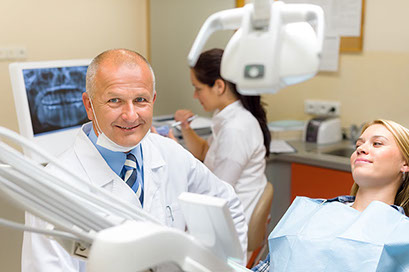
    Image of smiling dentist.

    If you dread going to the dentist, ask about anxiety-reducing techniques you can use to help stay calm and relaxed. Some effective strategies follow.

    *  Tell your dentist how you feel. Some dentists are trained in helping anxious patients overcome fear of dental procedures.

    *  Ask if you can listen to soothing music or relaxation CDs played on a stereo headset. Ask if the dentist offers a hand-held device that allows you to press a button to stop the dentist’s drill.

    *  If your dentist is skilled at hypnosis, consider being hypnotized.

    *  If your anxiety is more than you can handle, see a psychotherapist who specializes in treating dental anxiety and other phobias.

    Have a routine cleaning and checkup every six months. Preventive care will minimize the need for more painful and lengthy treatment.

    A Year of Health Hints book by the American Institute for Preventive Medicine. www.HealthyLife.com. All rights reserved.

    © American Institute for Preventive Medicine

  • Avoid Gum Disease With These Tips

    SELF-CARE CORNER

    Image of variety of cleaning supplies.

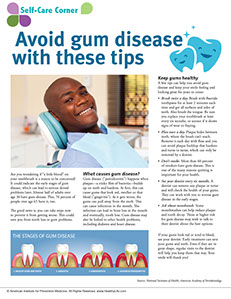
    Are you wondering if “a little blood” on your toothbrush is a reason to be concerned? It could indicate the early stages of gum disease, which can lead to serious dental problems later. Almost half of adults over age 30 have gum disease. Plus, 70 percent of people over age 65 have it, too.

    The good news is, you can take steps now to prevent it from getting worse. This could save you from tooth loss or gum problems.

    What causes gum disease?

    Gum disease (“periodontitis”) happens when plaque-a sticky film of bacteria-builds up on teeth and hardens. At first, this can cause gums that look red, swollen or that bleed (“gingivitis”). As it gets worse, the gums can pull away from the teeth. This can cause infections in the mouth. The infection can lead to bone loss in the mouth and eventually, tooth loss. Gum disease may also be linked to other health problems, including diabetes and heart disease.

    Keep gums healthy

    A few tips can help you avoid gum disease and keep your smile feeling and looking great for years to come:

    *  Brush twice a day. Brush with fluoride toothpaste for at least 2 minutes each time and get all surfaces and sides of teeth. Also brush the tongue. Be sure you replace your toothbrush at least every six months, or sooner if it shows signs of wear or fraying.

    *  Floss once a day. Plaque hides between teeth, where the brush can’t reach. Remove it each day with floss and you can avoid plaque buildup that hardens and turns to tartar, which can only be removed by a dentist.

    *  Don’t smoke. More than 60 percent of smokers have gum disease. This is one of the many reasons quitting is important for your health.

    *  See your dentist every six months. A dentist can remove any plaque or tartar and will check the health of your gums. They can work with you to reverse gum disease in the early stages.

    *  Ask about mouthwash. Some mouthwashes can help reduce plaque and tooth decay. Those at higher risk for gum disease may wish to talk to their dentist about the best options.

    If your gums look red or tend to bleed, see your dentist. Early treatment can save your gums and teeth. Even if they are in great shape, regular visits to the dentist will help you keep them that way. Your smile will thank you!

    Sources: National Institutes of Health, American Academy of Periodontology

    © American Institute for Preventive Medicine

  • Dental Hygiene

    Dental & Mouth Concerns

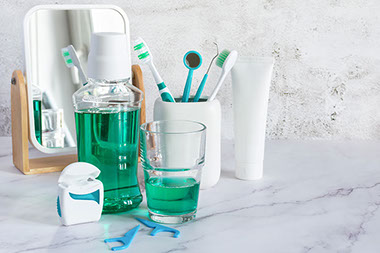
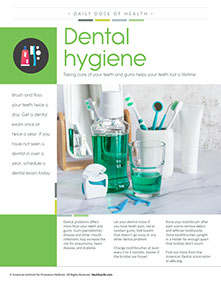
    Dental hygiene products, tooth brush, tooth paste, mouth wash, etc.

    Taking care of your teeth and gums helps your teeth last a lifetime.

    Brush and floss your teeth twice a day. Get a dental exam once or twice a year. If you have not seen a dentist in over a year, schedule a dental exam today.

    Dental problems affect more than your teeth and gums. Gum (periodontal) disease and other mouth infections may increase the risk for pneumonia, heart disease, and diabetes.

    Let your dentist know if you have tooth pain, red or swollen gums, bad breath that doesn’t go away or any other dental problem.

    Change toothbrushes at least every 3 to 4 months; sooner if the bristles are frayed.

    Rinse your toothbrush after each use to remove debris and leftover toothpaste. Store toothbrushes upright in a holder far enough apart that bristles don’t touch.

    Find out more from the American Dental Association atada.org.

    Health at Home Lifetime book by the American Institute for Preventive Medicine. www.HealthyLife.com. All rights reserved.

    © American Institute for Preventive Medicine

  • Give Cold Sores The Cold Shoulder

    SELF-CARE CORNER

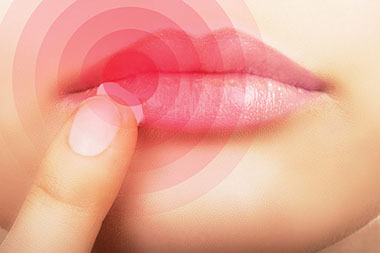
    Close up image of cold sore.

    Cold sores – those bothersome blisters that appear around the mouth – can be painful and embarrassing. Cold sores are spread by a virus, but not the cold virus.

    Cold sores happen when a person gets infected with the herpes simplex virus (HSV). This is why cold sores may also be called “oral herpes.” HSV is very contagious. It can be easily spread person to person by:

    *  Sharing drinks or utensils

    *  Kissing

    *  Touching a cold sore or infected person’s face, and then touching your face

    *  Touching an infected person’s face and then touching someone else (this is how many babies get HSV)

    *  Sharing personal items like razors or towels

    *  Intimate or sexual contact

    *  Touching the same object that was touched by a person with a cold sore.

    The type of HSV that causes cold sores is usually HSV  type 1. Another type of HSV,  known as HSV type 2, is most often spread through sexual contact. HSV type 2 is the virus that usually causes genital herpes. But, either type of  HSV can cause cold sores or genital herpes.

    What triggers cold sores?

    Once you get HSV, there is no cure. It stays in the body forever and it may cause repeated outbreaks of cold sores. Certain things may trigger a cold sore outbreak. Things that bring down the body’s defenses may allow the virus to become active and produce a cold sore again. Many people get cold sores due to:

    *  Stress

    *  Hormone changes such as menstruation or pregnancy

    *  Illnesses, like the flu or a cold

    *  Sun exposure

    *  Certain foods

    Don’t spread cold sores!

    Even if you stay healthy and avoid stress, there is no way to prevent all cold sore outbreaks. So, it’s best to try and avoid spreading cold sores and HSV to others.

    The best way to avoid spreading cold sores is to wash your hands frequently and avoid contact that could spread the sore. If you feel a cold sore coming on, don’t share drinks and other items listed in this article. Avoid touching your mouth and don’t touch people’s faces or kiss people, especially babies, children and people with weakened immune systems.

    Treating cold sores

    If you get cold sores frequently, ask your doctor about medicines that can help. Some antiviral medicines can reduce the number of outbreaks. They also help lower the chance of spreading HSV to others.

    Some over-the-counter medicines can also help speed up the healing time of a sore, but they won’t prevent outbreaks or stop the spread of HSV. Ask your doctor if one of these treatments might work for you.

    Sources: American Academy of Pediatrics, Centers for Disease Control and Prevention, National Institutes of Health

    © American Institute for Preventive Medicine

  • Dry Mouth

    Dental & Mouth Concerns

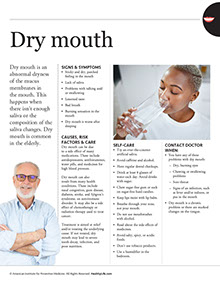
    Dry mouth is an abnormal dryness of the mucus membranes in the mouth. This happens when there isn’t enough saliva or the composition of the saliva changes. Dry mouth is common in the elderly.

    Signs & Symptoms

    *  Dry, parched feeling in the mouth

    *  Lack of saliva

    *  Problems with talking and/or swallowing

    *  Lessened taste

    *  Bad breath

    *  Burning sensation in the mouth

    *  Dry mouth is worse after sleeping

    Causes, Risk Factors & Care

    Dry mouth can be due to a side effect of many medications. These include antidepressants, antihistamines, water pills, and medicines for high blood pressure.

    Dry mouth can also result from many health conditions. These include nasal congestion, gum disease, diabetes, stroke, and Sjögren’s syndrome, an autoimmune disorder.

    Treatment is aimed at relief and/or treating the underlying cause. If not treated, dry mouth may lead to severe tooth decay, infection, and poor nutrition.

    Self-Care

    *  Try an over-the-counter artificial saliva, such as Xerolube.

    *  Avoid caffeine and alcohol.

    *  Have regular dental checkups.

    *  Drink at least 8 glasses of water each day. Avoid drinks with sugar.

    *  Avoid salty, spicy, or acidic foods.

    *  Don’t use tobacco products.

    *  Take a multivitamin that your doc- tor recommends.

    *  Use a humidifier in the bedroom.

    *  Keep your lips moist with lip balm.

    *  Breathe through your nose, not your mouth.

    *  Do not use mouthwashes with alcohol.

    *  Read about the side effects of medicines.

    Medical Care

    Contact Doctor When:

    *  The dry mouth is a chronic problem or there are marked changes on the tongue.

    *  You have any of these problems with dry mouth:

    – Dry, burning eyes

    – Chewing or swallowing problems

    – Sore throat

    – Signs of an infection, such as fever and/or redness, or pus in the mouth

    Health at Home Lifetime book by the American Institute for Preventive Medicine. www.HealthyLife.com. All rights reserved.

    © American Institute for Preventive Medicine

  • Is Bad Breath A Health Problem?

    WELL-BEING

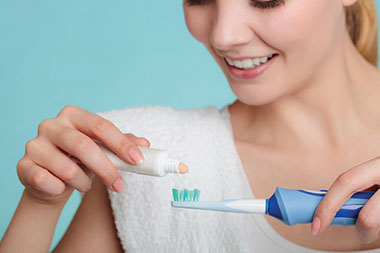
    Image of women placing tooth paste on tooth brush.

    After eating foods like onions or garlic, your mouth may smell less than pleasing to those around you. Usually, brushing, flossing and using mouthwash or sugar-free mints can get your mouth fresh again. Although bad breath is sometimes just bad luck, it can also be a sign of a health problem.

    When bad breath is normal

    Many people have bad breath in the morning. Even if you brushed and flossed well before bed, you may not have great-smelling breath when you wake up. This is because bacteria in the mouth multiply and make sulfur compounds while you sleep. These sulfur compounds usually smell stinky.

    Morning breath may be worse than normal if you slept with your mouth open. This is because the bacteria and sulfur compounds thrive in a dry mouth. If you have a stuffy nose from a cold, your morning breath may be worse for a few days. Floss at night before bed to help minimize morning breath.

    Other ways to help prevent dry mouth include drinking plenty of water throughout the day and avoid using tobacco products.

    Tooth decay and gum disease

    Tooth decay, also known as cavities, can smell bad because bacteria can live inside the holes or cavities in the teeth.

    Not brushing and flossing every day can lead to gum disease. This is sometimes called gingivitis or periodontitis. With gum disease, sticky bacteria called plaque collects in the mouth. Plaque smells bad, and people with gum disease usually have more plaque than normal.

    Besides persistent bad breath, signs of tooth decay and gum disease include:

    *  Tooth pain

    *  A very sensitive tooth

    *  Red, swollen or bleeding gums

    *  Loose teeth

    *  Gums pulling away from the teeth

    See your dentist if you notice these problems. Gum disease and cavities can be treated, but it’s better if you catch these problems early. Most people should see their dentist every six months for a checkup and cleaning.

    Health problems and bad breath

    Bad breath can be a sign of a health problem. If bad breath continues despite good dental care, it may be a sign of a sinus or throat infection. Breath that smells fruity or like rotten apples can be a sign of diabetes. In rare cases, breath that smells like ammonia or rotten eggs can be a sign of a serious kidney or liver problem.

    Your breath may be trying to tell you something. See your dentist and doctor if you’re concerned about bad breath so you can find out the cause and get treatment if needed.

    Sources: American Dental Association, National Institutes of Health

    © American Institute for Preventive Medicine

  • Foods That Fight Cavities

    Dental & Mouth Concerns

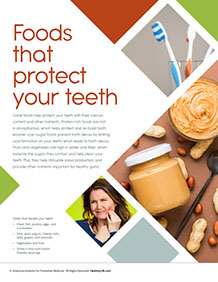
    Image of a dish with food fighting items to fight cavities.

    Now you know how sticky sweets promote tooth decay. What you may not realize is that some foods prevent tooth decay. Research studies show that certain foods, like cheese and peanut butter, counteract the acids in the mouth that wear down the tooth enamel. (Be careful to buy plain, all-natural peanut butter, without added sugar of any kind.) Other tooth-saving foods include:

    *  Nuts and seeds.

    *  Meat, fish, poultry, and eggs.

    *  Olives and dill pickles.

    *  Milk, plain yogurt, and cheese.

    A Year of Health Hints book by the American Institute for Preventive Medicine. www.HealthyLife.com. All rights reserved.

    © American Institute for Preventive Medicine