Tag: dental

  • Safety Tips For Your Teeth

    Dental & Mouth Concerns

    Your teeth are vulnerable to nicks, chips, stains, and strains. To protect your teeth from damage and injury, take these precautions.

    *  Don’t chew ice, pens, or pencils.

    *  Don’t use your teeth to open paper clips or otherwise function as tools.

    *  If you smoke a pipe, don’t bite down on the stem.

    *  If you grind your teeth at night, ask your dentist if you should be fitted for a bite plate to prevent tooth grinding.

    *  If you play contact sports like football or hockey, wear a protective mouth guard.

    *  Always wear a seat belt when riding in a car.

    *  Avoid sucking on lemons or chewing aspirin or vitamin C tablets. The acid wears away tooth enamel.
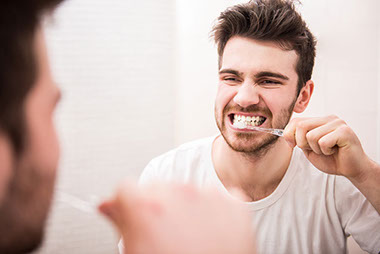
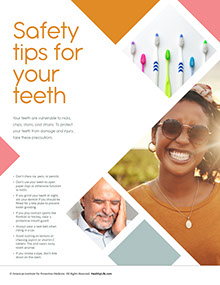
    Image of man brushing teeth.
    A Year of Health Hints book by the American Institute for Preventive Medicine. www.HealthyLife.com. All rights reserved.

    © American Institute for Preventive Medicine

  • Sticky Snacks Spell Trouble

    Dental & Mouth Concerns

    Image of chewy candy.

    Sticky, chewy foods-like cough drops, hard candies, and sugary pastries-cling to the surface of your teeth, where they mix with bacteria in the mouth and produce acids that gradually wear away tooth enamel. Granola bars, many dried fruits, and foods or cereals sweetened with honey, corn syrup, or molasses are particularly troublesome. But starchy foods like bread, crackers, potato chips, or pretzels-which are turned into sugar by saliva-can also be a problem. To minimize this difficulty:

    *  If you eat fruit and other foods high in sugars, eat them with meals.  Finish a meal with foods that help buffer acid formation.

    *  Don’t eat sweets, fruit, or starchy foods before bedtime. Saliva production slows down overnight, enabling cavity-causing bacteria to feed on food particles more easily. Brushing your teeth doesn’t effectively prevent the problem.

    *  Avoid sugar-sweetened gum and beverages. Chew a sugar-free gum instead, especially one with the artificial sweetener xylitol.

    A Year of Health Hints book by the American Institute for Preventive Medicine. www.HealthyLife.com. All rights reserved.

    © American Institute for Preventive Medicine

  • Take A Good Look At Your Gums

    Dental & Mouth Concerns

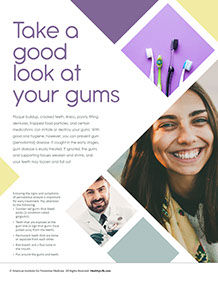
    Image of man at the dentist office looking at xrays.

    Plaque buildup, crooked teeth, illness, poorly fitting dentures, trapped food particles, and certain medications can irritate or destroy your gums. With good oral hygiene, however, you can prevent gum (periodontal) disease. If caught in the early stages, gum disease is easily treated. If ignored, the gums and supporting tissues wither, and your teeth may loosen and fall out.

    Knowing the signs and symptoms of periodontal disease is important for early treatment. Pay attention to the following:

    *  Swollen red gums that bleed easily (a condition called gingivitis).

    *  Teeth that are exposed at the gum line (a sign that gums have pulled away from the teeth).

    *  Permanent teeth that are loose or separate from each other.

    *  Bad breath and a foul taste in the mouth.

    *  Pus around the gums and teeth.

    A Year of Health Hints book by the American Institute for Preventive Medicine. www.HealthyLife.com. All rights reserved.

    © American Institute for Preventive Medicine

  • Seal Out Tooth Decay

    Dental & Mouth Concerns

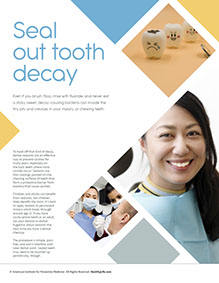
    Image of older women smiling and pointing to her mouth.

    Even if you brush, floss, rinse with fluoride, and never eat a sticky sweet, decay-causing bacteria can invade the tiny pits and crevices in your molars, or chewing teeth. To head off that kind of decay, researchers have developed sealants-special plastic coatings that form an effective barrier between bacteria and the chewing surfaces of your teeth, where fluoride is less effective.

    Approximately 90 percent of the cavities in school-age children occur in crevices in the back teeth, so sealants are best applied when the permanent molars first emerge. (The American Dental Association reports a significant decrease in cavities in children who have sealants applied to their teeth.) But that doesn’t mean sealants aren’t useful or appropriate for adults who have cavity-prone teeth. So ask your dentist or dental hygienist about sealants the next time you have a dental checkup.

    The procedure is simple, pain-free, and won’t interfere with later dental work. Sealed teeth may need to be touched up periodically, though.

    A Year of Health Hints book by the American Institute for Preventive Medicine. www.HealthyLife.com. All rights reserved.

    © American Institute for Preventive Medicine