Tag: diarrhea

  • What To Do If Turista Strikes

    Healthy Travel

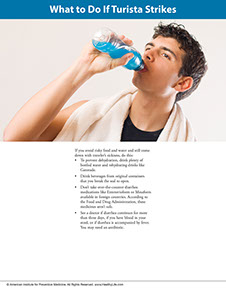
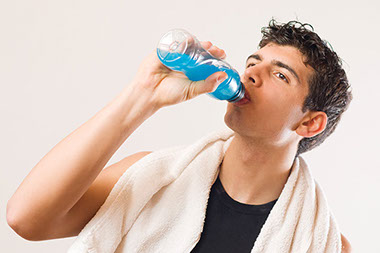
    Image of man rehydrating with liquids.

    If you avoid risky food and water and still come down with traveler’s sickness, do this:

    *  To prevent dehydration, drink plenty of bottled water and rehydrating drinks like Gatorade.

    *  Drink beverages from original containers that you break the seal to open.

    *  Don’t take over-the-counter diarrhea medications like Enterovioform or Mesaform available in foreign countries. According to the Food and Drug Administration, these medicines aren’t safe.

    *  See a doctor if diarrhea continues for more than three days, if you have blood in your stool, or if diarrhea is accompanied by fever. You may need an antibiotic.

    Page image from A Year of Health Hints book by the American Institute for Preventive Medicine. www.HealthyLife.com. All rights reserved.

    © American Institute for Preventive Medicine

  • Diarrhea

    Abdominal & Urinary Conditions

    Image of medicine in pink bottle.

    Diarrhea occurs when body wastes are discharged from the bowel more often and in a more liquid state than usual.

    Signs & Symptoms

    *  Frequent watery, loose stools.

    *  Cramping or pain in the abdomen.

    Causes

    Common causes are infections that affect the digestive system, food allergies, overuse of laxatives or alcohol, and taking some antibiotics. Diarrhea is also a symptom of lactose intolerance, diverticulitis, food poisoning, ulcerative colitis, Crohn’s disease, and irritable bowel syndrome (IBS).

    Treatment

    Self-care usually treats diarrhea. The goal is to replace lost fluids and minerals to prevent dehydration.

    Questions to Ask

    Self-Care / Prevention

    *  If vomiting is also present, treat for vomiting first.

    *  To prevent dehydration:

    – Drink plenty of water and other fluids, such as sports drinks, broths, and Kool-Aid (which usually has less sugar than soda).

    – Avoid drinks with caffeine or alcohol.

    – Avoid having high “simple” sugar drinks, like apple juice, grape juice, and sodas. These can make the diarrhea persist. Or, dilute juices and sodas with water.

    If you have signs of dehydration seek medical care. Until you get care, drink fluids:

    *  Broths and sports drinks.

    *  For children less than 2 years old, give over- the-counter mixtures, such as Pedialyte as advised by their doctors.

    *  If you breast-feed, give only as much milk as your baby wants. Feed every 2 hours.

    *  Avoid caffeine and alcohol.

    *  Choose foods that don’t upset your stomach.

    *  Do not have foods that are greasy, high in fiber, or very sweet.

    *  Avoid milk, but try yogurt that has live cultures of lactobacillus acidophilus (unless you are lactose intolerant).

    *  Follow a light diet. Eat foods that are easy to digest, such as:

    – Bananas.

    – Plain rice.

    – Boiled potatoes.

    – Toast.

    – Crackers.

    – Cooked carrots.

    – Baked chicken without the skin or fat.

    – Soups with vegetables and noodles or rice.

    *  Don’t exercise too hard.

    *  Adults can try an over-the-counter medicine, such as Imodium A-D or Pepto-Bismol. Follow the directions on the label. {Note: Stools can become black after taking Pepto- Bismol. Also, do not give aspirin or any medication that has salicylates, such as Pepto- Bismol, to anyone under 19 years of age, due to the link to Reye’s syndrome.}

    *  Wash your hands after you go to the toilet and before you prepare food. Use paper towels to dry your hands. Throw the towels away.

    Resources

    National Institute of Diabetes and Digestive and Kidney Diseases (NIDDK)www2.niddk.nih.gov
    Healthier at Home book by the American Institute for Preventive Medicine. www.HealthyLife.com. All rights reserved.

    © American Institute for Preventive Medicine

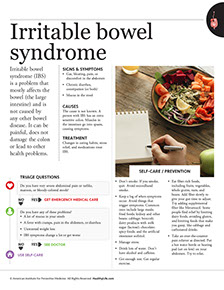
  • Irritable Bowel Syndrome (Ibs)

    Abdominal & Urinary Conditions

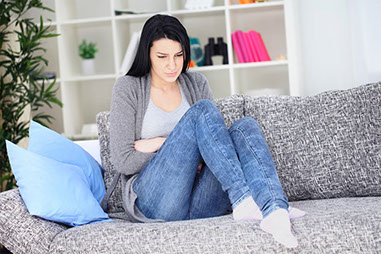
    Image of women sitting holding stomach in pain.

    Irritable bowel syndrome (IBS) is a problem that mostly affects the bowel (the large intestine) and is not caused by any other bowel disease. It can be painful, does not damage the colon or lead to other health problems.

    Signs & Symptoms

    *  Gas, bloating, pain, or discomfort in the abdomen.

    *  Chronic diarrhea, constipation (or both).

    *  Mucus in the stool.

    Causes

    The cause is not known. A person with IBS has an extra sensitive colon. Muscles in the intestines go into spasm, causing symptoms.

    Treatment

    Changes in eating habits, stress relief, and medications treat IBS.

    Questions to Ask

    Self-Care / Prevention

    *  Don’t smoke. If you smoke, quit. Avoid secondhand smoke.

    *  Maintain a healthy diet. Lose weight if you are overweight.

    *  Avoid constipation. Don’t strain to pass stool.

    *  Exercise to keep abdominal muscles strong. Follow your doctor’s advice.

    *  When you do sit ups, keep your knees bent and your feet flat on the floor.

    *  Follow proper lifting techniques.

    *  Wear a weight lifting belt to support the back when lifting.

    *  Wear a truss. This is a device that holds a hernia in place.

    *  For mild pain, take an over-the-counter medicine for pain. If even mild pain lasts longer than a week, see your doctor.

    Resources

    National Institute of Diabetes and Digestive and Kidney Diseases (NIDDK)

    www.niddk.nih.gov

    Healthier at Home book by the American Institute for Preventive Medicine. www.HealthyLife.com. All rights reserved.

    © American Institute for Preventive Medicine

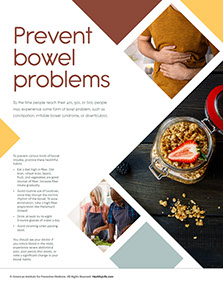
  • How To Prevent Bowel Problems

    Mature Health: Over Age 50

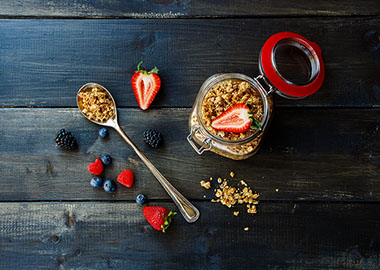
    Image of fiber rich grains and berries.

    By the time people reach their forties, fifties, or sixties, they will usually experience some form of bowel trouble such as diverticulosis, irritable bowel, and constipation.

    To prevent various kinds of bowel trouble, practice these healthful habits.

    *  Eat a diet high in fiber. (Oat bran, wheat bran, beans, fruit, and vegetables are good sources of fiber.)

    *  Avoid routine use of laxatives, since they disrupt the normal rhythm of the bowel. To ease elimination, take a high-fiber preparation like Metamucil instead.

    *  Drink at least six to eight 8-ounce glasses of water a day.

    *  Avoid straining when passing stool.

    You should see your doctor if you notice blood in the stool, experience severe abdominal pain, pass pencil-thin stools, or note a significant change in your bowel habits.

    A Year of Health Hints book by the American Institute for Preventive Medicine. www.HealthyLife.com. All rights reserved.

    © American Institute for Preventive Medicine