Tag: digestion

  • Bloated Belly: Ways To Get Relief

    SELF-CARE CORNER

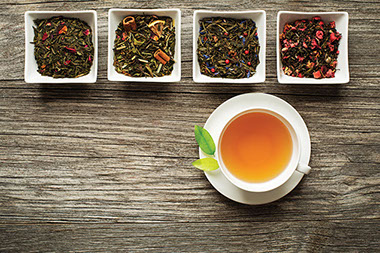
    Image of tea and different tea leaves.

    Most people have felt a bloated stomach after a big meal. Usually, the belly feels overly full. It can make clothing feel tighter. The belly may look swollen. Bloating is usually caused by too much food or air and gas getting trapped in the intestines.

    But some people get bloated even when they didn’t eat too much. In some cases, it can be downright painful. The best way to address painful bloating is to find the cause and know how you can treat it.

    Bloating culprits

    The most common causes include:

    *  Dairy foods. If you notice bloating after eating cheese, ice cream, or drinking milk, you could have lactose intolerance.

    *  Gum. Swallowing air while chewing can cause bloating.

    *  Eating too much fiber at once. Fiber is great for you, but if your body isn’t used to it, you can get bloated and uncomfortable. Increase the amount you eat gradually.

    *  Bowel problems. Being constipated or having irritable bowel syndrome (IBS) can cause painful bloating. Drinking plenty of water can help with constipation and fiber absorption.

    *  Menstrual cycles. Some women get bloated because their body holds extra water before or during their periods.

    Treat bloating at home

    Many times, bloating can be managed at home. Here’s how:

    *  Write down what you eat and drink. Record when you get stomach pain or bloating.

    *  Cut back on gum.

    *  Avoid carbonated drinks.

    *  Drink plenty of water to keep the bowels moving. Don’t use a straw when drinking.

    *  Eat enough fiber. Start with fruits and vegetables. Eat only small amounts of beans, lentils and other gas-causing foods until you get used to them.

    *  Watch out for sugar-free foods. Some artificial sweeteners can cause bloating and gas.

    *  Ginger, peppermint, chamomile or fennel herbal teas may help. Always ask a doctor before using herbs if you have a health condition or take any medicines.

    *  Over-the-counter anti-gas medicines with simethicone help move gas bubbles out of the body.

    When to see your doctor

    Call a doctor or seek immediate medical care if you notice bloating with:

    *  Blood with bowel movements (stool)

    *  Losing weight without making an effort

    *  Nausea or vomiting

    *  For women: menstrual bleeding between periods or after menopause

    *  Fever

    *  Severe pain that won’t go away

    These could be signs of a serious health issue that needs treatment.

    Source: American Academy of Family Physicians
    © American Institute for Preventive Medicine
  • Gut Check: Tips For Healthy Digestion

    SELF-CARE CORNER

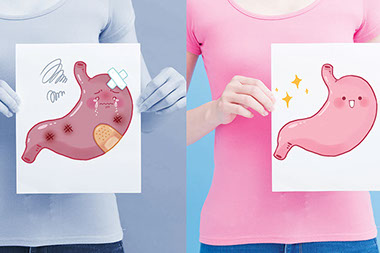
    Person holding a paper with a stomach illustration, one half happy stomach the other half a sick stomach.

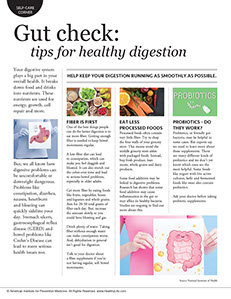
    Your digestive system plays a big part in your overall health. It breaks down food and drinks into nutrients. These nutrients are used for energy, growth, cell repair and more.

    But, we all know how digestive problems can be uncomfortable or downright dangerous. Problems like constipation, diarrhea, nausea, heartburn and bloating can quickly sideline your day. Stomach ulcers, gastroesophageal reflux disease (GERD) and bowel problems like Crohn’s Disease can lead to more serious health issues too.

    Help keep your digestion running as smoothly as possible.

    Fiber is first

    One of the best things people can do for better digestion is to eat more fiber. Getting enough fiber is needed to keep bowel movements regular.

    A low-fiber diet can lead to constipation, which can make you feel sluggish and bloated. It can also stretch out the colon over time and lead to serious bowel problems, especially in older adults.

    Get more fiber by eating foods like fruits, vegetables, beans and legumes and whole grains. Aim for 20-30 total grams of fiber each day. But, increase the amount slowly or you could have bloating and gas.

    Drink plenty of water. Taking fiber without enough water can make constipation worse. And, dehydration in general isn’t good for digestion.

    Talk to your doctor about a fiber supplement if you’re not having regular, soft bowel movements.

    Eat less processed foods

    Processed foods often contain very little fiber. Try to shop the four walls of your grocery store. This means avoid the middle grocery store aisles with packaged foods. Instead, buy fresh produce, lean meats, whole grains and dairy products.

    Some food additives may be linked to digestive problems. Research has shown that some food additives may cause inflammation in the gut or may affect its healthy bacteria. Studies are ongoing to find out more about this.

    Probiotics – do they work?

    Probiotics, or friendly gut bacteria, may be helpful in some cases. But experts say we need to learn more about these supplements. There are many different kinds of probiotics and we don’t yet know which ones are the most helpful. Some foods like yogurt with live active cultures, kefir and fermented foods like miso also contain probiotics.

    Ask your doctor before taking probiotic supplements.

    Source: National Institutes of Health

    © American Institute for Preventive Medicine
  • Microbiome: What It Can Do

    SELF-CARE CORNER

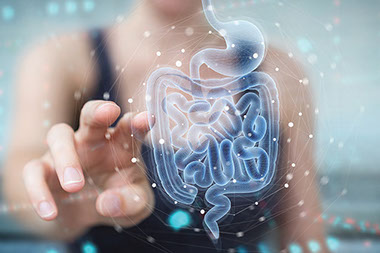
    Hand reaching out to touch an illustration of digestive system.

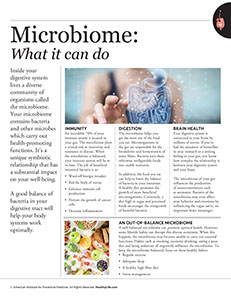
    Inside your digestive system lives a diverse community of organisms called the microbiome. Your microbiome contains bacteria and other microbes which carry out health-promoting functions. It’s a unique symbiotic relationship that has a substantial impact on your well-being.

    A good balance of bacteria in your digestive tract will help your body systems work optimally.

    Immunity

    An incredible 70% of your immune system is located in your gut. The microbiome plays a critical role in immunity and resistance to disease. When the microbiome is balanced, your immune system will be at its best. The job of beneficial intestinal bacteria is to:

    *  Ward off foreign invaders

    *  Rid the body of toxins

    *  Enhance immune cell production

    *  Prevent the growth of cancer cells

    *  Decrease inflammation

    Digestion

    The microbiome helps you get the most out of the food you eat. Microorganisms in the gut are responsible for the breakdown and fermentation of some fibers. Bacteria turn these otherwise undigestable foods into usable nutrients.

    In addition, the food you eat can help or harm the balance of bacteria in your intestines. A healthy diet promotes the growth of more beneficial microorganisms. Conversely, a diet high in sugar and processed foods encourages the overgrowth of harmful bacteria.

    Brain health

    Your digestive system is connected to your brain by millions of nerves. If you’ve had the sensation of butterflies in your stomach or a sinking feeling in your gut, you know how complex the relationship is between your digestive system and your brain.

    The microbiome of your gut influences the production of neurotransmitters such as serotonin. Bacteria of the microbiome may even affect your behavior and emotions by influencing the vagus nerve, an important brain messenger.

    An out-of-balance microbiome

    A well-balanced microbiome can promote optimal health. However, some lifestyle habits can disrupt this diverse ecosystem. When this happens, the microbiome may become unable to carry out essential functions. Habits such as smoking, excessive drinking, eating a poor diet and being sedentary all negatively influence the microbiome. To keep the microbiome balanced, focus on these healthy habits:

    *  Regular exercise

    *  Adequate sleep

    *  A healthy high-fiber diet

    *  Stress management

    © American Institute for Preventive Medicine
  • Dietary Fiber

    Nutrition

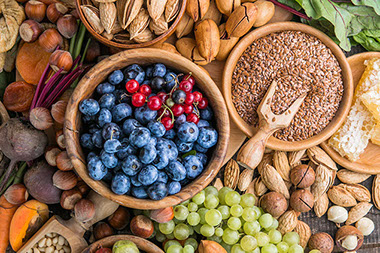
    A variety of foods high in fiber.

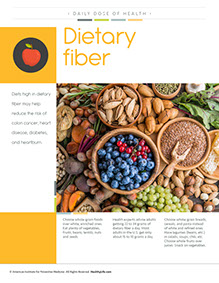
    Diets high in dietary fiber may help reduce the risk of colon cancer, heart disease, diabetes, and heartburn.

    Choose whole-grain foods over white, enriched ones. Eat plenty of vegetables, fruits, beans, lentils, nuts and seeds.

    Health experts advise adults getting 22 to 34 grams of dietary fiber a day. Most adults in the U.S. get only about 15 to 18 grams a day.

    Choose whole-grain breads, cereals, and pasta instead of white and refined ones. Have legumes (beans, etc.) in salads, soups, chili, etc. Choose whole fruits over juices. Snack on vegetables.

    Page from HealthyLife Weigh book by the American Institute for Preventive Medicine. www.HealthyLife.com. All rights reserved.

    © American Institute for Preventive Medicine
  • Fiber Up

    Nutrition

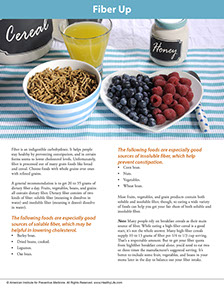
    Fiber is an indigestible carbohydrate. It helps people stay healthy by preventing constipation, and in certain forms seems to lower cholesterol levels. Unfortunately, fiber is processed out of many grain foods like bread and cereal. Choose foods with whole grains over ones with refined grains.

    A general recommendation is to get 20 to 35 grams of dietary fiber a day. Fruits, vegetables, beans, and grains all contain dietary fiber. Dietary fiber consists of two kinds of fiber: soluble fiber (meaning it dissolves in water) and insoluble fiber (meaning it doesn’t dissolve in water).

    The following foods are especially good sources of soluble fiber, which may be helpful in lowering cholesterol.

    *  Barley bran.

    *  Dried beans, cooked.

    *  Legumes.

    *  Oat bran.

    The following foods are especially good sources of insoluble fiber, which help prevent constipation.

    *  Corn bran.

    *  Nuts.

    *  Vegetables.

    *  Wheat bran.

    Most fruits, vegetables, and grain products contain both soluble and insoluble fiber, though, so eating a wide variety of foods can help you get your fair share of both soluble and insoluble fiber.

    Note: Many people rely on breakfast cereals as their main source of fiber. While eating a high-fiber cereal is a good start, it’s not the whole answer. Many high-fiber cereals supply 10 to 13 grams of fiber per 1/4 to 1/3 cup serving. That’s a respectable amount. But to get your fiber quota from high-fiber breakfast cereal alone, you’d need to eat two or three times the manufacturer’s suggested serving. It’s better to include some fruit, vegetables, and beans in your menu later in the day to balance out your fiber intake.

    Page from A Year of Health Hints book by the American Institute for Preventive Medicine. www.HealthyLife.com. All rights reserved.

    © American Institute for Preventive Medicine
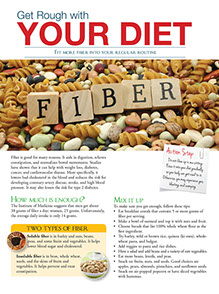
  • Get Rough With Your Diet

    Nutrition

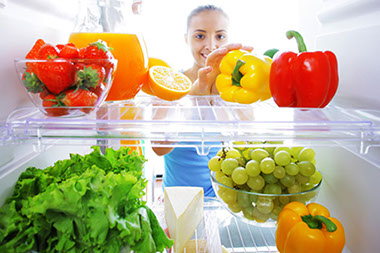
    Image of fresh produce in the fridge.

    Fit more fiber into your regular routine.

    Fiber is good for many reasons. It aids in digestion, relieves constipation, and normalizes bowel movements. Studies have shown that it can help with weight loss, diabetes, cancer, and cardiovascular disease. More specifically, it lowers bad cholesterol in the blood and reduces the risk for developing coronary artery disease, stroke, and high blood pressure. It may also lessen the risk for type 2 diabetes.

    How much is enough

    The Institute of Medicine suggests that men get about 38 grams of fiber a day; women, 25 grams. Unfortunately, the average daily intake is only 14 grams.

    Mix it up

    To make sure you get enough, follow these tips:

    *  Eat breakfast cereals that contain 5 or more grams of fiber per serving.

    *  Make a bowl of oatmeal and top it with nuts and fruit.

    *  Choose breads that list 100% whole wheat flour as the first ingredient.

    *  Try barley, wild or brown rice, quinoa (ki-nwa), whole-wheat pasta, and bulgur.

    *  Add veggies to pasta and rice dishes.

    *  Have a salad and add beans and a variety of raw vegetables.

    *  Eat more beans, lentils, and peas.

    *  Snack on fruits, nuts, and seeds. Good choices are apples, pears, almonds, pistachios, and sunflower seeds.

    *  Snack on air-popped popcorn or have sliced vegetables with hummus.

    Two types of fiber

    Soluble fiber is in barley and oats, beans, peas, and some fruits and vegetables. It helps lower blood sugar and cholesterol.

    Insoluble fiber is in bran, whole wheat, seeds, and the skins of fruits and vegetables. It helps prevent and treat constipation.

    Action Step

    Do not fiber up in one sitting. Ease it into your diet gradually so your body can get used to it. Otherwise, you may experience gas, bloating, and cramping.

    Page from Ways to Well-Being book by the American Institute for Preventive Medicine. www.HealthyLife.com. All rights reserved.

    © American Institute for Preventive Medicine
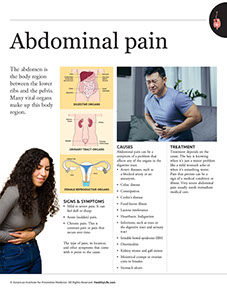
  • Abdominal Pain

    Abdominal & Urinary Conditions

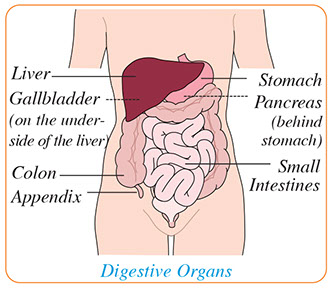
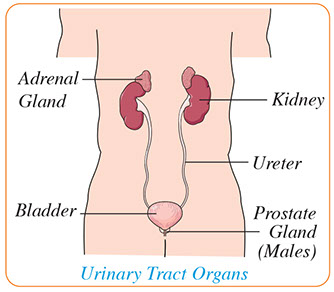
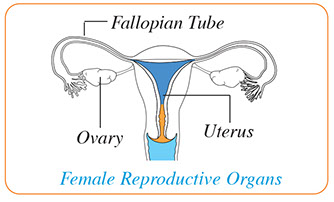
    The abdomen is the body region between the lower ribs and the pelvis. Many vital organs make up this body region.

    Signs & Symptoms

    The type of pain, its location, and other symptoms that come with it point to the cause.

    *  Mild to severe pain. It can feel dull or sharp.

    *  Acute (sudden) pain.

    *  Chronic pain. This is constant pain or pain that recurs over time.

    Illustration of digestive organs.
    Illustraion of urinary tract organs.
    Illustration of female reproductive organs.

    Causes

    Abdominal pain can be a symptom of a problem that affects any of the organs. Causes of abdominal pain include:

    *  Artery diseases, such as a blocked artery or an aneurysm.

    *  Celiac disease.

    *  Constipation.

    *  Crohn’s disease.

    *  Food poisoning.

    *  Gallstones.

    *  Heartburn. Indigestion.

    *  Infections, such as ones in the digestive tract and urinary tract.

    *  Irritable bowel syndrome (IBS).

    *  Kidney stones.

    *  Menstrual cramps or ovarian cysts in females.

    *  Reflux.

    *  Stomach ulcers.

    Treatment

    Treatment depends on the cause. The key is knowing when it’s just a minor problem like a mild stomach ache or when it’s something worse. Pain that persists can be a sign of a medical condition or illness. Very severe abdominal pain usually needs immediate medical care.

    Questions to Ask

    Self-Care / Prevention

    *  Find a comfortable position. Relax.

    *  Take an over-the-counter pain medicine as directed on the label.

    *  Apply a heating pad set on low (adults only).

    *  Don’t wear clothes that fit tight.

    *  Don’t exercise too hard.

    *  Use a hot water bottle on the area that aches.

    Crohn’s Disease

    Crohn’s Disease is a chronic problem that can cause abdominal pain and diarrhea. Other symptoms are fever, fatigue, and, at times, rectal bleeding or drainage. Symptoms occur when the disease flares up. This is followed by periods when symptoms go away or lessen.

    With Crohn’s disease, any part of the GI tract, from the mouth to the anus, can be inflamed. Usually, the colon and the last part of the small intestine, the ileum, are affected.

    Treatment for Crohn’s disease includes medicines, nutrition supplements, and surgery.

    Resources

    Crohn’s & Colitis Foundation of America

    www.ccfa.org

    Healthier at Home book by the American Institute for Preventive Medicine. www.HealthyLife.com. All rights reserved.

    © American Institute for Preventive Medicine
  • Tips For Good Digestion

    Mature Health: Over Age 50

    Image of mature couple eating at home.

    Around the age of 40, people begin to notice that they can’t tolerate certain foods as well as they used to. As you get older, your stomach produces a smaller volume of digestive enzymes and other secretions, and your body may not digest or absorb foods as easily as it did when you were younger.

    If you are prone to digestive problems, follow these tips.

    *  See a dentist if you are having trouble with your teeth or dentures. Poorly fitting dentures, sensitive teeth, and diseased gums can make chewing difficult.

    *  Eat smaller, lighter meals, spaced throughout the day, instead of heavy meals. As a person ages, the blood supply to the small intestine declines, hindering the absorption of nutrients from a sudden, large delivery of food.

    *  To prevent gas and bloating, don’t gulp liquids or talk while chewing food.

    *  Limit the amount of gas-producing foods you eat. Cabbage, onions, and cooked dried beans are common offenders.

    *  Eliminate milk products from your diet if they cause bloating, intestinal gas, or diarrhea, but be sure to supplement your diet with calcium. (You may be able to tolerate small amounts of milk products if you treat them with Lactaid, a digestive aid sold in many health food stores.

    *  Avoid wearing tight clothing around your waist at mealtime.

    *  Don’t lie down for at least 2 hours after you’ve finished a meal, and don’t eat right before bedtime.

    A Year of Health Hints book by the American Institute for Preventive Medicine. www.HealthyLife.com. All rights reserved.

    © American Institute for Preventive Medicine
  • Apple Cider Vinegar: A Miracle Cure?

    HEALTHY EATING

    Image of apple cider vinegar.

    The belief that apple cider vinegar is a “cure-all” has been circulating in recent years on numerous websites and promoted by natural health groups. But, can it really cure diseases and keep you healthy?

    Some say apple cider vinegar helps you lose weight, control blood sugar and improve digestion. Unfortunately, these health claims have not been proven by any valid research study. And, using it in place of medications or healthy lifestyle changes can be downright dangerous.

    In addition, people with heartburn or gastroesophageal reflux disease (GERD) may find that vinegar actually makes their reflux worse. Drinking too much of it can also damage tooth enamel.

    The bottom line: Most healthy people can enjoy apple cider vinegar in food without any problems. But, don’t use it, or any natural remedy, to cure diseases. Always ask your doctor before you try any natural remedy or supplement to be sure it’s safe for you.

    © American Institute for Preventive Medicine
  • Calming An Irritable Bowel

    SELF-CARE CORNER

    Image of a women holding stomach in pain.

    Irritable bowel syndrome (IBS) is a disorder of the digestive system. Experts believe that IBS happens when there is a problem with how the brain and the gut work together. IBS can have bothersome symptoms like stomach pain, diarrhea and constipation. But, IBS does not damage the digestive tract like the effects of ulcerative colitis or Crohn’s disease.

    Millions of people in the U.S. have IBS. And some people have severe symptoms that require medication or other medical care. IBS should be diagnosed by a doctor to ensure your symptoms are not caused by other diseases.

    Fortunately, mild to moderate symptoms of IBS can often be improved with some self-care and lifestyle changes.

    Foods to skip

    Some foods are known to cause more cramping and diarrhea. People with IBS may wish to avoid these foods, which include:

    *  Fried foods or high-fat meals

    *  Artificial sweeteners

    *  Caffeine, such as coffee or tea

    *  Alcohol

    You should also avoid eating large meals.

    Keep a food diary

    It may be a good idea to keep a food diary to identify other problem foods and eating habits, especially during flare-ups.

    Feel fiber-fabulous

    Fiber is one of the most effective ways to help calm an irritable bowel. Fiber can improve constipation because it softens stool and makes it easier to pass. And, it may help “bulk up” stool to reduce diarrhea.

    The 2015-2020 Dietary Guidelines for Americans says that adults should be eating 22 to 34 grams of fiber per day. Soluble fiber may be the best choice for those with IBS.

    Good sources of soluble fiber include:

    *  Oats

    *  Nuts

    *  Lentils

    *  Beans

    *  Fruits & Vegetables

    If you’re not used to eating fiber, don’t eat too much at first. This could lead to gas, bloating, and more IBS symptoms. Gradually increase the amount of fiber you eat by 2 to 3 grams per day until you’re eating the recommended amount. Be sure to drink plenty of fluids to absorb the extra fiber.

    Get better sleep

    Sleep helps the body restore itself, and poor sleep may aggravate IBS symptoms. Help your body rest by practicing good sleep hygiene. You can do this by:

    *  Shutting off computers, smart phones and other screens two hours before bedtime

    *  Going to bed and getting up at the same time every day

    *  Avoiding alcohol and heavy meals in the evening

    *  Not smoking

    *  Getting regular exercise (even light exercise can help you sleep better)

    *  Avoiding naps if you have trouble sleeping at night

    Get help from your doctor

    If these self-care steps don’t help, it may be time to talk to your doctor about other solutions. Some people find success by avoiding gluten, a protein found in wheat, barley, rye, oats and many other foods.

    A low-FODMAP diet may also be helpful. FODMAPS are carbohydrates that can be harder for the intestines to digest. Avoiding these foods helps some people with IBS. Ask your doctor before you begin any diet that eliminates certain foods.

    Sources: International Foundation for Functional Gastrointestinal Disorders, National Institute of Diabetes and Digestive and Kidney Diseases, National Sleep Foundation

    © American Institute for Preventive Medicine