Tag: dining

  • Eat Out Without Filling Out

    Nutrition

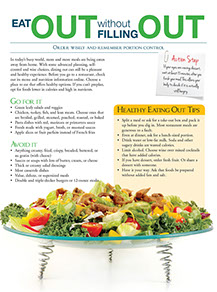
    Order wisely and remember portion control.

    In today’s busy world, more and more meals are being eaten away from home. With some advanced planning, self-control and wise choices, dining out can still be a pleasant and healthy experience. Before you go to a restaurant, check out its menu and nutrition information online. Choose a place to eat that offers healthy options. If you can’t preplan, opt for foods lower in calories and high in nutrients.

    Go for it.

    *  Green leafy salads and veggies

    *  Chicken, turkey, fish, and lean meats. Choose ones that are broiled, grilled, steamed, poached, roasted, or baked

    *  Pasta dishes with red, marinara or primavera sauce

    *  Foods made with yogurt, broth, or mustard sauces

    *  Apple slices or fruit parfaits instead of French fries

    Avoid it.

    *  Anything creamy, fried, crispy, breaded, battered, or au gratin (with cheese)

    *  Sauces or soups with lots of butter, cream, or cheese

    *  Thick or creamy salad dressings

    *  Most casserole dishes

    *  Value, deluxe, or supersized meals

    *  Double and triple-decker burgers or 12-ounce steaks

    Healthy Eating Out Tips

    *  Split a meal or ask for a take-out box and pack it up before you dig in. Most restaurant meals are generous to a fault.

    *  Even at dinner, ask for a lunch-sized portion.

    *  Drink water or low-fat milk. Soda and other sugary drinks are wasted calories.

    *  Limit alcohol. Choose wine over mixed cocktails that have added calories.

    *  If you have dessert, order fresh fruit. Or share a dessert with someone.

    *  Have it your way. Ask that foods be prepared without added fats and salt.

    Action Step

    If your eyes are craving dessert, wait at least 15 minutes after you finish your meal. This allows your body to decide if it is actually still hungry.
    Page from Ways to Well-Being book by the American Institute for Preventive Medicine. www.HealthyLife.com. All rights reserved.

    © American Institute for Preventive Medicine
  • Nine Tips For Healthier Fast-Food Meals

    Nutrition

    Image of restaurant neon sign.

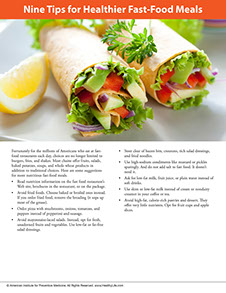
    Fortunately for the millions of Americans who eat at fast-food restaurants each day, choices are no longer limited to burgers, fries, and shakes. Most chains offer fruits, salads, baked potatoes, soups, and whole wheat products in addition to traditional choices. Here are some suggestions for more nutritious fast-food meals.

    *  Read nutrition information on the fast food restaurant’s Web site, brochures in the restaurant, or on the package.

    *  Avoid fried foods. Choose baked or broiled ones instead. If you order fried food, remove the breading (it sops up most of the grease).

    *  Order pizza with mushrooms, onions, tomatoes, and peppers instead of pepperoni and sausage.

    *  Avoid mayonnaise-laced salads. Instead, opt for fresh, unadorned fruits and vegetables. Use low-fat or fat-free salad dressings.

    *  Steer clear of bacon bits, croutons, rich salad dressings, and fried noodles.

    *  Use high-sodium condiments like mustard or pickles sparingly. And do not add salt to fast food. It doesn’t need it.

    *  Ask for low-fat milk, fruit juice, or plain water instead of soft drinks.

    *  Use skim or low-fat milk instead of cream or nondairy creamer in your coffee or tea.

    *  Avoid high-fat, calorie-rich pastries and dessert. They offer very little nutrients. Opt for fruit cups and apple slices.

    Page from A Year of Health Hints book by the American Institute for Preventive Medicine. www.HealthyLife.com. All rights reserved.

    © American Institute for Preventive Medicine
  • Make The Most Of Mealtime

    Mature Health: Over Age 50

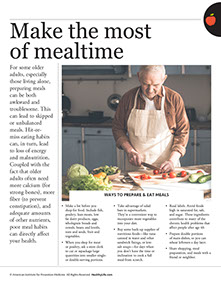
    Image of a man pan stirring vegetables.

    Mealtime is something to look forward to. But for some older adults, especially men living alone, preparing meals can be both awkward and troublesome. This can lead to the “tea and toast” syndrome of skipped or unbalanced meals. Hit-or-miss eating habits can, in turn, lead to loss of energy and malnutrition. Coupled with the fact that older adults often need more calcium than other folks (for strong bones), more fiber (to prevent constipation), and adequate supplies of other important dietary components, poor meal habits can directly affect your health.

    Here are a few hints to make preparing meals and eating meals more pleasant and convenient.

    *  Make a list before you shop for food. Include fish, poultry, lean meats, nonfat dairy products, whole-grain breads and cereals, fresh fruits and vegetables.

    *  When you shop for meat or produce, ask a store clerk to cut or repackage large quantities into smaller single- or double-serving portions.

    *  Take advantage of salad bars in supermarkets. They’re a convenient way to incorporate fresh vegetables into your diet.

    *  Buy some back-up supplies of nutritious foods-like tuna canned in water or low-salt soups-for days when you don’t have the time or inclination to cook a full meal from scratch.

    *  Read labels. Avoid foods high in fat, salt, and sugar. These ingredients contribute to many of the chronic health problems that affect people after age 40.

    *  Prepare double portions of main dishes, so you can reheat leftovers a day or two later.

    *  Share shopping, meal preparation, and meals with a friend or neighbor.

    A Year of Health Hints book by the American Institute for Preventive Medicine. www.HealthyLife.com. All rights reserved.

    © American Institute for Preventive Medicine