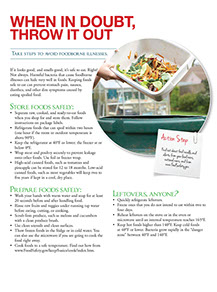
Take steps to avoid foodborne illnesses.
If it looks good, and smells good, it’s safe to eat. Right? Not always. Harmful bacteria that cause foodborne illnesses can hide very well in foods. Keeping foods safe to eat can prevent stomach pain, nausea, diarrhea, and other dire symptoms caused by eating spoiled food.
Store foods safely:
* Separate raw, cooked, and ready-to-eat foods when you shop for and store them. Follow instructions on package labels.
* Refrigerate foods that can spoil within two hours (one hour if the room or outdoor temperature is above 90°F).
* Keep the refrigerator at 40°F or lower; the freezer at or below 0°F.
* Wrap meat and poultry securely to prevent leakage onto other foods. Use foil or freezer wrap.
* High-acid canned foods, such as tomatoes and pineapple can be stored for 12 to 18 months. Low-acid canned foods, such as most vegetables will keep two to five years if kept in a cool, dry place.
Prepare foods safely:
* Wash your hands with warm water and soap for at least 20 seconds before and after handling food.
* Rinse raw fruits and veggies under running tap water before eating, cutting, or cooking.
* Scrub firm produce, such as melons and cucumbers with a clean produce brush.
* Use clean utensils and clean surfaces.
* Thaw frozen foods in the fridge or in cold water. You can also use the microwave if you are going to cook the food right away.
* Cook foods to a safe temperature.
Leftovers, anyone?
* Quickly refrigerate leftovers.
* Freeze ones that you do not intend to eat within two to four days.
* Reheat leftovers on the stove or in the oven or microwave until an internal temperature reaches 165°F.
* Keep hot foods higher than 140°F. Keep cold foods at 40°F or lower. Bacteria grow rapidly in the “danger zone” between 40°F and 140°F.
Action Step
Find out about food recalls and alerts from your local news, national news, and from
www.FoodSafety.gov.