Tag: discount

  • Save On Prescriptions

    FINANCIAL HEALTH

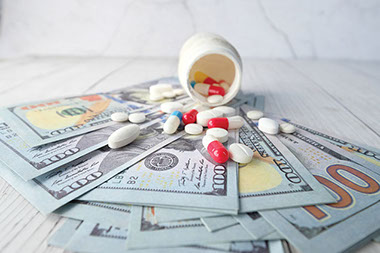
    Pills and bottle on top of a money.

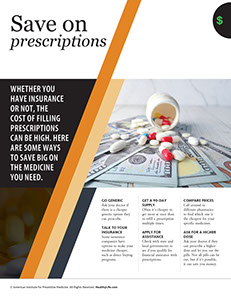
    Whether you have insurance or not, the cost of filling prescriptions can be high. Here are some ways to save big on the medicine you need.

    Go generic

    Ask your doctor if there is a cheaper generic option they can prescribe.

    Talk to your insurance

    Some insurance companies have options to make your medicine cheaper, such as direct buying programs.

    Get a 90-day supply

    Often it’s cheaper to get more at once than to refill a prescription multiple times.

    Apply for assistance

    Check with state and local governments to see if you qualify for financial assistance with prescriptions.

    Compare prices

    Call around to different pharmacies to find which one is the cheapest for your specific medicines.

    Ask for a higher dose

    Ask your doctor if they can prescribe a higher dose and let you cut the pills. Not all pills can be cut, but if it’s possible, it can save you money.
    © American Institute for Preventive Medicine
  • Shopping Around For Contact Lenses

    FINANCIAL HEALTH

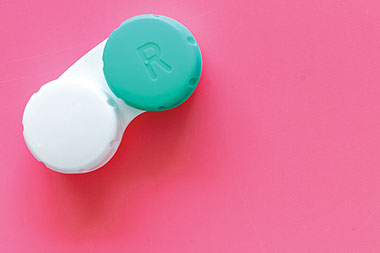
    Contact case holder.

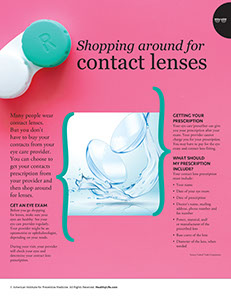
    Many people wear contact lenses. But you don’t have to buy your contacts from your eye care provider. You can choose to get your contacts prescription from your provider and then shop around for lenses.

    Get an eye exam

    Before you go shopping for lenses, make sure your eyes are healthy. See your eye care provider regularly. Your provider might be an optometrist or ophthalmologist, depending on your needs.

    During your visit, your provider will check your eyes and determine your contact lens prescription.

    Getting your prescription

    Your eye care prescriber can give you your prescription after your exam. Your provider cannot charge you for your prescription. You may have to pay for the eye exam and contact lens fitting.

    What should my prescription include?

    Your contact lens prescription must include:

    *  Your name

    *  Date of your eye exam

    *  Date of prescription

    *  Doctor’s name, mailing address, phone number and fax number

    *  Power, material, and/or manufacturer of the prescribed lens

    *  Base curve of the lens

    *  Diameter of the lens, when needed

    Source: Federal Trade Commission

    © American Institute for Preventive Medicine