Tag: discounts

  • Save Money On Prescriptions

    FINANCIAL HEALTH

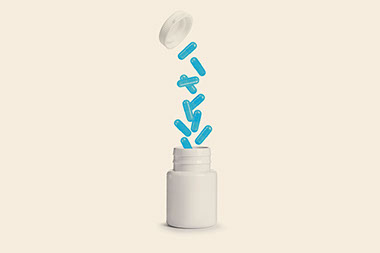
    Pills dropping into bottle.

    FACT: New drugs are protected by patents. After the patent expires, other companies can make a generic version of the drug.

    Knowing about generic drugs can save you money on prescriptions. Tell your doctor or pharmacist you want a generic drug if possible.

    If your prescription is expensive, speak up. Sometimes there’s an alternative that costs less but is still safe.

    Be wary of places that promise free or cheap prescriptions. It may be a scam. Your doctor or pharmacist can tell you about free or low-cost prescription programs.

    © American Institute for Preventive Medicine

  • Save If You Have No Insurance

    Medical Care

    Image of nurse standing in front of the nurse station.

    Look into getting some.

    Insurance costs money, but having none may end up costing you more. Medical costs from a chronic illness, surgery, etc. could erase any savings you have and may cause you to file for bankruptcy. Discuss your health needs and ability to pay for premiums with an insurance broker. Find out about health insurance in your state fromwww.naic.org/state_web_map.htm.

    You may need short-term coverage.

    If you are between jobs, a recent college graduate, etc., contact an insurance broker about short-term health insurance. This has a low monthly cost and high coverage limits for most (especially healthy) people. Read about COBRA in tip number 60, too.

    Look into group coverage.

    Find out if you can get health insurance from groups you belong to, such as AARP. Your costs are likely to be cheaper than if you buy an individual policy. If you are a veteran or a dependent of a veteran, find out if you are eligible for health care fromwww.va.gov/health/index.aspor from 800.827.1000.

    Look into an HSA.

    This is a Health Savings Account. It is also called a Medical Savings Account (MSA). It is like an IRA, but is used for medical costs. Instead of paying the costs for a fee-for-service health plan, you pay the cost for two things. One is a high deductible policy. The other is a tax-deductible savings account. You take money out of the savings account for medical costs when they are needed. Money not used from the savings account grows interest on a tax-sheltered basis and can be used to add funds to your retirement. Find out more about HSAs fromwww.msainfo.netandwww.consumerdrivenhealthcare.us. An MSA is a kind of Consumer Driven Health Plan.

    Know about “Insure Kids Now!”

    Infants, children, and teens may be able to get free or low-cost health insurance from your state. Find out from  877.KIDS NOW (543.7669) orwww.insurekidsnow.com.

    Honesty is the best policy.

    If you give false information on insurance forms, your coverage could be cancelled. Before you sign the dotted line, read the fine print. Find out if any conditions would limit or cancel your coverage.

    Know about clinical trials.

    You may be able to get expert medical care if you take part in a clinical trial. Find out what clinical trials are and which ones you could qualify for fromwww.clinicaltrials.gov. Find out about studies on mental health and disorders fromwww.nimh.nih.gov/health/ trials/index.shtml.

    If you are on a very limited income, find out if you qualify for Medicaid.

    Contactwww.cms.hhs.gov. Medicaid is a state sponsored health care program.

    If you cannot pay for health care.

    Contact the Bureau of Primary Health Care. Use the Web sitewww.findahealthcenter.hrsa.govto find a clinic in your area that will give you medical care at a reduced cost or for free. Search the Internet, too, for “National Free Clinic Directory.” Also, contact a social worker at your local hospital or community health agency to recommend resources that can help with medical problems.

    Opt for medical coverage with your auto insurance plan.

    This can cover expenses for medical services if you and passengers are injured in an accident.

    Find out about free and low-cost cancer screening.

    *  The American Cancer Society at 800.227.2345 orwww.cancer.org.

    *  The National Comprehensive Cancer Control Program atwww.cdc.gov/cancer/screening.htm.

    Find out if you have a health credit report.

    Before you buy a health insurance plan, contact the Medical Information Bureau (MIB). The MIB keeps track of medical information on persons who have applied for individual disability, health or life insurance in the past seven years. You can get a copy of your record fromwww.mib.comor by calling 866.692.6901.

    Cover image to the Healthy Savings book by the American Institute for Preventive Medicine. www.HealthyLife.com. All rights reserved.

    © American Institute for Preventive Medicine

  • Save On Dental Care

    Medical Care

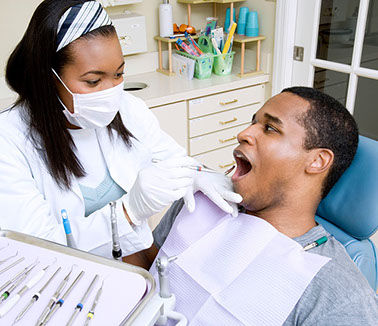
    Image of dentist with patient.

    Take care of those teeth.

    Get a dental checkup twice a year. Brush your teeth two times a day. Floss one or more times a day. You will have something to smile about when you hear “no cavities” and receive lower dental bills.

    Look for advertised specials.

    Many dentists offer specials or discounts to attract new patients. These include free X-rays, cleanings, and/or exams. Even if you have a regular dentist, you can take advantage of these services. Go back to your regular dentist for other work. Look for advertised specials in direct mail packs and local newspapers.

    Save with managed care dental plans.

    If your health insurance plan offers an HMO or PPO option, use one of its dentists. You could save between 25 and 50% on your dental bills.

    Find out about free and low-cost dental clinics and providers.

    Get information fromwww.nidcr.nih.gov/FindingDentalCare.

    Save money at dental schools.

    They give discounts to patients willing to trust dental students. Licensed dentists or dental hygienists supervise the students. Find out where dental schools are located atwww.nidcr.nih.gov.

    X-rays to go.

    Dental X-rays are expensive and expose you to radiation. If you switch dentists, want a second opinion, or must see a specialist, take your X-rays with you. Just ask your dentist or his or her staff for them.

    Materials matter.

    Some types of fillings, bridges, and crowns cost more than others. Talk with your dentist about the ones that suit your needs, as well as your budget. Ask about OTC products to whiten your teeth.

    Cover image to the Healthy Savings book by the American Institute for Preventive Medicine. www.HealthyLife.com. All rights reserved.

    © American Institute for Preventive Medicine

  • Save On Medications

    Medical Care

    Image of mother and daughter at the pharmacy.

    Ask for freebies.

    If you are prescribed a new medicine, ask your doctor if you can have free samples or a prescription for fewer tablets. This allows you to try the medicine before you pay for a full month’s supply.

    No frills pills.

    Instead of brand name drugs, ask for generic ones. These usually cost less. Co-pays for generics cost less, too. Even if your doctor gives you free samples to try, ask if a generic form of the medicine can be prescribed. If the sample medicine does not have a generic form, ask if you can get another generic medicine that has the same effects. Find out more about generic drugs from 888.INFO.FDA (463.6332) orwww.fda.gov/cder/ogd.

    Split the pill, split the cost?

    When your doctor prescribes medicines, ask if it would save money to prescribe pills that could be split in half. This means you would get two months of medicine for the cost of one. Use a pill splitter from a drug store to help keep the halves an equal size. Split one pill at a time so you take the halves in back-to-back doses.

    Mail order your medicine.

    Use a mail order pharmacy for prescribed medicines you take on a regular basis. You usually get a 3-month supply for the same cost you would pay for one month at a drug store. Your doctor needs to write a prescription for 3 months.

    Shop around.

    Medicine prices can vary a lot. Call large chains first. They can pass along the savings of buying in bulk. Even so, your local pharmacy may have a lower price on some drugs. Make sure the pharmacy takes your insurance. Some pharmacies offer 24-hour emergency and delivery services. Some keep track of all the drugs you buy. They can check for harmful mixtures of drugs. Think about helpful service and convenience, as well as cost.

    Deal or no deal.

    Costs for medicines from foreign Internet sites may or may not be cheaper. A study by the FDA showed that generic drugs sold in the U.S. are often cheaper than both Canadian brand-name and generic drugs. Factor in shipping and handling costs, too. {Note: Get safety information on imported drugs fromwww.fda.gov/importeddrugs. Before you buy prescriptions on the Internet, make sure the pharmacy has the VIPPS seal. This stands for Verified Internet Pharmacy Practice Sites. Also, check with the National Association of Boards of Pharmacy atwww.nabp.netor call 847.391.4406 to find out if a Web site is a licensed pharmacy in good standing.}

    Medicare Part D may be free.

    If you are eligible for Medicare, you may benefit from Medicare Part D Prescription Drug Savings Program. To find out, contact: Medicare Choices Helpline at 800.MEDICARE (633.4227) orwww.medicare.gov. Before you call, have a list of all the medicines you take, their dosages, and your zip code.

    Take all of it.

    If your doctor or pharmacist says to take a drug until it is gone, do it. Don’t stop taking the medicine even if you start to feel better. This also applies to medicines you take for high blood pressure, diabetes, and heart disease. You can also avoid the cost of getting sick again. If you stop taking medicines because you can’t pay for them, talk to your doctor.

    Store OTC medicines in a good place.

    The bathroom medicine chest is not a good place. Bathroom heat and humidity can make drugs lose their power faster. This means they would have to be replaced sooner. A kitchen cupboard or linen closet is better, especially if it has a lock.

    The best medicine may be no medicine.

    Don’t pressure your doctor to prescribe medicine if he or she doesn’t think you need it. For example, antibiotics treat bacterial infections, not viral ones, such as colds and flu.

    Find out about prescription savings programs.

    *  The Partnership for Prescription Assistance at 888.4PPANOW (477.2669) orwww.pparx.org. This program offers a single point of access to more than 475 public and private patient assistance programs. This includes over 150 drug company programs.

    *  NeedyMeds at 215.625.9609 orwww.needymeds.com. This Web site gives information to help you find programs to help you with the cost of medicines and other health care expenses.

    *  PAP Advocates for Patient Assistance Programs at 870.873.4629 orwww.prescriptionmedicationhelp.com. This helps you enroll in programs to be able to get prescribed medicines for free.

    *  RxAssist at 401.729.3284 orwww.rxassist.org. With this, pharmaceutical companies provide free medicines to people who cannot afford to buy their medicine.

    *  Together Rx Access atwww.togetherrxaccess.com. This is a prescription savings program for people with no prescription coverage. Persons enrolled get a Together Rx Access Card to present at drug stores to save money on certain prescriptions.

    *  FRxEE Medicine™ Foundation.com atwww.freemedicinefoundation.com.

    *  NORDs Medication Assistance Program atwww.rarediseases.org/programs/medication.

    Save money on store brands.

    When you do buy OTC medicines, buy store brands instead of name brands. Like prescribed generic medicines, these have the same active ingredients, but cost less.

    Keep it simple.

    When you buy over-the-counter medicines, don’t buy combination ones, such as cold pills that have a decongestant and an antihistamine. There will be times when you need only one of these ingredients.

    Read OTC labels.

    Don’t waste your money on over-the-counter (OTC) medicines that you don’t need. Read the label to make sure it’s the right product to treat your symptoms. If you have questions about how useful a product is, ask the pharmacist and/or your doctor.

    Simplify your home Rxs.

    Keep some OTC medicines handy for common problems like fever or heartburn. Only buy OTC medicines you use often because they lose their effects over time. Most are good for three years or less. (Check the labels for the expiration dates.)

    Cover image to the Healthy Savings book by the American Institute for Preventive Medicine. www.HealthyLife.com. All rights reserved.

    © American Institute for Preventive Medicine