
Tag: disease

  • Living Well With Sickle Cell

    MEDICAL NEWS

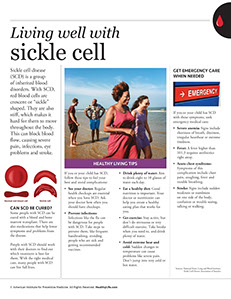
    Two couples walking and laughing along the beach.

    Sickle cell disease (SCD) is a group of inherited blood disorders. With SCD, red blood cells are crescent or “sickle” shaped. They are also stiff, which makes it hard for them to move throughout the body. This can block blood flow, causing severe pain, infections, eye problems and stroke.

    Can SCD be cured?

    Some people with SCD can be cured with a blood and bone marrow transplant. There are also medications that help lower symptoms and problems from the disease.

    People with SCD should work with their doctors to find out which treatment is best for them. With the right medical care, many people with SCD can live full lives.

    Healthy living tips

    If you or your child has SCD, follow these tips to feel your best and avoid complications:

    *  See your doctor: Regular health checkups are essential when you have SCD. Ask your doctor how often you should have checkups.

    *  Prevent infections: Infections like the flu can be dangerous for people with SCD. Take steps to prevent them, like frequent handwashing, avoiding people who are sick and getting recommended vaccines.

    *  Drink plenty of water: Aim to drink eight to 10 glasses of water each day.

    *  Eat a healthy diet: Good nutrition is important. Your doctor or nutritionist can help you create a healthy eating plan that works for you.

    *  Get exercise: Stay active, but don’t do strenuous or very difficult exercise. Take breaks when you need to, and drink plenty of water.

    *  Avoid extreme heat and cold: Sudden changes in temperature can cause problems like severe pain. Don’t jump into very cold or hot water.

    Get emergency care when needed

    If you or your child has SCD with these symptoms, seek emergency medical care:

    *  Severe anemia: Signs include shortness of breath, dizziness, irregular heartbeat or extreme tiredness.

    *  Fever: A fever higher than 101.3 requires antibiotics right away.

    *  Acute chest syndrome: Symptoms of this complication include chest pain, coughing, fever and trouble breathing.

    *  Stroke: Signs include sudden weakness or numbness on one side of the body, confusion or trouble seeing, talking or walking.

    Sources: National Heart, Lung and Blood Institute, Sickle Cell Disease Association of America
    © American Institute for Preventive Medicine

  • Infant Immunization

    Pediatric Care

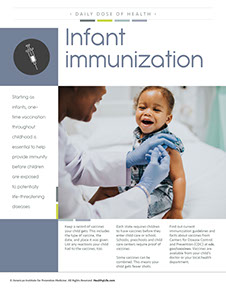
    Young child getting a vaccine from doctor.

    Starting as infants, one-time vaccination throughout childhood is essential to help provide immunity before children are exposed to potentially life-threatening diseases.

    Keep a record of vaccines your child gets. This includes the type of vaccine, the date, and place it was given. List any reactions your child had to the vaccines, too.

    Each state requires children to have vaccines before they enter child care or school. Schools, preschools and child care centers require proof of vaccines.

    Some vaccines can be combined. This means your child gets fewer shots.

    Find out current immunization guidelines and facts about vaccines from Centers for Disease Control and Prevention (CDC) atcdc.gov/vaccines. Vaccines are available from your child’s doctor or your local health department.

    A Year of Health Hints book by the American Institute for Preventive Medicine. www.HealthyLife.com. All rights reserved.

    © American Institute for Preventive Medicine
  • Surprisingly Simple Ways To Prevent Disease

    MEDICAL NEWS

    Image of happy man with thumbs up as he weighs himself.

    Five new studies support simple steps to prevent illness and improve overall health. The American Journal of Medicine reports the following based on multiple studies in several countries:

    *  Eating fresh fish regularly may reduce your risk of colorectal cancer.

    *  Still trying to stop smoking? Try acupuncture and hypnosis. Several studies found smokers had good success.

    *  Have your teeth cleaned regularly. Scaling removes harmful bacteria. You can reduce your risk for heart attack and stroke.

    *  Talk to your doctor about weight loss. People who were moderately obese, followed a diet plan from their doctors (not a weight loss clinic), and stuck with it at least 12 weeks, lost over 10% of their body weight.

    *  Low-dose aspirin, for people who can take it, offers preventive cancer benefits along with heart healthy help.

    © American Institute for Preventive Medicine

  • When Petting Pets Causes Disease

    SELF-CARE CORNER

    Image of women with her dog.

    Salmonella, E. coli, and roundworms are among the nearly 20 different diseases that people most commonly get from their pets, said Jason Stull, assistant professor of veterinary preventive medicine at Ohio State. Infants, the elderly, pregnant women, and people with limited immune function are most at risk for animal-borne, or zoonotic, diseases.

    Since different species of pets-dogs, cats, rodents, birds, fish, reptiles, and amphibians-carry different types of diseases and at different stages of life, Stull and his colleagues suggest that families talk to both their doctor and veterinarian about what pet is the safest choice for their family.

    Here are some safe tips for pet ownership:

    *  Wear protective gloves to clean aquariums and cages and to remove feces.

    *  Wash hands after pet contact.

    *  Don’t let your pets lick your face.

    *  Cover playground sandboxes when not in use (cats love them).

    *  Avoid contact with higher risk animals such as reptiles, amphibians, and exotic animals.

    *  Regularly clean and disinfect animal cages, feeding areas, and bedding.

    *  Put litter boxes away from areas where food is eaten and prepared.

    *  Schedule regular veterinary visits.

    © American Institute for Preventive Medicine