Tag: distance

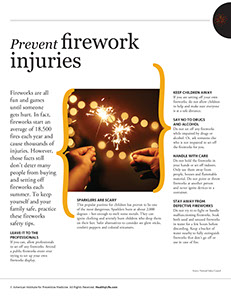
  • Prevent Firework Injuries

    WELL-BEING

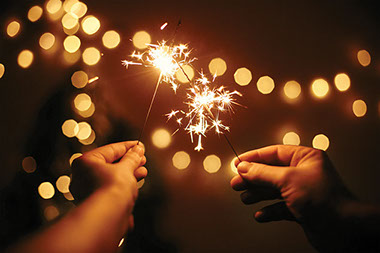
    Two hands holding sparklers.

    Fireworks are all fun and games until someone gets hurt. In fact, fireworks start an average of 18,500 fires each year and cause thousands of injuries. However, those facts still don’t deter many people from buying and setting off fireworks each summer. To keep yourself and your family safe, practice these fireworks safety tips.

    Leave it to the professionals

    If you can, allow professionals to set off any fireworks. Attend a public fireworks event over trying to set up your own fireworks display.

    Keep children away

    If you are setting off your own fireworks, do not allow children to help and make sure everyone is at a safe distance.

    Say no to drugs and alcohol

    Do not set off any fireworks while impaired by drugs or alcohol. Or, ask someone else who is not impaired to set off the fireworks for you.

    Handle with care

    Do not hold the fireworks in your hands or set off indoors. Only use them away from people, houses and flammable material. Do not point or throw fireworks at another person and never ignite devices in a container.

    Stay away from defective fireworks

    Do not try to re-light or handle malfunctioning fireworks. Soak both used and unused fireworks in water for a few hours before discarding. Keep a bucket of water nearby to fully extinguish fireworks that don’t go off or use in case of fire.

    Sparklers are scary

    This popular pastime for children has proven to be one of the most dangerous. Sparklers burn at about 2,000 degrees – hot enough to melt some metals. They can ignite clothing and severely burn children who drop them on their feet. Safer alternatives to consider are glow sticks, confetti poppers and colored streamers.

    Source: National Safety Council
    © American Institute for Preventive Medicine
  • Start Running

    BE FIT

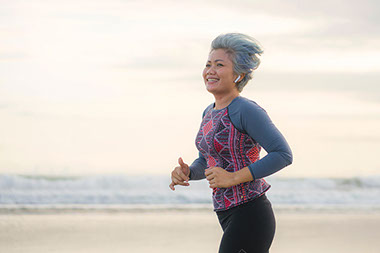
    Middle aged women jogging on beach.

    Running is a great form of exercise. It gets your heart rate up, builds endurance, and releases stress. But, running is also high-impact and should be approached with caution. Here’s how to get started safely:

    1. Check with your doctor to make sure running is right for you.

    2. Invest in comfortable footwear that provides cushion and support.

    3. Stretch and strengthen your feet to prepare them for impact.

    4. Begin with a walk-run program that gradually builds endurance.

    5. Take it slow! If you haven’t run in a while, assume your body needs time to adapt.

    6. Don’t push through pain. A little twinge may become an injury if you run through it.

    7. Cross-train with exercises that build strength and flexibility like weight training, yoga, and stretching.

    8. Hydrate and fuel well before, during, and after you run.

    9. Give your body plenty of rest between runs to avoid overtraining.

    10. Listen to music or find a running partner to make your runs more enjoyable.

    © American Institute for Preventive Medicine
  • Make Unhealthy Habits Less Convenient

    Healthylife® Weigh

    Part 4

    Muffins with cranberries and white chocolate.

    To help make your healthy habits easier, make doing your unhealthy habits harder or unpleasant. Make healthy choices pleasant and convenient.

    Ways to Make Unhealthy Habits Unpleasant and Inconvenient

    *  Sit in an uncomfortable chair when having an unhealthy food or drink. Don’t sit on the couch to eat.

    *  Keep unhealthy foods and drinks in the basement, the laundry room, or a closet. Don’t keep these foods in the kitchen or in easy sight.

    *  Eat foods with the wrong utensil (e.g., try eating a pizza with a spoon).

    *  Set the volume on the TV very low as a cue to do something active. If you turn up the volume and watch, turn the volume back down before turning the TV off. The reminder will be there for you next time.

    *  Hide the TV remote in a drawer or on top of a book case.

    How can you make an unhealthy habit unpleasant and inconvenient?

    Ways to Make Healthy Habits Pleasant & Convenient

    *  Wear new workout clothes-even new socks can make an experience more fun!

    *  Listen to your favorite music while exercising or eating a healthy snack.

    *  Add fresh flowers to the table when you serve a healthy meal.

    How can you make a healthy habit pleasant and convenient?

    Take Small Steps Toward a New Habit

    1. List one unhealthy eating habit you want to change. Make sure the change is something you want to do, not something you are doing just to please someone else. Be specific.

    2. Make a list of the reasons you want to do this. Read this list often. For extra support: use a sticky note or index card and post this list where the unhealthy eating habit takes place.

    3. Write a positive statement about yourself or an encouraging message on a sticky note or an index card. Post this where you will see it, such as on a refrigerator or bathroom mirror.

    4. Working backwards from your goal, write a series of steps you can take to get there. Make the first step something you feel ready to do today. As soon as you take each step, set a time goal for taking the next step. It can be tempting to break a goal into so many steps that it takes a very long time to make any changes. It is normal to not want to fail. However, if you stretch a change out too long, you risk losing motivation. If you are taking steps that seem easy, try taking a little bigger step. You may find you are able to do more at once than you thought! If that bigger step is too hard, try again or go back to the smaller step. Keep going.

    5. Reflect on your success or any challenges you experienced.

    – How easy/hard was it to make this change?

    – What changes did you have to make to your steps as you went along?

    6. Reward yourself for small steps.

    – Pay attention to any rewarding thoughts or feelings that occur, such as feeling more confident or more organized.

    – Notice any physical feelings, such as having more energy or sleeping better at night.

    – Take time to reflect on one of your values statements. How has taking these steps allowed you to show yourself and others what you value?

    – Treat yourself with non-food rewards, such as a new book, fresh flowers, or new music. Reflect on the intrinsic rewards of your changes.

    © American Institute for Preventive Medicine

  • Miles To Go

    WELL-BEING

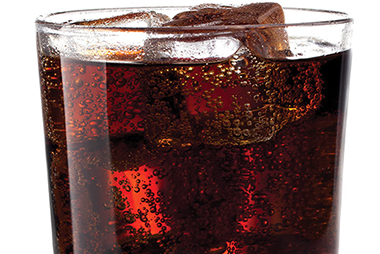
    Image of a glass of soda.

    Would you choose that soda if you were told how many miles you needed to walk to burn off the calories?

    You’d choose a lower calorie drink if you saw signs explaining how many miles you would need to walk to burn off the calories in that sugary drink. Research at Johns Hopkins, reported in the American Journal of Public Health, found that simply showing calories is not enough to change bad eating habits.

    But when calories are tied to miles of walking, then behavior changes.

    Teens who shopped in neighborhood stores in Baltimore were presented facts on signs about various soft drinks. Researchers found that the teens who saw the signs either bought lower-sugar choices or smaller bottles.

    A typical 20-oz. soda or sports drink has 16 teaspoons of SUGAR and would take 50 minutes of RUNNING or 5 MILES of WALKING for a 110-pound adolescent to burn off the calories.

    © American Institute for Preventive Medicine
  • The Aerobic Mile

    BE FIT

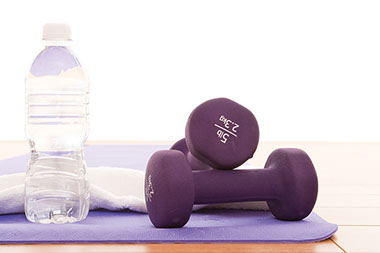
    Image of water bottle, towel and dumb bells on a mat.

    How much exercise do you need? The answer is 30 minutes most days of the week, according to government guidelines. But you can calculate your own fitness level by using the aerobic mile as your guideline.

    An aerobic mile, simply, is how much energy you expend jogging one mile. Okay, you don’t want to jog. But you can burn the same number of calories by doing other exercises. Here are some examples of activities you can do to equal one aerobic mile:

    *  Walking one mile at any pace

    *  Bicycling at a moderate pace for 12 minutes

    *  Vigorous rowing for 12 minutes

    *  Swimming for 24 minutes

    *  Tennis for 20 minutes (11 if your game is vigorous)

    *  Weight training at a moderate pace for 15 minutes

    *  Easy gardening for one hour

    *  Aerobic exercise to music, easy pace for 20 minutes

    Beginning exercisers should strive to achieve the equivalent of 6 aerobic miles a week. Those with good fitness levels can move up to 10 hours a week. High fitness levels are achieved with 15 aerobic miles each week, according to ACSM Guidelines for Exercise Testing.

    © American Institute for Preventive Medicine