Tag: distractions

  • Six Things You Should Never Do In Your Car

    Personal Safety

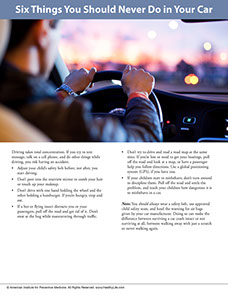
    Image of man driving.

    Driving takes total concentration. If you try to text message, talk on a cell phone, and do other things while driving, you risk having an accident.

    *  Adjust your child’s safety belt before, not after, you start driving.

    *  Don’t peer into the rearview mirror to comb your hair or touch up your makeup.

    *  Don’t drive with one hand holding the wheel and the other holding a hamburger. If you’re hungry, stop and eat.

    *  If a bee or flying insect distracts you or your passengers, pull off the road and get rid of it. Don’t swat at the bug while maneuvering through traffic.

    *  Don’t try to drive and read a road map at the same time. If you’re lost or need to get your bearings, pull off the road and look at a map, or have a passenger help you follow directions. Use a global positioning system (GPS), if you have one.

    *  If your children start to misbehave, don’t turn around to discipline them. Pull off the road and settle the problem, and teach your children how dangerous it is to misbehave in a car.

    Note: You should always wear a safety belt, use approved child safety seats, and heed the warning for air bags given by your car manufacturer. Doing so can make the difference between surviving a car crash intact or not surviving at all, between walking away with just a scratch or never walking again.
    A Year of Health Hints book by the American Institute for Preventive Medicine. www.HealthyLife.com. All rights reserved.

    © American Institute for Preventive Medicine
  • Avoiding Distractions At Work

    WORK LIFE

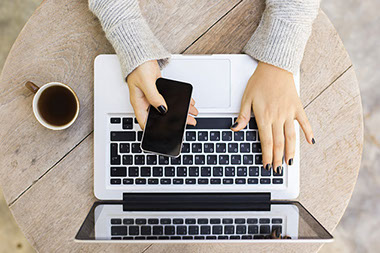
    Close up image of laptop with hands and phone.

    We all have days that are more productive than others. But you can be your best each day if you learn how to avoid the biggest distractions at your workplace.

    Put the phone away

    Is your phone frequently dinging with texts or people calling you “just to chat?” Do you find yourself checking social media or playing with apps when you should be working?

    Smart phones are a major cause of work-related distractions. Some employers have policies that prohibit cell phone use on the job. If that’s the case, you’ll need to follow those rules. But if your employer allows cell phones, turn off notifications and put the phone in a place that’s harder to reach. Some phones have an option that filters all calls except those from important or emergency numbers. This is a great way to allow people to reach you when it’s necessary, but to avoid non-essential calls and notifications.

    Use white noise

    If other people’s conversations or office noises are bothering you, consider ways you can soften or filter some of the sound. A white noise machine, fan or even headphones that play white noise or quiet non-distracting music may be helpful.

    Ways to get your focus back

    Everyone needs a mental break once in a while. Instead of checking your phone or social media, try these healthy tips that can energize you and help you get back to your work:

    *  Take a short walk around the building.

    *  Eat a healthy snack, such as fruits, vegetables, or lean protein.

    *  Drink a glass of water. Add a lemon or cucumber slice for more flavor.

    *  Get up from your chair and stretch for 3 minutes.

    *  Clean or organize your workspace. Clutter in your space can make your brain feel cluttered, too.

    © American Institute for Preventive Medicine

  • 3 Ways To Avoid Distractions At Work

    WORK LIFE

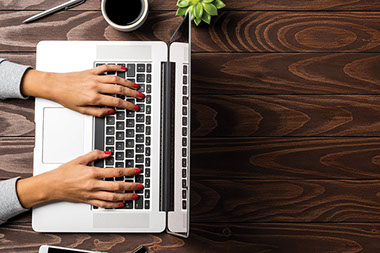
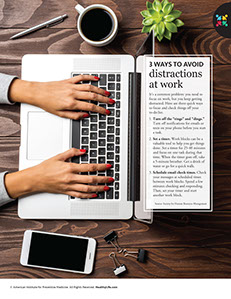
    Close up of hands typing on laptop keyboard.

    It’s a common problem: you need to focus on work, but you keep getting distracted. Here are three quick ways to focus and check things off your to-do list.

    1. Turn off the “rings” and “dings.” Turn off notifications for emails or texts on your phone before you start a task.

    2. Set a timer. Work blocks can be a valuable tool to help you get things done. Set a timer for 25-40 minutes and focus on one task during that time. When the timer goes off, take a 5-minute breather. Get a drink of water or go for a quick walk.

    3. Schedule email check times. Check your messages at scheduled times between work blocks. Spend a few minutes checking and responding. Then, set your timer and start another work block.

    Source: Society for Human Resource Management

    © American Institute for Preventive Medicine