Tag: dosage

  • What Is Cbd?

    WELL-BEING

    CBD oil in small glass jar.

    CBD (or cannabidiol) oil may be purchased in many pharmacies and other stores. It is claimed to treat more than 50 health conditions like sleep problems, anxiety and pain. But, experts say there’s little evidence that it works for most of them.

    What is CBD?

    CBD oil comes from the cannabis plant. Cannabis plants can be marijuana or hemp.

    A chemical called tetrahydrocannabinol (THC) causes the mental changes that make a person “high” when they use marijuana. CBD oil should contain little to no THC so it can’t make a person high. However, there is no way to know for sure that the CBD product is THC-free.

    The Food and Drug Administration (FDA) tested CBD products. Some products were found to contain THC, even though CBD should not contain it. Other products had a different amount of CBD than what the label stated.

    What does CBD do?

    Experts don’t know exactly how CBD works in the body. There is solid evidence that it can help control seizure disorders in children. But, evidence that it helps treat other conditions is lacking. In fact, the FDA has warned several companies about selling CBD with untested health claims.

    Does CBD have side effects?

    In studies, people didn’t report serious side effects when taking CBD. There were some reports of diarrhea. Also, CBD may interact with a person’s other medications. People who take other medicines or have health conditions should ask a doctor before using CBD.

    Should I use CBD?

    There isn’t enough evidence to recommend CBD for health problems other than seizures. Experts say you should stick with proven treatments for health problems. Always talk with a doctor before using any natural treatment, including CBD.

    Source: National Institutes of Health

    © American Institute for Preventive Medicine

  • Use Caution With Sleeping Pills

    Medication

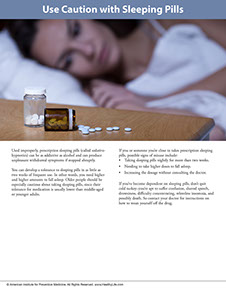
    Image of women trying to sleep with pills on her nightstand.

    Used improperly, prescription sleeping pills (called sedative-hypnotics) can be as addictive as alcohol and can produce unpleasant withdrawal symptoms if stopped abruptly.

    You can develop a tolerance to sleeping pills in as little as two weeks of frequent use. In other words, you need higher and higher amounts to fall asleep. Older people should be especially cautious about taking sleeping pills, since their tolerance for medication is usually lower than middle-aged or younger adults.

    If you or someone you’re close to takes prescription sleeping pills, possible signs of misuse include:

    *  Taking sleeping pills nightly for more than two weeks.

    *  Needing to take higher doses to fall asleep.

    *  Increasing the dosage without consulting the doctor.

    If you’ve become dependent on sleeping pills, don’t quit cold turkey-you’re apt to suffer confusion, slurred speech, drowsiness, difficulty concentrating, relentless insomnia, and possibly death. So contact your doctor for instructions on how to wean yourself off the drug.

    Page from A Year of Health Hints book by the American Institute for Preventive Medicine. www.HealthyLife.com. All rights reserved.

    © American Institute for Preventive Medicine
  • How To Take Painkillers Safely

    Medication

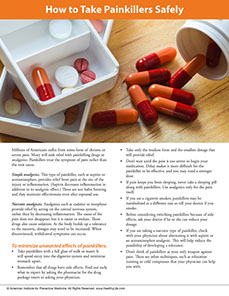
    Image of pills.

    Millions of Americans suffer from some form of chronic or severe pain. Many will seek relief with painkilling drugs or analgesics. Painkillers treat the symptom of pain rather than the root cause.

    Simple analgesics. This type of painkiller, such as aspirin or acetaminophen, provides relief from pain at the site of the injury or inflammation. (Aspirin decreases inflammation in addition to its analgesic effect.) These are not habit forming and they maintain effectiveness even after repeated use.

    Narcotic analgesics. Analgesics such as codeine or morphine provide relief by acting on the central nervous system, rather than by decreasing inflammation. The cause of the pain does not disappear, but it is easier to endure. These drugs also cause sedation. As the body builds up a tolerance to the narcotic, dosages may need to be increased. When discontinued, withdrawal symptoms can occur.

    To minimize unwanted effects of painkillers:

    *  Take painkillers with a full glass of milk or water. It will speed entry into the digestive system and minimize stomach upset.

    *  Remember that all drugs have side effects. Find out early what to expect by asking the pharmacist for the drug package insert or asking your physician.

    *  Take only the weakest form and the smallest dosage that will provide relief.

    *  Don’t wait until the pain is too severe to begin your medication. Delay makes it more difficult for the painkiller to be effective, and you may need a stronger dose.

    *  If pain keeps you from sleeping, never take a sleeping pill along with painkillers. Use analgesics only for the pain itself.

    *  If you are a cigarette smoker, painkillers may be metabolized at a different rate so tell your doctor if you smoke.

    *  Before considering switching painkillers because of side effects, ask your doctor if he or she can reduce your dosage.

    *  If you are taking a narcotic type of painkiller, check with your physician about alternating it with aspirin or an acetaminophen analgesic. This will help reduce the possibility of developing a tolerance.

    *  Don’t think of painkillers as your only weapon against pain. There are other techniques, such as relaxation training or cold compresses that your physician can help you with.

    Page from A Year of Health Hints book by the American Institute for Preventive Medicine. www.HealthyLife.com. All rights reserved.

    © American Institute for Preventive Medicine
  • Medication Safety

    Medication

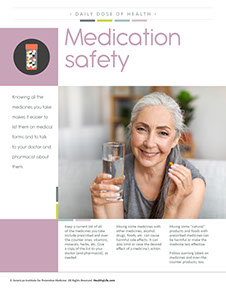
    Smiling women holding a glass of water in one hand and a pill in the other hand.

    Knowing all the medicines you take makes it easier to list them on medical forms and to talk to your doctor and pharmacist about them.

    Keep a current list of all of the medicines you take. Include prescribed and over-the-counter ones, vitamins, minerals, herbs, etc. Give a copy of the list to your doctor (and pharmacist), as needed.

    Mixing some medicines with other medicines, alcohol, drugs, foods, etc. can cause harmful side effects. It can also limit or raise the desired effect of a medicine’s action.

    Mixing some “natural” products and foods with prescribed medicines can be harmful or make the medicine less effective.

    Follow warning labels on medicines and over-the-counter products, too.

    A Year of Health Hints book by the American Institute for Preventive Medicine. www.HealthyLife.com. All rights reserved.

    © American Institute for Preventive Medicine
  • Over-The-Counter Medication Safety

    Medication

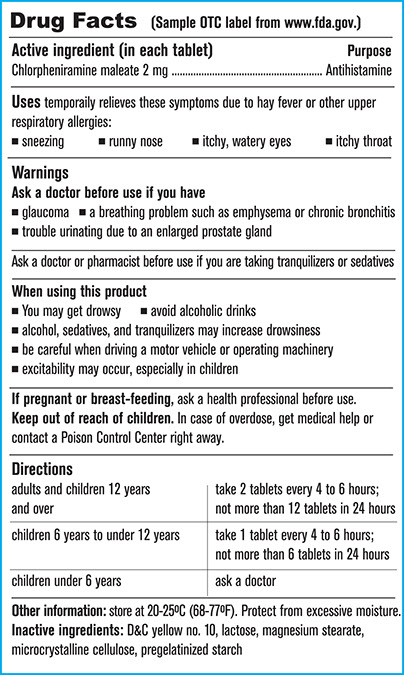
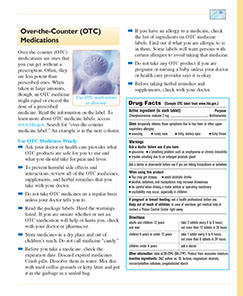
    Over-the-counter (OTC) medications are ones that you can get without a prescription. Often, they are less potent than prescribed ones. When taken in large amounts, though, an OTC medicine might equal or exceed the dose of a prescribed medicine. Read the information on the label. To learn more about OTC medicine labels, accesswww.fda.gov. Search for “over-the-counter medicine label.”

    Use OTC Medicines Wisely

    *  Ask your doctor or health care provider what OTC products are safe for you to use and what you should take for pain and fever.

    *  To prevent harmful side effects and interactions, review all of the OTC medicines, supplements, and herbal remedies that you take with your doctor.

    *  Do not take OTC medicines on a regular basis unless your doctor tells you to.

    *  Read the package labels. Heed the warnings listed. If you are unsure whether or not an OTC medication will help or harm you, check with your doctor or pharmacist.

    *  Store medicines in a dry place and out of children’s reach. Do not call medicine “candy.”

    *  Before you take a medicine, check the expiration date. Discard expired medicines. Crush pills. Dissolve them in water. Mix this with used coffee grounds or kitty litter and put it in the garbage in a sealed bag.

    *  If you have an allergy to a medicine, check the list of ingredients on OTC medicine labels. Find out if what you are allergic to is in them. Some labels will warn persons with certain allergies to avoid taking that medicine.

    *  Do not take any OTC product if you are pregnant or nursing a baby unless your doctor or health care provider says it is okay.

    *  Before taking herbal remedies and supplements, check with your doctor.

    Drug fact chart.

    Resources

    U.S. Food and Drug Administration

    www.fda.gov

    Page from the Healthier at Home book by the American Institute for Preventive Medicine. www.HealthyLife.com. All rights reserved.

    © American Institute for Preventive Medicine

  • Safe Use Of Medications

    Medication

    Image of man picking up medications.

    *  Things to tell your doctor:

    – Things you have had an allergic reaction to.

    – If you are pregnant or breast-feeding.

    – If another doctor is also treating you.

    – If you have diabetes or kidney or liver disease.

    – If you use alcohol, tobacco, or drugs.

    *  See that your doctor has an up-to-date list of all the medicines you take. This includes prescribed and over-the-counter (OTC) ones, vitamins, and herbal supplements. Keep an up-to-date list in your wallet.

    *  Ask your doctor these questions: What is the medicine for? When should I take it? How long do I need to take it? Should I take it with or without food? Can I crush the pill or open up the capsule if I can’t swallow it whole? Write the answers down.

    *  Give a list of all medicines and supplements you take to your local and mail order pharmacist. Harmful mixtures with other drugs and with foods can be identified.

    *  Get prescribed medicines from a licensed pharmacy.

    *  Keep medicines in their original containers or in ones with sections for daily doses.

    *  Let your doctor know about your past reactions to certain medicines. As some people age, they may be more sensitive to some medications, such as painkillers or sedatives.

    *  Ask about the possible side effects of a medication. Find out what you should do if you have any.

    *  Ask if you can drink alcohol while taking the medication(s). Alcohol can lessen the effects of some medicines. Other medicines, such as sedatives, can be deadly when used with alcohol.

    *  Don’t take someone else’s medication.

    *  Safely discard unused and expired medicines. Use a community drug take-back program. Or, take medicines from their containers and mix them with used coffee grounds or kitty litter. Put this in a sealable bag and place it in the trash.

    *  Try to reduce the need for some medications, such as sleeping pills or laxatives. A warm bath and a glass of milk might help you fall asleep. Having more fiber in your diet can reduce or replace the need for a laxative. Check with your doctor on ways other than medicines to help treat your problem.

    *  Even if you feel better, don’t stop taking a prescribed medicine unless your doctor tells you to. Also, don’t skip doses.

    Resources

    U.S. Food and Drug Administration

    www.fda.gov

    Page from the Healthier at Home book by the American Institute for Preventive Medicine. www.HealthyLife.com. All rights reserved.

    © American Institute for Preventive Medicine
  • Supplements

    Healthylife® Weigh

    Part 7

    Doctor and patient talking.

    The term “dietary supplement” can be used for anything that you take orally to enhance your usual food intake. Dietary supplements include vitamins, minerals, amino acids, protein powders, and herbal products. Supplements do not have to be approved by the FDA.

    Reasons to Take a Supplement:

    *  Females who are pregnant or breastfeeding need more iron, folic acid, and calcium.

    *  Females with excessive menstrual bleeding may need to take an iron supplement.

    *  Some vegetarians may not get enough calcium, iron, zinc, and vitamin B12.

    *  Older adults and people with little exposure to sunlight may need a vitamin D supplement.

    *  People with certain disorders or diseases and people who take some medications may need a supplement. For example, people with high blood pressure who take a water pill may need to take a potassium supplement.

    Ask your doctor if you need any vitamin and/or mineral supplement due to a medical condition or any medication(s) you take. Supplements can interact with food and other medications.

    HealthyLife® Weigh Guidelines:

    1. Healthy adults and children can get the nutrients they need by choosing a variety of foods rather than taking supplements. This reduces the risk of deficiencies, as well as excesses.

    a. Do not take supplements that contain more than 10 times the Recommended Daily Intake (RDI) for a nutrient, particularly fat soluble vitamins (A, D, E, and K). The mineral selenium can also be harmful if taken in large amounts.

    b. The maximum value of vitamins is in food rather than supplements. It’s much better to get your vitamins and minerals from food rather than from pills. Unlike supplements, fruits, vegetables, and grains have dietary fiber that is beneficial, promotes regularity, and aids in the prevention of disease.

    2. Some supplement ingredients can be seriously harmful. Examples include high potency doses of some vitamins, such as niacin, amino acids (e.g., L-tryptophan) and herbs (e.g., chaparral, comfrey, and germander).

    3. Supplements may not be pure. If you have allergies, be sure to follow recommendations from your doctor or allergist before taking a supplement.

    Bottom Line: You should eat healthy foods to get needed nutrients. Consult your doctor or registered dietitian if you think taking vitamin/mineral supplements could benefit you.

    Resources for Supplement Information:

    Center for Food Safety and Applied Nutrition

    www.fda.gov/about-fda/fda-organization/center-food-safety-and-applied-nutrition-cfsan

    Food and Nutrition Information Center

    www.nal.usda.gov/fnic

    National Center for Complementary and Integrative Health (NCCIH)

    www.nccih.nih.gov

    National Institute of Health: Office of Dietary Supplements

    https://ods.od.nih.gov

    © American Institute for Preventive Medicine