
Tag: dry skin

  • Say Goodbye To Winter Rash

    SELF-CARE CORNER

    Female using face cream on cheeks.

    Winter weather can create havoc for your skin. Cold air, low humidity, and the use of central heating all contribute to skin becoming dry, red, and itchy. A winter rash is a common skin condition that develops in the cool months.

    In addition, cool temperatures and dry air create a condition ripe for flair-ups for people who have skin conditions. This includes eczema or psoriasis.

    If you are prone to winter rashes, there are simple steps you can take to protect your skin and keep you comfortable all winter long.

    Keep your skin moisturized

    A thick, cream-based moisturizer is often a good choice in the winter. Because winter rashes are usually caused by dryness of the skin, find a lotion or cream that keeps your skin soft and smooth.

    Moisturize right after you bathe while your skin is still damp. For patches of skin that are dry, red, or itchy, you can apply lotion as often as needed.

    Avoid hot showers or baths

    Soaking in a steaming hot bath or shower might sound nice, but all that hot water can dry out your skin. When you bathe or shower, keep the water warm and limit your time to five or ten minutes.

    For some people, bathing every other day can aid in keeping the skin moisturized by allowing the skin’s natural oils to accumulate.

    Use a humidifier

    In cooler months, the air is cold and it also contains less water. If your home heating system does not have built-in humidity control, you may choose to purchase a humidifier to add moisture to the air.

    Ideal indoor air humidity should be between 30-50%. If you are using a humidifier, aim to stay in that range to prevent dryness.

    When to seek treatment for a rash

    Call your doctor if you have any of these symptoms:

    *  You develop open cuts or sores

    *  Your dry skin keeps you from sleeping

    *  You have itching without a visible rash

    *  Your self-care efforts do not relieve your dry skin

    © American Institute for Preventive Medicine
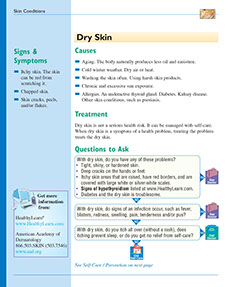
  • Dry Skin

    Skin Conditions

    Signs & Symptoms

    *  Itchy skin. The skin can be red from scratching it.

    *  Chapped skin.

    *  Skin cracks, peels, and/or flakes.

    Causes

    *  Aging. The body naturally produces less oil and moisture.

    *  Cold winter weather. Dry air or heat.

    *  Washing the skin often. Using harsh skin products.

    *  Chronic and excessive sun exposure.

    *  Allergies. An underactive thyroid gland. Diabetes. Kidney disease. Other skin conditions, such as psoriasis.

    Treatment

    Dry skin is not a serious health risk. It can be managed with self-care. When dry skin is a symptom of a health problem, treating the problem treats the dry skin.

    Questions to Ask

    Self-Care / Prevention

    *  Drink 8 or more glasses of water a day.

    *  Apply an oil- based lotion daily.

    *  Wear rubber gloves when you wash dishes.

    *  Take showers instead of baths. Use warm (not hot) water. Try sponge baths.

    *  Apply a moisturizing cream while your skin is damp. Use products with lanolin.

    *  If you do bathe, do so for only 15 to 20 minutes in lukewarm water. Pat yourself dry. Do not rub.

    *  Put soap on a washcloth, not right on the skin.

    *  Use a mild liquid soap, like Cetaphil lotion or use a fatted soap. Avoid deodorant, medicated, or alkaline soaps.

    *  Don’t use moisturizers with fragrances, preservatives, or alcohol.

    *  Use a night cream for the face.

    *  Stay out of the strong sun. Do not use tanning salons. When in the sun, use a sunblock with a sun protection factor (SPF) of at least 15.

    *  Don’t scratch or rub dry skin.

    Resources

    American Academy of Dermatology

    866.503.SKIN (503.7546)

    www.aad.org

    Healthier at Home book by the American Institute for Preventive Medicine. www.HealthyLife.com. All rights reserved.

    © American Institute for Preventive Medicine