Tag: duration

  • Zone Minutes Explained

    BE FIT

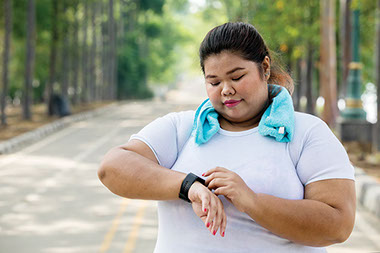
    Women looking at watch before exercising.

    When we are active, our heart and muscles increase the circulation of blood throughout the body. The more we get our heart pumping, the more efficient the body becomes at using oxygen.

    Zone minutes refer to the amount of time spent in any activity that gets the heart rate elevated into a range that promotes health. We all need a certain amount of time in the “zone” to keep our heart, muscles, lungs, and brain in peak condition.

    Getting at least 30 zone minutes a day, or 150 a week, is the recommended minimum for good health.

    The heart-rate zone

    Your recommended heart-rate zone depends on your age and physical condition. The simplest way to find your zone is to calculate 220 minus your age. This tells you your maximum recommended heart rate in beats per minute (BPM).

    In general, you earn zone minutes for activities that get you to 50-85% of your maximum heart rate.

    For example: A fifty-year-old in good health has a maximum heart rate of 170. When engaged in moderate to vigorous activity, their heart rate should be in the zone of 85-145 BPM.

    Activities to get in the zone

    To reach 150 zone minutes per week, make time for activities that get your heart pumping. Remember your zone minutes require moderate to vigorous exertion. Here are some great options:

    *  A moderately paced walk

    *  Playing a sport

    *  Biking

    *  Swimming

    *  Dancing

    *  Weight training

    If you’re new to being active, check with your doctor before you start. In the beginning, stick with moderate activity and don’t overexert yourself. As your body becomes more efficient, you will likely feel more comfortable in your target heart rate zone.

    Tracking your zone minutes

    There are many options for tracking how many zone minutes you accumulate each day. Choose the option that works best for you.

    *  Use a smartwatch to track your heart rate and minutes in the zone.

    *  Wear a heart rate monitor when you exercise to make sure you get in your ideal range.

    *  Do the talk test when being active: if you can talk and sing easily, you’re at a low intensity; if you can talk but not sing, you’re at moderate intensity, and if you cannot comfortably talk or sing, you’re at high intensity.
    © American Institute for Preventive Medicine

  • Check Your Current Exercise Habits

    Healthylife® Weigh

    Part 5

    Fitness concept with sneakers dumbbells headphones and bottle of water.

    How would you describe your current exercise habits?

    *  I do not engage in additional exercise beyond my daily activities.

    *  I exercise 1-3 times per week, for at least 30 minutes at a time.

    *  I exercise most days of the week, for at least 30 minutes at a time.

    *  I sit most of the day for my job.

    *  I am on my feet most of the day for my job.

    *  I am very active during most of the day for my job.

    What are your favorite ways to be physically active?

    Recommendation: Be physically active for at least 2 ½ hours (150 minutes) per week. You can do this in blocks of time that you choose. Any amount of physical activity counts toward the weekly amount.

    *  Have a chronic health problem, such as heart disease or diabetes.

    *  Have high blood pressure.

    *  Feel faint or very dizzy when you try to exercise.

    *  Have an injury or bone or joint problems, such as arthritis, that has been or could become aggravated by exercise.

    © American Institute for Preventive Medicine
  • Choose The Right Summer Camp For Your Child

    FAMILY LIFE

    Image of child at summer camp.

    When school’s out for the summer, what will the kids do? Many families choose summer camp options for school-age children to help make summer an educational and fun experience. But choosing the right camp for your child can seem daunting with so many choices.

    To simplify your decision, consider these factors:

    *What type of camp works with your child’s personality?Some children only want to be gone for a day camp and come home in the evening. Others want to do overnight camps. This may depend on the child’s age and whether they are accustomed to being away from home.

    *How many children attend the camp?Some kids do better in small groups, while others enjoy the excitement of being around many people.

    *What are your child’s interests?Some camps focus on particular activities, such as sports, cooking, music or art. Some offer programs for special needs children. Look for one that offers activities they like to do.

    *How will your child get there?Is there a bus or other transportation offered?

    *What is your budget?Be sure you understand the total cost of the camp. Some may have extra charges for food, special outings, or transportation.

    *How are the staff trained on safety, supervision, and other issues?If your child will be near water, discuss life guards and safety precautions for swimming.

    Once you’ve decided upon a camp, ask about a packing list, particularly for overnight camps. Even day camps often ask the children to bring a bathing suit, water bottle, snack, sunscreen, or other supplies.

    Source: American Camp Association

    © American Institute for Preventive Medicine