Tag: eating

  • Nine Tips For Healthier Fast-Food Meals

    Nutrition

    Image of restaurant neon sign.

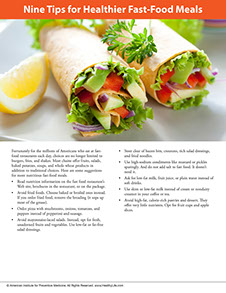
    Fortunately for the millions of Americans who eat at fast-food restaurants each day, choices are no longer limited to burgers, fries, and shakes. Most chains offer fruits, salads, baked potatoes, soups, and whole wheat products in addition to traditional choices. Here are some suggestions for more nutritious fast-food meals.

    *  Read nutrition information on the fast food restaurant’s Web site, brochures in the restaurant, or on the package.

    *  Avoid fried foods. Choose baked or broiled ones instead. If you order fried food, remove the breading (it sops up most of the grease).

    *  Order pizza with mushrooms, onions, tomatoes, and peppers instead of pepperoni and sausage.

    *  Avoid mayonnaise-laced salads. Instead, opt for fresh, unadorned fruits and vegetables. Use low-fat or fat-free salad dressings.

    *  Steer clear of bacon bits, croutons, rich salad dressings, and fried noodles.

    *  Use high-sodium condiments like mustard or pickles sparingly. And do not add salt to fast food. It doesn’t need it.

    *  Ask for low-fat milk, fruit juice, or plain water instead of soft drinks.

    *  Use skim or low-fat milk instead of cream or nondairy creamer in your coffee or tea.

    *  Avoid high-fat, calorie-rich pastries and dessert. They offer very little nutrients. Opt for fruit cups and apple slices.

    Page from A Year of Health Hints book by the American Institute for Preventive Medicine. www.HealthyLife.com. All rights reserved.

    © American Institute for Preventive Medicine

  • Pick & Pack A Healthy Lunch

    Nutrition

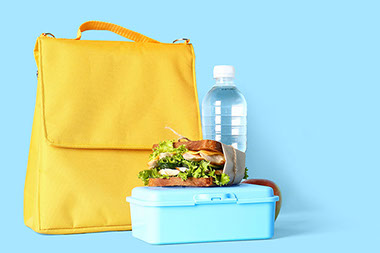
    Sandwich and water bottle sitting next to lunch bag.

    Supersized fast-foods and large sit-down or buffet lunches feed your hunger, but supersize your waistline, too. Make your own lunch with healthier foods.

    *  Choose fruits and veggies of different colors.

    *  Eat salads with dark, leafy greens; veggies and fruits; chick peas, kidney, and other beans. Choose low-calorie salad dressing.

    *  When cooking dinner, make extra for lunches the next day or two.

    *  Cook chili, spaghetti, and rice and beans in bulk. Refrigerate or freeze in single storage containers.

    In the evening, make family lunches and snacks for the next day. Save time in the morning!

    Yes:

    *  Low-sodium, lean meat and  whole-grain bread sandwiches or whole-grain bowls or salads.

    *  Nonfat and 1% low-fat milks. Low-fat cheeses and yogurts.

    No:

    *  High-fat luncheon meats on white bread.

    *  Regular soda and high-calorie coffee drinks and milkshakes.

    Page from HealthyLife Weigh book by the American Institute for Preventive Medicine. www.HealthyLife.com. All rights reserved.

    © American Institute for Preventive Medicine

  • Eating Disorders 3

    Mental Health

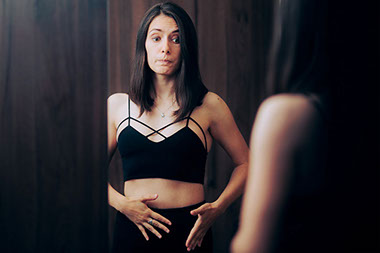
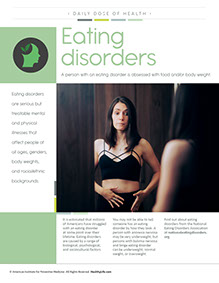
    Women looking at her body in a mirror.

    A person with an eating disorder is obsessed with food and/or body weight.

    Eating disorders are serious but treatable mental and physical illnesses that affect people of all ages, genders, body weights, and racial/ethnic backgrounds.

    It is estimated that millions of Americans have struggled with an eating disorder at some point over their lifetime. Eating disorders are caused by a range of biological, psychological, and sociocultural factors.

    You may not be able to tell someone has an eating disorder by how they look. A person with anorexia nervosa may be very underweight, but persons with bulimia nervosa and binge eating disorder can be underweight, normal weight, or overweight.

    Find out about eating disorders from the National Eating Disorders Association atnationaleatingdisorders.org.

    ays to Well-Being book by the American Institute for Preventive Medicine. www.HealthyLife.com. All rights reserved.

    © American Institute for Preventive Medicine

  • Eating Disorders 4

    Mental Health

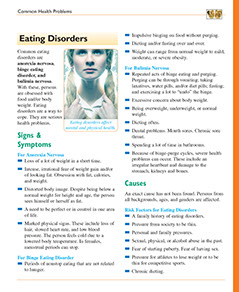
    Common eating disorders are anorexia nervosa, binge eating disorder, and bulimia nervosa. With these, persons are obsessed with food and/or body weight. Eating disorders are a way to cope. They are serious health problems.

    Signs & Symptoms

    For Anorexia Nervosa

    *  Loss of a lot of weight in a short time.

    *  Intense, irrational fear of weight gain and/or of looking fat. Obsession with fat, calories, and weight.

    *  Distorted body image. Despite being below a normal weight for height and age, the person sees himself or herself as fat.

    *  A need to be perfect or in control in one area of life.

    *  Marked physical signs. These include loss of hair, slowed heart rate, and low blood pressure. The person feels cold due to a lowered body temperature. In females, menstrual periods can stop.

    For Binge Eating Disorder

    *  Periods of nonstop eating that are not related to hunger.

    *  Impulsive binging on food without purging.

    *  Dieting and/or fasting over and over.

    *  Weight can range from normal weight to mild, moderate, or severe obesity.

    For Bulimia Nervosa

    *  Repeated acts of binge eating and purging. Purging can be through vomiting; taking laxatives, water pills, and/or diet pills; fasting; and exercising a lot to “undo” the binge.

    *  Excessive concern about body weight.

    *  Being overweight, underweight, or normal weight.

    *  Dieting often.

    *  Dental problems. Mouth sores. Chronic sore throat.

    *  Spending a lot of time in bathrooms.

    *  Because of binge-purge cycles, severe health problems can occur. These include an irregular heartbeat and damage to the stomach, kidneys and bones.

    Causes

    An exact cause has not been found. Persons from all backgrounds, ages, and genders are affected.

    Risk Factors for Eating Disorders

    *  A family history of eating disorders.

    *  Pressure from society to be thin.

    *  Personal and family pressures.

    *  Sexual, physical, or alcohol abuse in the past.

    *  Fear of starting puberty. Fear of having sex.

    *  Pressure for athletes to lose weight or to be thin for competitive sports.

    *  Chronic dieting.

    Treatment

    *  Counseling. This can be individual, family, group, and/or behavioral therapy.

    *  Support groups.

    *  Medication.

    *  Nutrition therapy.

    *  Outpatient treatment programs.

    *  Hospitalization, if needed.

    Questions to Ask

    Self-Care / Prevention

    Eating disorders need professional treatment.

    To Help Prevent an Eating Disorder

    *  Learn to accept yourself and your body. You don’t need to be or look like anyone else. Spend time with people who accept you as you are, not people who focus on “thinness.”

    *  Know that self-esteem does not have to depend on body weight.

    *  Eat nutritious foods. Focus on whole grains, beans, fresh fruits and vegetables, low-fat dairy foods, and low-fat meats.

    *  Commit to a goal of normal eating. Realize that this will take time. It will also take courage to fight fears of gaining weight.

    *  Don’t skip meals. If you do, you are more likely to binge when you eat.

    *  Avoid white flour, sugar and foods high in sugar and fat, such as cakes, cookies, and pastries. Bulimics tend to binge on junk food. The more they eat, the more they want.

    *  Find success in things that you do.

    *  Get regular moderate exercise 3 to 4 times a week. If you exercise more than your doctor advises, do non-exercise activities with friends and family.

    *  Learn as much as you can about eating disorders from books and places that deal with them.

    *  To help their children avoid eating disorders, parents should promote a balance between their child’s competing needs for independence and family involvement.

    To Treat an Eating Disorder

    *  Follow your treatment plan.

    *  Attend counseling sessions and/or support group meetings as scheduled.

    *  Identify feelings before, during, and after you overeat, binge, purge, or restrict food intake. What is it that you are hoping the food will do?

    *  Set small goals that you can easily reach. Congratulate yourself for every success. This is a process. Accept setbacks. Learn from them.

    *  Talk to someone instead of turning to food.

    *  Learn to express your rights. You have the right to say “no” and the right to express your feelings and your opinions. You have the right to ask that your needs are met.

    *  Keep a journal of your progress, feelings, thoughts, etc., but not about what you eat. The journal is just for you, not for others to read or judge. This is a safe place to be honest with yourself. The journal can also help you identify your “triggers” so that you can deal with them in the future.

    *  Don’t let the scale run your life. Better yet, throw out the scale!

    Resources

    Eating Disorders Awareness and Prevention

    202.382.3587

    nationaleatingdisorders.org
    Healthier at Home book by the American Institute for Preventive Medicine. www.HealthyLife.com. All rights reserved.

    © American Institute for Preventive Medicine

  • The Keys To Physical Well-Being Are Healthy Habits

    Personal Safety

    Couple eating watermelon.

    *  Eat nutritious foods.

    *  Get to and maintain a healthy weight.

    *  Be physically active.

    *  Get enough sleep and rest.

    *  See that you and all family members age 6 months and older get an annual flu vaccine. It is the single best way to prevent getting seasonal flu.

    Dos

    *  Balance work and play.

    *  Wash your hands often with soap and water or hand sanitizer containing 60% alcohol.

    *  Avoid secondhand smoke.

    Don’ts

    *  Don’t be a workaholic.

    *  Don’t be around people who have the flu.

    *  Don’t use tobacco in any form.

    A Year of Health Hints book by the American Institute for Preventive Medicine. www.HealthyLife.com. All rights reserved.

    © American Institute for Preventive Medicine

  • Mind Your Mindless Munching

    Weight Control

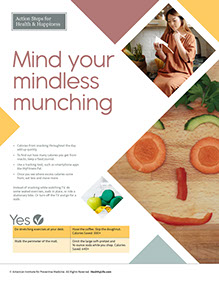
    Women in kitchen, writing in a journal.

    *  Calories from snacking throughout the day add up quickly.

    *  To find out how many calories you get from snacks, keep a food journal.

    *  Use a tracking tool, such as smartphone apps like MyFitness Pal.

    *  Once you see where excess calories come from, eat less and move more.

    *  Instead of snacking while watching TV, do some seated exercises, walk in place, or ride a stationary bike. Or turn off the TV and go for a walk.

    *  Do stretching exercises at your desk.

    *  Walk the perimeter of the mall.

    *  Have the coffee. Skip the doughnut. Calories Saved: 300+.

    *  Omit the large soft-pretzel and 16-ounce soda while you shop. Calories Saved: 640+.

    Page from HealthyLife Weigh book by the American Institute for Preventive Medicine. www.HealthyLife.com. All rights reserved.

    © American Institute for Preventive Medicine

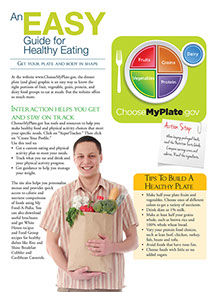
  • An Easy Guide For Healthy Eating

    Nutrition

    Image of women eating a healthy salad.

    Get your plate and body in shape.

    At the websitewww.ChooseMyPlate.gov, the dinner plate (and glass) graphic is an easy way to know the right portions of fruit, vegetable, grain, protein, and dairy food groups to eat at meals. But the website offers so much more.

    Interaction Helps You Get and Stay On Track

    ChooseMyPlate.govhas tools and resources to help you make healthy food and physical activity choices that meet your specific needs. Click on “SuperTracker.” Then click on “Create Your Profile.” Use this tool to:

    *  Get a custom eating and physical activity plan to meet your needs.

    *  Track what you eat and drink and your physical activity progress.

    *  Get guidance to help you manage your weight.

    The site also helps you personalize menus and provides quick access to calorie and nutrient comparisons of foods using My Food-A-Pedia. You can also download useful brochures and get White House recipes and Food Group recipes for healthy dishes like Rise and Shine Breakfast Cobbler and Caribbean Casserole.

    Tips to build a healthy plate

    *  Make half your plate fruits and vegetables. Choose ones of different colors to get a variety of nutrients.

    *  Drink skim or 1% milk.

    *  Make at least half your grains whole, such as brown rice and 100% whole wheat bread.

    *  Vary your protein food choices, such as lean beef, chicken, turkey, fish, beans and tofu.

    *  Avoid foods that have trans fats.

    *  Choose foods with little or no added sugars.

    Action Step

    When buying packaged foods, read the Nutrition Facts labels. Compare serving sizes and calories. Read the ingredients.

    Page from Ways to Well-Being book by the American Institute for Preventive Medicine. www.HealthyLife.com. All rights reserved.

    © American Institute for Preventive Medicine

  • Control Portion Sizes

    Weight Control

    Smiling women holding 4 pre-prepped meals.

    It’s all about portion control!

    *  First, learn how much food you need. Get a personalized MyPlate Plan atmyplate.gov/eat-healthy/what-is-myplatethat identifies how many cups, ounces, etc. of different foods you should eat for your daily needs.

    *  Use measuring cups, spoons, etc.

    *  Estimate portions. One cup of cereal is about the size of 2 hands, cupped. Three ounces of meat is about the size of a computer mouse. One Tbsp. is the size of 1 thumb.

    *  Limit second helpings, especially of foods high in fat and sugar.

    Page from HealthyLife Weigh book by the American Institute for Preventive Medicine. www.HealthyLife.com. All rights reserved.

    © American Institute for Preventive Medicine

  • Good Cheer For Holiday Dieting 2

    Weight Control

    Image of holiday inspired strawberries.

    Big holiday coming up? Don’t panic. With a good game plan and strategic planning you and your diet can not only survive holidays but you can actually thrive on them. Holidays do not have to be a time of feast or famine-you can strike a happy balance between gorging and self-sacrifice.

    *  Review your eating habits from the previous year’s celebration. Does food take center stage at Thanksgiving, Christmas, Fourth of July, and other big holidays? Do you genuinely enjoy foods like fruitcake, for example, or do you just eat them out of custom and tradition?

    *  Decide which customary holiday food habits you could easily change. (If you like to cook out for the Fourth of July, for example, consider barbecued chicken without skin instead of hot dogs.)

    *  Before digging in at a big holiday feast, imagine how you will feel after eating it. Visualize the bloated, uncomfortable, and guilty feelings you’ve experienced on past occasions.

    *  Forget about being “perfect” on holidays. Stringent dieting may be unrealistic and you could sabotage your efforts by setting standards that are too high. Don’t set yourself up for failure by only thinking of what you can’t have. Concentrate instead on what is available on your diet plan.

    *  Learn to be festive without depending on alcohol. A drink here, a toast there-the calories of alcohol can add up. Substitute club soda or mineral water for alcohol.

    *  If you’re invited to someone’s home for dinner, ask if you can contribute a dish, then make it low-calorie. (And be sure to make plenty. Low-calorie foods are usually very popular.)

    *  Remember that the major purpose of the holidays is to enjoy family and friends. Food and alcohol are secondary factors.

    Page from A Year of Health Hints book by the American Institute for Preventive Medicine. www.HealthyLife.com. All rights reserved.

    © American Institute for Preventive Medicine

  • Mind Your Mindless Munching 2

    Weight Control

    Eating when you are distracted can pack on pounds.

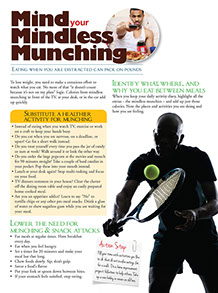
    To lose weight, you need to make a conscious effort to watch what you eat. No more of that “it doesn’t count because it’s not on my plate” logic. Calories from mindless munching in front of the TV, at your desk, or in the car add up quickly.

    Lower the need for munching & snack attacks.

    Image of teenage boys eating out of big bag of chips.

    *  Eat meals at regular times. Have breakfast every day.

    *  Eat when you feel hungry.

    *  Set a timer for 20 minutes and make your meal last that long.

    *  Chew foods slowly. Sip; don’t gulp.

    *  Savor a food’s flavor.

    *  Put your fork or spoon down between bites.

    *  If your stomach feels satisfied, stop eating.

    Identify what, where, and why you eat between meals.

    When you keep your daily activity diary, highlight all the extras – the mindless munchies – and add up just those calories. Note the places and activities you are doing and how you are feeling.

    Substitute a healthier activity for munching.

    *  Instead of eating when you watch TV, exercise or work on a craft to keep your hands busy.

    *  Do you eat when you are nervous, on a deadline, or upset? Go for a short walk instead.

    *  Do you treat yourself every time you pass the jar of candy or nuts at work? Walk around it or look the other way.

    *  Do you order the large popcorn at the movies and munch for 90 minutes straight? Take a couple of hard candies in your pocket. Pop these into your mouth instead.

    *  Lunch at your desk again? Stop multi-tasking and focus on your food.

    *  TV dinners common in your house? Clear the clutter off the dining room table and enjoy an easily prepared home cooked meal.

    *  Are you an appetizer addict? Learn to say “No” to tortilla chips or any other pre-meal snacks. Drink a glass of water or chew sugarless gum while you are waiting for your meal.

    Action Step

    Fill your time with activities you like to do that do not involve eating. Go for a walk. Do a home improvement project. Volunteer to help others. Take up a new hobby or renew an old one.

    Page from Ways to Well-Being book by the American Institute for Preventive Medicine. www.HealthyLife.com. All rights reserved.

    © American Institute for Preventive Medicine