Tag: enamel

  • Tooth-Brushing Truth

    WELL-BEING

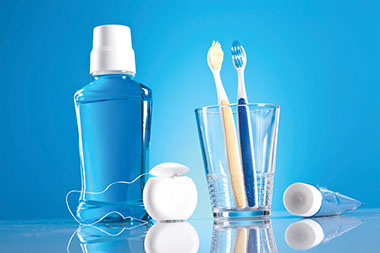
    Toothburshs, toothpaste, floss and mouthwash.

    Clean teeth are healthy teeth.

    Change your toothbrush with the seasons.

    Don’t wait until your 6-month dentist visit to get a new toothbrush. You should change your brush every 3 months, or sooner if it starts to fray.

    You’re probably using too much toothpaste.

    Adults and children over 3 years of age only need a pea-sized amount of fluoride toothpaste. For children younger than 3, the toothpaste should be the size of a grain of rice.

    Don’t scrub so hard.

    Choose a soft-bristled brush and don’t overdo it. Brush hard enough to clean the film off your teeth, but be gentle.

    Power brushes can give you a hand.

    Manual brushes clean well, but power brushes have their place, too. If you have trouble brushing on your own or tend to have a lot of plaque, try a power brush.
    © American Institute for Preventive Medicine

  • Foods That Fight Cavities

    Dental & Mouth Concerns

    Image of a dish with food fighting items to fight cavities.

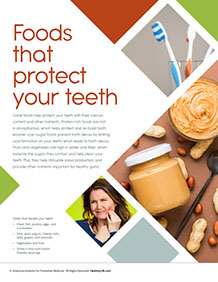
    Now you know how sticky sweets promote tooth decay. What you may not realize is that some foods prevent tooth decay. Research studies show that certain foods, like cheese and peanut butter, counteract the acids in the mouth that wear down the tooth enamel. (Be careful to buy plain, all-natural peanut butter, without added sugar of any kind.) Other tooth-saving foods include:

    *  Nuts and seeds.

    *  Meat, fish, poultry, and eggs.

    *  Olives and dill pickles.

    *  Milk, plain yogurt, and cheese.

    A Year of Health Hints book by the American Institute for Preventive Medicine. www.HealthyLife.com. All rights reserved.

    © American Institute for Preventive Medicine
  • Teeth & Mouth Changes With Aging

    Dental & Mouth Concerns

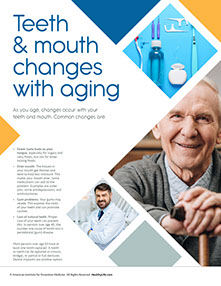
    Image of older women at the dentist office.

    As you age, changes occur with your teeth and mouth. Common changes are:

    *  Fewer taste buds on your tongue, especially for sugary and salty foods, but not for bitter tasting foods

    *  Drier mouth. The tissues in your mouth get thinner and tend to hold less moisture. This makes your mouth more dry. Some medications can add to the problem. Examples are water pills, some antidepressants, and antihistamines.

    *  Gum problems. Your gums may recede. This exposes the roots of your teeth and can promote cavities.

    *  Loss of natural teeth. Proper care of your teeth can prevent this. In persons over age 40, the number one cause of tooth loss is periodontal (gum) disease.

    More than half of persons over age 50 have at least one tooth replaced. A tooth or teeth can be replaced as crowns, bridges, partial or full dentures. Dental implants are another option.

    Health at Home Lifetime book by the American Institute for Preventive Medicine. www.HealthyLife.com. All rights reserved.

    © American Institute for Preventive Medicine

  • Seal Out Tooth Decay

    Dental & Mouth Concerns

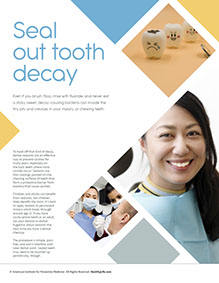
    Image of older women smiling and pointing to her mouth.

    Even if you brush, floss, rinse with fluoride, and never eat a sticky sweet, decay-causing bacteria can invade the tiny pits and crevices in your molars, or chewing teeth. To head off that kind of decay, researchers have developed sealants-special plastic coatings that form an effective barrier between bacteria and the chewing surfaces of your teeth, where fluoride is less effective.

    Approximately 90 percent of the cavities in school-age children occur in crevices in the back teeth, so sealants are best applied when the permanent molars first emerge. (The American Dental Association reports a significant decrease in cavities in children who have sealants applied to their teeth.) But that doesn’t mean sealants aren’t useful or appropriate for adults who have cavity-prone teeth. So ask your dentist or dental hygienist about sealants the next time you have a dental checkup.

    The procedure is simple, pain-free, and won’t interfere with later dental work. Sealed teeth may need to be touched up periodically, though.

    A Year of Health Hints book by the American Institute for Preventive Medicine. www.HealthyLife.com. All rights reserved.

    © American Institute for Preventive Medicine