Tag: encouragement

  • Positive Parenting Hacks

    FAMILY LIFE

    Parents with son, smile.

    Don’t focus on mistakes or bad behavior. Catch your child doing good things and point them out.

    Chores don’t have to be a punishment. Chores at home can help children learn life skills and independence.

    Spend a little time connecting each day. Take a few minutes to talk to your child without phones or screens.

    © American Institute for Preventive Medicine

  • Friends Help Friends Through Addiction

    Substance Use & Abuse

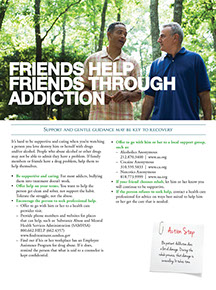
    Image of 2 friends walking and talking.

    Support and gentle guidance may be key to recovery.

    It’s hard to be supportive and caring when you’re watching a person you love destroy him or herself with drugs  and/or alcohol. People who abuse alcohol or other drugs may not be able to admit they have a problem. If family members or friends have a drug problem, help them to help themselves.

    Be supportive and caring.

    For most addicts, bullying them into treatment doesn’t work.

    Offer help on your terms.

    You want to help the person get clean and sober, not support the habit. Tolerate the struggle, not the abuse.

    Encourage the person to seek professional help.

    *  Offer to go with him or her to a health care provider visit.

    *  Provide phone numbers and websites for places that can help, such as: Substance Abuse and Mental Health Services Administration (SAMHSA) – 800.662.HELP (662.4357)www.findtreatment.samhsa.gov

    *  Find out if his or her workplace has an Employee Assistance Program for drug abuse. If it does, remind the person that what is said to a counselor is kept confidential.

    If your friend chooses rehab, let him or her know you will continue to be supportive. If the person refuses to seek help, contact a health care professional for advice on ways best suited to help him or her get the care that is needed.

    Offer to go with him or her to a local support group.

    Alcoholics Anonymous

    212.870.3400

    www.aa.org

    Cocaine Anonymous

    310.559.5833

    www.ca.org

    Narcotics Anonymous

    818.773.9999

    www.na.org

    Action Step

    Be patient. Addiction does a lot of damage. During the rehab process, that damage is unraveling. It takes time.

    Page from Ways to Well-Being book by the American Institute for Preventive Medicine. www.HealthyLife.com. All rights reserved.

    © American Institute for Preventive Medicine

  • Lean On Friends For Weight Loss Support

    Weight Control

    Find a friend or a room full of others on similar paths.

    Getting support as you change lifestyle habits is important. It could be from a buddy who will listen to your woes, applaud your successes, and help you stay on track. Or you could find the support you need in a group program where others’ successes inspire and motivate you.

    Friends don’t let friends eat junk.

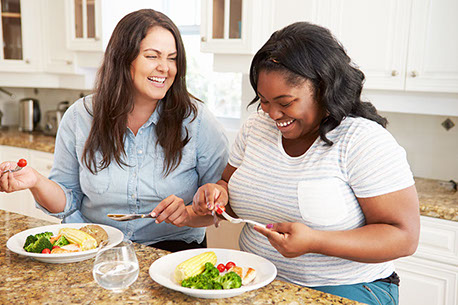
    Image of two friends eating healthy.

    It’s okay to be choosy. While your best friend might be great for laughs, if she’s a junk food junkie without weight issues, her own eating habits could rub off on you. Spend more time with a friend who is on a similar weight loss path or supports your efforts. If you don’t know anyone, find an online buddy in a weight-loss chat room or join a local weight loss support group.

    Use common sense for fee-based programs.

    Find out what you are paying for. One-on-one counseling? Group sessions? Medication? Pre-packaged foods and/or supplements that promise to speed up metabolism. Make sure the program you choose fits in with your budget, your lifestyle, and your personal goals.

    Questions to ask:

    *  Is a medical doctor on staff? Does the program have certified professionals, such as registered dietitians and exercise physiologists?

    *  Do I have one-on-one counseling?

    *  Do I attend group meetings?

    *  Will I have to buy special foods and/or supplements?

    *  Is there a start-up fee and/or membership fees?

    *  What is the average cost per month?

    *  How will I get help to make healthy behavior changes?

    *  How much weight does the average member lose and how long does he or she keep the weight off?

    Action Step

    Don’t keep your weight loss goals a secret. Post it on Facebook. Tweet it. Sharing will give you that push to stay on track and provide some much needed encouragement when you feel like quitting.

    Page from Ways to Well-Being book by the American Institute for Preventive Medicine. www.HealthyLife.com. All rights reserved.

    © American Institute for Preventive Medicine

  • Help Someone Quit Smoking

    Tobacco Cessation

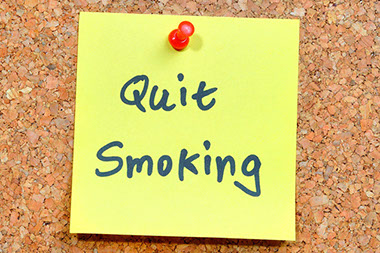
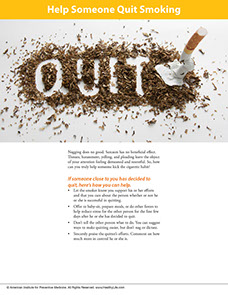
    Image of note with 'Quit Smoking' written on it.

    Nagging does no good. Sarcasm has no beneficial effect. Threats, harassment, yelling, and pleading leave the object of your attention feeling demeaned and resentful. So, how can you truly help someone kick the cigarette habit?

    If someone close to you has decided to quit, here’s how you can help.

    *  Let the smoker know you support his or her efforts and that you care about the person whether or not he or she is successful in quitting.

    *  Offer to baby-sit, prepare meals, or do other favors to help reduce stress for the other person for the first few days after he or she has decided to quit.

    *  Don’t tell the other person what to do. You can suggest ways to make quitting easier, but don’t nag or dictate.

    *  Sincerely praise the quitter’s efforts. Comment on how much more in control he or she is.

    Page from A Year of Health Hints book by the American Institute for Preventive Medicine. www.HealthyLife.com. All rights reserved.

    © American Institute for Preventive Medicine

  • It Takes A Village

    Healthylife® Weigh

    Part 4

    Three friends at the beach.

    Build support around you. Support from others can help:

    *  Motivate you and lift you up when you stumble.

    *  Hold you accountable.

    *  Give you new ideas and inspiration.

    *  Make activities more fun.

    Start With One Person

    Find someone you know and trust. This could be anybody-a family member, friend, or coworker. Perhaps this person already motivates you to make positive changes in your life.

    1. Let them know what you are trying to do.

    2. Ask them if they would be willing to support you.

    3. If “yes,” say “thank you!”

    4. Let them know how to help you. This may change over time.

    5. Thank this person often. Let them know the impact they are having on your lifestyle change.

    Let Others Know How to Help You

    Even when someone wants to help you, they may not know how. You have probably experienced this already, like when someone gives you cliché advice or gives you a sweet treat to cheer you up.

    Be specific when you tell others how to help you. Here are a few ideas.

    *  Remind you of your strengths and talents.

    *  Share healthy recipes for easy meals and snacks.

    *  Plan social times that don’t involve food. For example, go for a walk or go to the same exercise class.

    *  Give you non-food gifts only.

    *  Take care of your children so you can do your planned exercise. Or, plan an event where your families can be active together.

    © American Institute for Preventive Medicine

  • 3 Ways To Be A Positive Force At Work

    WORK LIFE

    Image of co-workers talking.

    *Give – or share – the credit.If you are recognized for a job well done, accept it graciously, but don’t forget about those who may have helped. If a co-worker or team had a hand in your achievement, be sure to mention them.

    *Always use “please” and “thank you.”We often forget these simple words when we’re busy and trying to get through a long to-do list. But they can have a big impact on how others respond to you. A (genuine) smile also helps.

    *Don’t take feedback personally.As hard as it may be, try to accept constructive criticism gracefully. Remember it’s not a personal attack, and consider the other person’s point of view before responding or getting upset.

    © American Institute for Preventive Medicine

  • Giving The Gift Of Healthy Eating

    HEALTHY EATING

    Image of salad filled with a variety of berries.

    The holiday season is usually associated with a lot of unhealthy, rich foods and sweets. The result of eating too much of these treats is often weight gain. A study in the New England Journal of Medicine found that people gained weight within 10 days of a national holiday, and it took several months to lose that weight.

    This year, celebrate without extra weight! Spread the gift of healthy eating to others by giving gifts that encourage good habits.

    Making healthy food easier

    If you’re looking for a thoughtful gift that will be truly appreciated, try giving the gift of healthy food that saves time and effort! Here are some ideas:

    *Make a healthy meal that freezes well and hand deliver it.The recipient can choose to freeze and eat later, or eat it that day. Be sure you are aware of any food allergies or other dietary needs. Some ideas include homemade chili or pasta sauce.

    *Put a more creative twist on a traditional fruit basket and give them a fruit salad that’s ready to eat.Pre-washed and cut fruit that’s ready to grab means they can enjoy it right away, without any prep time.

    *Put soup ingredients in a mason jar.This is a popular gift that helps the person prepare an easy and healthy dinner. Usually, the dry ingredients for your favorite soup will go well in a jar. Be sure to include directions on how to cook it, and consider adding some whole-grain bread on the side.

    *Share your favorite mix or sauce.Do you have a secret recipe for healthy granola or a delicious marinade for meats? Share your gift of cooking by putting it in a jar or container with a nice label. Provide tips on how to use or prepare it.

    Not into cooking?You can always purchase dishes or containers that are useful for healthy eating. For instance, a person who eats lunch on the go may appreciate containers that can keep salads, dressing or other healthy foods fresh and delicious.

    © American Institute for Preventive Medicine

  • Helping Your Child Succeed At School

    FAMILY LIFE

    Image of school children with backpacks.

    Although learning may be easier for some children than others, any child can find success at school with some extra help from their family. The American Academy of Pediatrics recommends these tips to help your child get a great education.

    Make reading a priority.

    Reading to your child helps them become a better learner. When they’re old enough, let them read to you. Don’t let reading be a chore. Make it a fun time for them by allowing them to choose books they enjoy. If they have difficulty reading aloud, offer to take turns reading to give them a break.

    Be involved.

    Ask your child about their class, their friends, and what they like about school. Attend parent-teacher conferences. If you’re concerned about how your child is doing, ask the teacher how you can help.

    Get them to bed on time.

    Children need the right amount of sleep for learning and good health. Lack of sleep affects the immune system, brain, and emotional control. To find out how much sleep your child needs, visitsleep.org/articles/how-much-sleep-children.

    Power their bodies with healthy food.

    Be sure your child eats a healthy breakfast each morning. Pack their favorite fresh fruits and vegetables in their lunches. Avoid soda and sugary drinks. A healthy diet can boost energy levels and help them stay alert.

    When a child is too sick for school

    Your child gets up in the morning and says she doesn’t feel well. It can be difficult to decide when your child truly needs to stay home, especially if  she doesn’t appear sick. In general, a child should stay home if she:

    *  Has a fever greater than 99.5 degrees

    *  Isn’t feeling well enough to participate in activities

    *  Has an illness that could spread to other children

    *  Has no appetite

    *  Has diarrhea, vomiting or nausea

    Often, you’ll have to use your best judgment to decide if your child should go to school. If he seems “not like himself” or you’re concerned about any symptoms, it’s usually best to play it safe and keep him home.


    © American Institute for Preventive Medicine