Tag: energy

  • 10 Ways To Get The Most Out Of Midlife

    SELF-CARE CORNER

    Image of couple dancing.

    Are your best years ahead? A national survey of women between the ages of 35 and 49, sponsored in partnership with the National Association of Nurse Practitioners in Women’s Health and Teva Women’s Health shows that more than three-quarters of women in midlife say the best years are ahead, not behind. Yet midlife is notoriously known as a time of crisis. Women’s health expert, Dr. Judith Reichman, tells how women are seizing the midlife moment and making new choices related to their health.

    If you have not already joined the ranks of women enjoying midlife, here are 10 ways to get the most out of these years:

    1. Don’t obsess about those 8 glasses of water each day. Drink when you are thirsty and when you are exercising briskly. Too much water reduces the impact of electrolytes and strains the bladder.

    2. Focus on family bonding. Often midlife crises for women are not an age phenomenon but rather due to the very significant changes that occur in the lives of our growing-up children and our maturing (we hope) partners.

    3. Spend more time with your partner. Don’t wait until the nest is already empty. This is the time to rediscover why you fell in love in the first place.

    4. Rev up the love life. You are free to go on dates with your partner-real dates!

    5. Periodically reevaluate your choice of birth control. The second-highest rates of unplanned pregnancies occur in midlife.

    6. Worry more about you. PMS gets worse with age, and work and family responsibilities continue to rise, so it is important to establish de-stressing routines, including setting aside time to exercise and visit with friends.

    7. Cut down on salt, reduce your caloric intact by 100-200 calories per day and boost your calcium and vitamin D intake. By midlife, most women are at high risk for high blood pressure and heart disease. Cutting salt can save your life and set up your family for healthy habits as they get older.

    8. Embrace your desire to sleep. Now is the time to develop good sleep habits to prepare you for the next stage of life as hormonal changes during menopause increase sleep troubles.

    9. Do something you thought you would never have time for. Take up a new hobby or go back to an activity you love-knitting, dancing, learning, or volunteering. Do something that makes you feel good about yourself.

    10. See your doctor. You have always made sure everyone else in the family gets a yearly check-up, but what about you? Schedule those yearly health screenings and don’t neglect your own health.

    Judith Reichman, MD, is an attending physician in gynecology at Cedars-Sinai Medical Center and author of Slow Your Clock Down: The Complete Guide to a Healthy, Younger You.

    © American Institute for Preventive Medicine

  • Should Kids Have Caffeine

    FAMILY LIFE

    Image of boy drinking water standing next to his bike.

    Many kids love the sugary sweet taste of soda, sports drinks and energy drinks. And, many of these drinks also contain various amounts of caffeine. Is it okay for your child to consume these drinks?

    No, says the American Academy of Pediatrics (AAP). Because these drinks can actually be harmful, the AAP says children and teens should avoid them. Here’s why:

    *  Caffeine can be harmful to a child’s developing brain and heart, according to the AAP.

    *  Soda contains extra sugar and calories that can lead to weight gain and tooth decay.

    *  Energy drinks contain caffeine and other stimulants which can be harmful to children. Often, the caffeine content is not listed and can be higher than a cup of coffee.

    *  Water is a better option for kids playing sports. Sports drinks are usually not needed and often contain extra calories. Only children who exercise very hard for long periods may need a sports drink to replenish lost electrolytes, such as sodium and potassium.

    The Academy of Nutrition and Dietetics (AND) agrees. Caffeine can interfere with a child’s sleep. The AND adds that caffeine can lead to a cycle of lack of sleep and consuming more caffeine to get through the day. If your child is low on energy, the AND recommends a short nap or getting to bed earlier at night.

    © American Institute for Preventive Medicine
  • 6 Benefits Of Drinking Water

    WELL-BEING

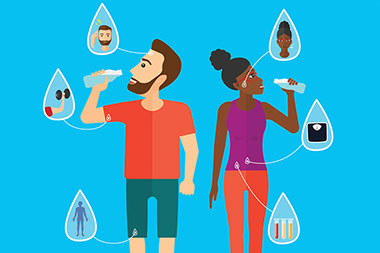
    Illustration of drinking water and it's benefits.

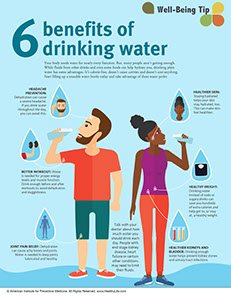
    Your body needs water for nearly every function. But, many people aren’t getting enough. While fluids from other drinks and even some foods can help hydrate you, drinking plain water has some advantages. It’s calorie-free, doesn’t cause cavities and doesn’t cost anything. Start filling up a reusable water bottle today and take advantage of these water perks:

    Headache prevention:Dehydration can cause a severe headache. If you drink water throughout the day, you can avoid this.

    Better workout:Water is needed for proper energy levels and muscle function. Drink enough before and after workouts to avoid dehydration and sluggishness.

    Joint pain relief:Dehydration can cause achy bones and joints. Water is needed to keep joints lubricated and healthy.

    Healthier skin:Staying hydrated helps your skin stay hydrated, too. This can make skin feel healthier.

    Healthy weight:Drinking water instead of soda or sugary drinks can save you hundreds of extra calories and help get to, or stay at, a healthy weight.

    Healthier kidneys and bladder:Drinking enough water helps prevent kidney stones and urinary tract infections.

    Talk with your doctor about how much water you should drink each day. People with end stage kidney disease, heart failure or certain other conditions may need to limit their fluids.

    © American Institute for Preventive Medicine

  • Stay Warm, Save Money

    FINANCIAL HEALTH

    Image of thermostat being set at 71 degrees.

    When temperatures drop, energy bills are higher. Duke Energy offers some simple energy (and money) saving tips:

    *  Check your heating system’s ductwork to ensure that it is well insulated and completely covered. Ductwork should be properly sealed and not allowed to hang loose under the house.

    *  Keep your thermostat at a comfortable setting. If you are going to be away for several days, turn the thermostat to a lower setting, but not off.

    *  Have your heating or cooling system checked each season by a qualified technician to make sure it is operating properly. Heating and cooling account for at least half of your energy bill.

    *  Check insulation, seal cracks, and weather-strips between heated and unheated areas such as garages, basements, and attics.

    *  If you have a window air conditioning unit, remove it for the winter months to prevent heat from escaping through and around the unit. If it cannot be moved, cover it to prevent drafts.

    *  Always make sure the fireplace damper seals tightly and remains closed except when a fire is burning or smoldering in the fireplace.

    *  Insulate your water heater with at least R-6 insulation. The water heater is the second-largest energy user in your home. You can save enough money in energy bills to pay back the cost of materials within months and then keep on saving.

    *  Ceiling fans help keep you comfortable in the summer and winter. Reversing the direction of the blades pushes warm air down into the room. Fans should turn counter-clockwise in the summer and clockwise in the winter.

    *  On sunny days, leave the draperies open to allow the sun’s rays to warm your house.

    © American Institute for Preventive Medicine
  • 7 Quick And Easy Breakfast Tips

    HEALTHY EATING

    Image of father and daughter having breakfast.

    A healthy breakfast is a must for kids. Skip it and your kids will be playing nutritional catch-up for the rest of the day, said Carole L. Adler, a dietitian at the Food and Drug Administration.

    When kids skip breakfast, they don’t get what they need to be at their best. “Growing bodies and developing brains need regular, healthy meals,” she said. According to the Academy of Nutrition and Dietetics, studies show that school children who eat breakfast perform better in the classroom.

    As with other meals, it’s a good idea for your kids (and you) to eat a healthy balance of fruits and vegetables, proteins, grains, and dairy-not just for breakfast but throughout the day.

    Here are Adler’s 7 quick and easy breakfast tips to ensure your children start their day off right.

    1.Breakfast doesn’t have to mean traditional breakfast foods.Anything goes. Even last night’s leftovers.

    2.Give kids foods they like.Put veggies on that left-over whole-grain pizza. Or make muffins with zucchini and carrots and spread with peanut butter with a glass of milk. Mix sugary cereal with a healthier nutrient-packed brand.

    3.Make healthy trade-offs.Nutritional balance is key. Not enough vegetables in the morning meal? Prepare extra carrot, celery, and broccoli sticks with a hummus dip as an afternoon snack.

    4.Take growth and activity levels into account.Adler says that having a breakfast that contains protein, fat, and carbohydrates helps children feel full and stay focused until lunch. Protein choices might include an egg, some nuts, a slice of deli meat or cheese, or a container of yogurt.

    5.Don’t take, “Mom, I don’t have time for breakfast” as an excuse.Make sure your kids grab a piece of fruit on the way out the door, and hand them a bag of nut-and-fruit trail mix or a whole-wheat tortilla spread with peanut butter or almond butter and a carton of milk.

    6.Prep the night before.Morning is a busy time for everyone-you included. So take ten minutes to think ahead and prep for breakfast the night before. Chop up fruit to layer in a yogurt parfait or add to cereal. Cut up vegetables for an omelet. Mix up muffin or whole-grain waffle batter, cover, and put in the fridge.

    7.Use the Nutrition Facts label and ingredient statement when you shop.

    Desk snacks.

    People who have snacks in or on the desk reported weighing 15.4 pounds more than those who don’t. Use an opaque candy dish with a lid and store candy in a drawer where it’s less visible and accessible, advises Cornell University researcher, Dr. Brian Wansink, author of Slim by Design. Or, keep dried fruit or unsalted nuts in your desk drawer.

    © American Institute for Preventive Medicine
  • Timing Is Everything: When To Exercise

    BE FIT

    Image of older couple brisk walking.

    Some people swear by a 6 a.m. run each day. Others are night-owls and hit the gym after dinner. Still others might go to a yoga class on their lunch hour. When is the right time of day to work out?

    Experts say there is no big difference in the time of day – as long as you stick with it. The key is to find a time that works for you and your schedule, according to the American Heart Association.

    Workout partners

    Studies show that people who have an exercise buddy are more likely to exercise regularly. If you can meet a friend at the gym or walk together, find a time that works for both of you.

    Think about sleep

    If you already have trouble falling asleep at night, a late-night workout probably won’t help. Exercise can make you feel more energetic and alert, instead of allowing you to wind down for rest. Schedule your workout at least two hours before you plan to go to sleep.

    Morning means consistency

    If you have a busy schedule, it may be easier to fit your workout into the early morning hours. People who exercise before work or other commitments find that they can get it done and “out of the way” before other things can interfere.

    Make it work for you

    If you dread going to the gym, you’re less likely to do it. Try different times of day and different routines to see which ones suit you best. Make it as fun as you can, and do it at a time of day when you feel your best. It can take two weeks or longer to build a habit, so give it a chance – and don’t give up if it’s difficult at first. You may find that over time, you have more energy and start to look forward to your exercise routine.

    Another reason to get moving

    During exercise, your body releases endorphins, which are special chemicals in the brain that reduce stress, relieve pain, and help you sleep better.

    Source: Anxiety and Depression Association of America

    © American Institute for Preventive Medicine
  • A Jolt Of Java

    HEALTHY EATING

    Image of 3 coffee cups around coffee beans.

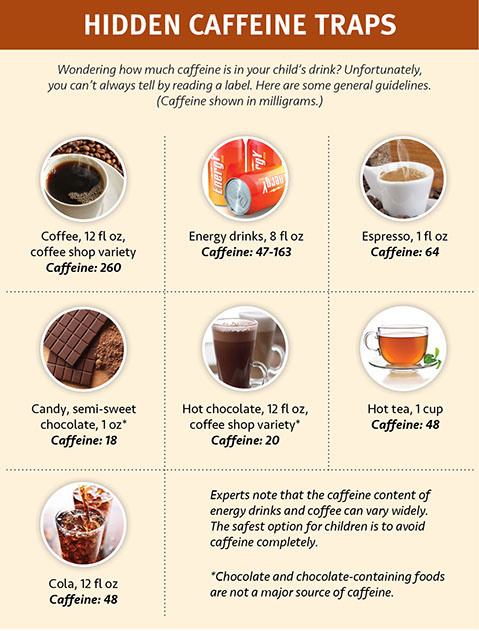
    The addictive drug caffeine (yes, it’s a drug) is naturally found in coffee beans and is added to other drinks and foods. So how much is in your daily cup?

    Here’s what the Center for Science in the Public Interest says. (Numbers are in milligrams per 8 ounce cup, unless otherwise stated, so judge accordingly because who drinks just 8 ounces?)

    * Note: The FDA advises consumers to talk with their health care providers before using any product marketed as an “energy shot” or “energy drink.”

    *  Brewed coffee 102 to 200 (by comparison, brewed decaf 5)

    *  Instant coffee 27 to 173

    *  Starbucks brewed 160 (Starbucks vanilla latte 75 or 1 oz Espresso 75)

    *  Dunkin’ Donuts 103

    *  Starbucks Tazo Chai tea 50

    *  Brewed tea 40-120

    *  Arizona Iced Tea, black 16; green 7.5

    *  Snapple, Just Plain Unsweetened 9

    *  5-Hour Energy (1.93 oz) 207*

    *  Monster Energy 80 (but the cans are 16 oz so 160)*

    *  Coke, regular or diet 54 (12 oz); Classic 35

    *  Sprite, regular or diet 0

    *  SoBe Essential 48

    *  Ben & Jerry’s Coffee Heath Bar Crunch 84

    *  Hershey’s Chocolate Bar (1.55 oz) 9

    *  Hershey’s Kisses (9 pieces) 9

    *  Excedrin (Extra Strength, 2 tablets) 130

    © American Institute for Preventive Medicine

  • Tips To Survive The Workweek

    WORK LIFE

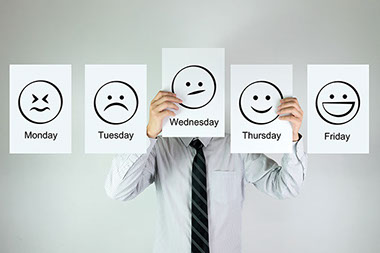
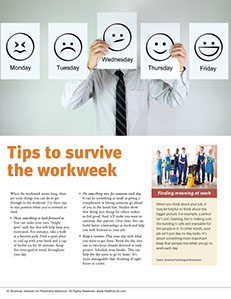
    Image of the days of the week on paper with emotion faces.

    When the workweek seems long, there are some things you can do to get through to the weekend. Try these tips to stay positive when you’re stressed or tired:

    *  Have something to look forward to. You can make your own “bright spot” each day that will help keep you motivated. For instance, take a walk at a favorite park. Find a quiet place to curl up with your book and a cup of herbal tea for 30 minutes. Keep this mini-goal in mind throughout your day.

    *  Do something nice for someone each day. It can be something as small as giving a compliment or letting someone go ahead of you in the lunch line. Studies show that doing nice things for others makes us feel good. And, it’ll make you want to continue that pattern. Over time, this can build better relationships at work and help you look forward to your job.

    *  Keep a routine. Plan your day with what you want to get done. Break the day into one or two-hour chunks devoted to each project. Schedule your breaks. This can help the day seem to go by faster. It’s more manageable than thinking of eight hours at a time.

    Finding meaning at work

    When you think about your job, it may be helpful to think about the bigger picture. For example, a janitor isn’t just cleaning; but is making sure the building is safe and enjoyable for the people in it. In other words, your job isn’t just day-to-day tasks. It’s about something more important. Keep that perspective when you go to work each day.

    Source: American Psychological Association

    © American Institute for Preventive Medicine

  • Avoiding The Afternoon Slump

    WORK LIFE

    Image of a group of co-workers smiling and laughing.

    Do you often feel tired and worn out after lunch? It can be hard to stay productive and get through the workday if you’re fighting fatigue and exhaustion. Often times, this afternoon slump can be avoided by making a few simple changes:

    *Use caffeine sparingly.A cup of coffee or tea can give you a boost in the morning, but drinking too much can cause an energy crash after it wears off. Finish your last caffeinated drink before noon, and limit intake to four 8 oz. cups of coffee.

    *Include lean protein and healthy fats in your lunch.This can help stabilize blood sugar levels and fight fatigue. Examples include turkey, low-fat dairy, avocado, nuts and fish.

    *Drink plenty of water.Even mild dehydration can make you tired. Aim for eight 8 oz. glasses per day.

    *Get moving.If you can, walk outside at lunch and get fresh air, even for just 10 minutes. This can energize and relax you. But even walking indoors or stretching in your office can be helpful. Sitting at a desk for hours without getting up can make you feel tired. Do alternative activities and walk around when you can.

    *Having more energy starts the day before.If you find that you’re tired every day despite these tips, you may need more sleep. Aim for 7 to 9 hours a night.

    Sometimes, ongoing fatigue can be a sign of a health issue. If you find that your energy levels are always low despite making healthy choices, talk to your doctor. Problems such as sleep disorders, anemia, depression, diabetes, and many other conditions can cause energy levels to sag. Certain medications can also cause sleepiness. You and your doctor can discuss your health history and make a plan to address any issues to get you feeling better again.

    © American Institute for Preventive Medicine

  • Understanding Carbs

    HEALTHY EATING

    Image of different type of breads.

    Carbohydrates (or carbs) are one of the main types of nutrients in our diets. Fats and protein are other nutrients.

    Carbs with a simple chemical structure are called sugars. Sugars are found naturally in foods such as fruits, vegetables, and milk products. They’re also added to many foods and drinks.

    Complex carbs, such as starches and fiber, are found in whole-grain breads and cereals and in starchy vegetables such as potatoes.

    Your digestive system changes the carbs you eat into glucose, a type of sugar that your body uses for energy.

    Simple carbs are more quickly digested and absorbed than complex carbs, so simple carbs can raise your blood glucose levels faster and higher. If you have diabetes, you need to manage your blood glucose levels. High blood glucose can damage your tissues and organs.

    It makes sense to eat more complex carbs, according to researchers at NIH. And not just people with diabetes, but everyone. Complex carbs are more gradually absorbed and help control blood sugar levels.

    Whole foods with complex carbs will give you more minerals and vitamins too and are usually good sources of fiber.

    Make Wise Carb Choices

    *  Try different kinds of beans and lentils.

    *  Choose cereals high in fiber (5 or more grams per serving, read the label for this information).

    *  Switch to whole grains. Look for whole-grain bread, whole-wheat pasta, brown or wild rice, barley, quinoa, and bulgur.

    *  Eat more fresh fruits and vegetables and drink less juice.

    *  Snack on fruit and small portions of nuts and seeds.

    *  Limit candy.

    © American Institute for Preventive Medicine