Nutrition
Three Ways to Modify Ingredients
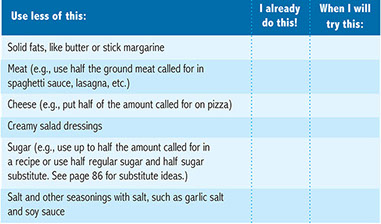
1. Use less of ingredients that contain fat, saturated fat, sodium, and sugar.
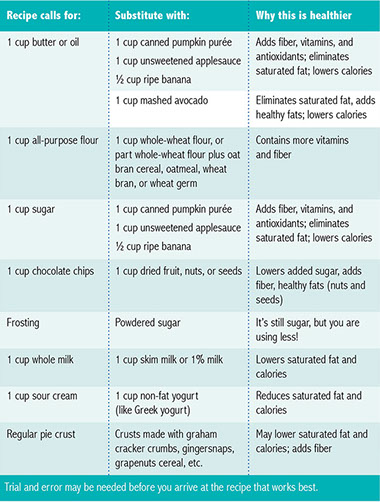
2. Substitute ingredients.
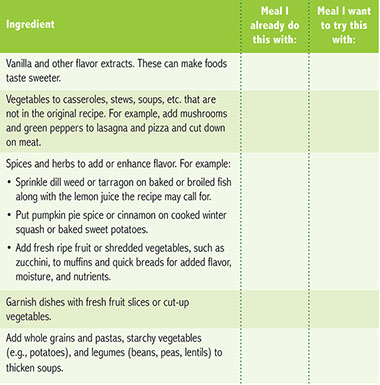
3. Add new ingredients.
All of the ingredients in a recipe add to the end product. You will need to look at each recipe to see where you can make changes. Only certain ingredients can be changed. Trial and error may be needed before you arrive at the recipe that works best.
1. Use Less of These Ingredients
These include:
* Oils, fats, such as butter, stick margarine, etc.
* Meats (e.g., cut ground meat by half in spaghetti sauce, lasagna, etc.)
* Cheese (e.g., put half of amount called for on pizza)
* Regular salad dressings
* Sugar (e.g., use up to half the amount called for in most recipes or use half regular sugar and half sugar substitute. See labels for correct amounts to use in place of sugar.)
* Salt and other seasonings with salt, such as garlic salt
2. Substitute Ingredients
* Diet margarine’s high water content may alter the texture of baked products. It works well, though, in sauces, as spreads, and for sauteing vegetables.
** When using yogurt for sour cream in heated sauces, mix 1 Tbsp. of cornstarch with 1 Tbsp. of the yogurt then add to the rest of the yogurt. Stir over medium heat until sauce thickens. This will prevent the yogurt from separating.
3. Add New Ingredients
Here are some examples:
* Vanilla and other flavor extracts. Adding vanilla or adding extra vanilla can make foods taste sweeter than they are.
* Vegetables to casseroles, stews, soups, etc. that are not in the original recipe. For example, add mushrooms and green pepper to lasagna and pizza and cut down on or don’t use any meats.
* Spices and herbs to add or enhance flavor. For example:
– Sprinkle dill weed or tarragon on baked or broiled fish along with the lemon juice the recipe may call for.
– Put pumpkin pie spice on cooked winter squash.
– Add fresh ripe fruit or mashed cooked vegetables to muffins and quick breads for added flavor, moistness, and nutrients.
* Garnish dishes with fresh fruit slices and cut-up vegetables.
* Add grains, pastas, starchy vegetables, (potatoes, etc.) legumes (beans, peas, lentils) to thicken soups.
* Practice with changing recipes. The savings in total fat, saturated fat, trans fat, sodium, sugar, and calories can be great.
Modify ingredients in the example below to lower fat, sugar, sodium, and calories.
Resources
American Heart Association
Search for “Nutrition Center.”
National Heart, Lung, and Blood Institute (NHLBI)
Search for “Healthy Recipes.”
NUTRITION.GOV
Search for “Healthy Eating.”
© American Institute for Preventive Medicine