Tag: exercise

  • 5 Ways To Fight Childhood Obesity

    FAMILY LIFE

    Image of boy with a glass of milk and an apple.

    Parents should set the example and be persistent, said Dr. Felipe Lobelo, who specializes in nutrition, physical activity, and obesity at the CDC.

    1.Eat more fruits and vegetables.Serve vegetables your kids are most likely to eat.

    2.Spend less time in front of a screen.Place limits on the amount of time kids spend in front of a TV or computer-no more than 2 hours a day is a good guide.

    3.Exercise more.Just play outside for at least an hour a day.

    4.Eliminate sugary drinks.Avoid soft drinks, juices, and energy drinks. Encourage kids to drink water.

    5.Set the example.Good eating habits start at home.

    © American Institute for Preventive Medicine

  • Agility Means Mobility

    SELF-CARE CORNER

    Image of 3 senior citizens walking on treadmills.

    Want to be able to move around well as you age? Finding it more difficult to get down on your knees (and get up)? Interested in keeping your joints strong and flexible to meet the demands of daily life?

    Join the club. Without our ability to get around, all kinds of health problems set in, according to the CDC. MySilverAge.com challenges not just seniors but everyone else to work out to improve mobility with these 3 functional fitness workouts:

    *Use sandbells to minimize strain.While exercise equipment such as dumbbells strengthen arms, many weights can place too much strain on the hands. A sandbell-a weighted, contoured fabric bag filled with sand-is an easier alternative for older adults and others who have trouble gripping items, because they offer customizable weight and grip for strength exercises, while minimizing stress and strain on hands.

    *Use interval training for quick bursts of energy.Children tend to have short bursts of energy followed by periods of rest before they start again. Keep up with the kids with interval training. Walk on a treadmill at a normal speed for 5 minutes, then increase to a more challenging pace for 1 minute and repeat.

    *Use an exercise ball for better balance.Good balance is vital for safe walking, stair climbing, and avoiding falls. Use an exercise ball in place of a chair during traditional workouts, such as lifting weights, to help improve balance. The instability of the ball forces all the body’s muscles to work together to support stability and steady balance.

    © American Institute for Preventive Medicine

  • Hey, Want To Improve Your Balance?

    SELF-CARE CORNER

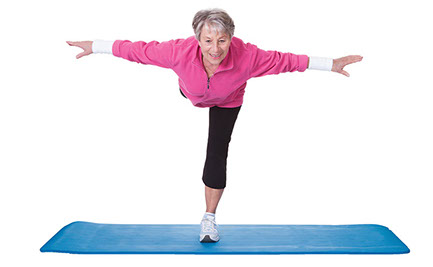
    Image of older women balancing on one leg while bending over half way.

    Everyone wants to prevent falls and improve balance, at any age. NIH in Health offers these daily exercises to steady your balance (and you could do these while talking on the phone or at work too):

    *  Stand on one leg at a time for a minute. Slowly increase the time. Try to balance with your eyes closed or without holding on to anything.

    *  Stand on your toes for a count of 10, and then rock back on your heels for a count of 10.

    *  Move your hips in a big circle to the left, and then to the right. Do not move your shoulders or feet. Repeat 5 times.

    © American Institute for Preventive Medicine

  • Move In Minutes

    SELF-CARE CORNER

    Image of business man walking while talking on the phone.

    Sitting for extended periods can raise the chances of developing cancer even for people who exercise regularly, says recent research. In response to these findings, fitness experts at The University of Texas MD Anderson Cancer Center share advice on how to get moving in minutes.

    “Taking just one- to two-minute breaks from sitting may help lower your cancer risk,” said Dr. Karen Basen-Engquist, professor in the Department of Behavioral Science. “That’s because even short spurts of movement can help minimize inflammation, insulin resistance, and long-term weight gain-all factors that make it harder for the body to fight off cancer.”

    Basen-Engquist, who uses a pedometer and tries to get at least 500 steps an hour, offers these tips to get moving-no matter how many minutes you can grab each day.

    Have 5 minutes? Stretch.

    Take breaks from sitting at work or home by standing up and stretching your back, forearms, wrists, legs, and hamstrings. Among the benefits: more energy, better circulation, and less muscle tension and stress.

    Have 10-15 minutes? Take a brisk walk.

    Head out during your lunchtime. Take walking meetings with coworkers. Plan a quick trip around the neighborhood. Walking helps maintain a healthier blood pressure, boosts metabolism, curbs stress, and possibly reduces breast and colorectal cancer risk.

    Just keep in mind that brisk walking yields more benefits than a casual stroll. So you should feel a little out of breath and feel your heart beating a little faster.

    Have 20-30 minutes? Tidy the house.

    Tidying up does more than limit couch time. It can also qualify as aerobic activity. To get your heart rate up, focus on repetitive activities that use large muscle groups, like the legs and back. This includes vacuuming, mopping, scrubbing, gardening, and even taking multiple trips upstairs to put away laundry.

    Have just 1-2 minutes? Take the stairs.

    Skip the elevator or escalator and take the stairs at work and when doing errands. Stairs get your heart pumping, build muscle, strengthen bones, and burn calories. The more often you take one step at a time, the bigger the payoff.
    © American Institute for Preventive Medicine