Tag: facts

  • Erectile Dysfunction Facts

    MEDICAL NEWS

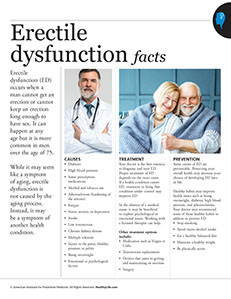
    Older couple cuddling with a blanket.

    Erectile dysfunction (ED) occurs when a man cannot get an erection or cannot keep an erection long enough to have sex. It can happen at any age but it is more common in men over the age of 75.

    While it may seem like a symptom of aging, erectile dysfunction is not caused by the aging process. Instead, it may be a symptom of another health condition.

    Causes

    *  Diabetes

    *  High blood pressure

    *  Some prescription medications

    *  Alcohol and tobacco use

    *  Atherosclerosis (hardening of the arteries)

    *  Fatigue

    *  Stress, anxiety, or depression

    *  Stroke

    *  Low testosterone

    *  Chronic kidney disease

    *  Multiple sclerosis

    *  Injury to the penis, bladder, prostate, or pelvis

    *  Being overweight

    *  Emotional or psychological factors

    Treatment

    Your doctor is the best resource to diagnose and treat ED. Proper treatment of ED depends on the exact cause. If a health condition causes ED, treatment to bring that condition under control may improve ED.

    In the absence of a medical cause, it may be beneficial to explore psychological or emotional issues. Working with a licensed therapist can help.

    Other treatment options include:

    *  Medication such as Viagra or Cialis

    *  Testosterone replacement

    *  Devices that assist in getting and maintaining an erection

    *  Surgery

    Prevention

    Some causes of ED are preventable. Protecting your overall health may decrease your chance of developing ED later in life.

    Healthy habits may improve health issues such as being overweight, diabetes, high blood pressure, and atherosclerosis. Your doctor may recommend some of these healthy habits to address or prevent ED.

    *  Stop smoking

    *  Avoid excess alcohol intake

    *  Eat a healthy, balanced diet

    *  Maintain a healthy weight

    *  Be physically active
    © American Institute for Preventive Medicine

  • Get The Facts About Stuttering

    MEDICAL NEWS

    Adult helping child with speech.

    Speech is an important part of communicating. Yet millions of people cope with a speech disability every day.

    What is stuttering?

    Stuttering is a problem that affects how your speech flows. People who stutter may:

    *  Stretch words out for too long when speaking

    *  Have pauses where they can’t get a word out

    *  Repeat whole words or parts of words

    *  Have uncontrolled movements when speaking, such as trembling in the jaw or excessive blinking

    Scientists don’t fully understand why stuttering happens. But we do have plenty of facts about this speech disorder. Learn more about what it is and how you can help someone who has it.

    FACT #1: Stuttering isn’t related to intelligence.

    Stuttering isn’t a problem with being confused or less intelligent. In fact, many intelligent and successful people have dealt with this speech disorder.

    FACT #2: Finishing a word or sentence for someone is not helpful.

    People who don’t understand stuttering may get frustrated or impatient when someone stutters. They may just want to say the word for them so they can keep talking. This is not helpful and could make stuttering worse.

    FACT #3: Stuttering is not caused by stress or being tense.

    Experts believe that people who stutter may have some brain differences. These  differences affect how a person’s brain works when they speak. But it’s not caused by anxiety, stress or a mental health condition. However, being stressed could make stuttering worse for a person who already has the disorder.

    FACT #4: Stuttering is more common in children.

    Many children stutter while they are learning how to speak and understand others. Most of the time, children stop stuttering before they become adults. They may need help from their doctor and a speech-language pathologist. If you’re concerned about your child’s stuttering, talk to their pediatrician.

    If you have concerns about stuttering, finding words or other speech issues, talk to your doctor about seeing a licensed speech-language pathologist.

    Sources: American Speech-Language-Hearing Association, National Institutes of Deafness and Other Communication Disorders

    © American Institute for Preventive Medicine

  • Quick Facts About Sodium

    HEALTHY EATING

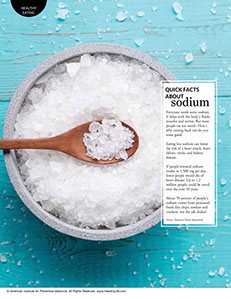
    A bowl filled with salt and a wooden spoon.

    Everyone needs some sodium. It helps with the body’s fluids, muscles and nerves. But most people eat too much. Here’s why cutting back can do you some good:

    Eating less sodium can lower the risk of a heart attack, heart failure, stroke and kidney disease.

    If people lowered sodium intake to 1,500 mg per day, fewer people would die of heart disease. Up to 1.2 million people could be saved over the next 10 years.

    About 70 percent of people’s sodium comes from processed foods like chips, cookies and crackers, not the salt shaker!

    Source: American Heart Association

    © American Institute for Preventive Medicine
  • The Facts About Donating Organs

    MEDICAL NEWS

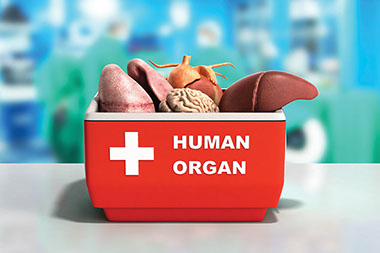
    Illustration of organs.

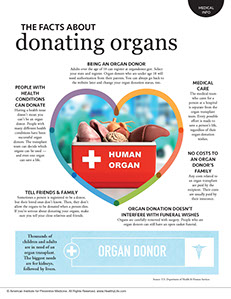
    Thousands of children and adults are in need of an organ transplant. The biggest needs are for kidneys, followed by livers.

    Being an organ donor

    Adults over the age of 18 can register at organdonor.gov. Select your state and register. Organ donors who are under age 18 will need authorization from their parents. You can always go back to the website later and change your organ donation status, too.

    People with health conditions can donate

    Having a health issue doesn’t mean you can’t be an organ donor. People with many different health conditions have been successful organ donors. The transplant team can decide which organs can be used – and even one organ can save a life.

    Tell friends & family

    Sometimes a person is registered to be a donor, but their loved ones don’t know. Then, they don’t allow the organs to be donated when a person dies. If you’re serious about donating your organs, make sure you tell your close relatives and friends.

    Medical care

    The medical team who cares for a person at a hospital is separate from the organ transplant team. Every possible effort is made to save a person’s life, regardless of their organ donation wishes.

    No costs to an organ donor’s family

    Any costs related to an organ transplant are paid by the recipient. Their costs are usually paid by their insurance.

    Organ donation doesn’t interfere with funeral wishes

    Organs are carefully removed with surgery. People who are organ donors can still have an open casket funeral.

    Source: U.S. Department of Health & Human Services

    © American Institute for Preventive Medicine
  • Vaccines & Autism: The Facts

    MEDICAL NEWS

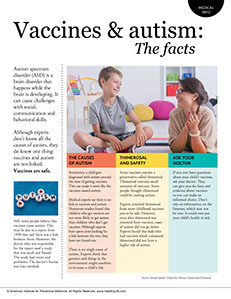
    Young child and teacher.

    Autism spectrum disorder (ASD) is a brain disorder that happens while the brain is developing. It can cause challenges with social, communication and behavioral skills.

    Although experts don’t know all the causes of autism, they do know one thing: vaccines and autism are not linked. Vaccines are safe.

    Still, some people believe that vaccines cause autism. This may be due to a report from 1998 that said there was a link between them. However, the doctor who was responsible for the report used a study that was small and flawed. The study had errors and problems. The doctor’s license was later revoked.

    The causes of autism

    Sometimes, a child gets diagnosed with autism around the time of getting vaccines. This can make it seem like the vaccines caused autism.

    Medical experts say there is no link to vaccines and autism. Numerous studies found that children who get vaccines are not more likely to get autism than children who don’t get vaccines. Although experts have spent years looking for a link between the two, they have not found one.

    There is no single cause of autism. Experts think that genetics and things in the environment might combine to increase a child’s risk.

    Thimerosal and safety

    Some vaccines contain a preservative called thimerosal. Thimerosal contains small amounts of mercury. Some people thought thimerosal could be causing autism.

    Experts removed thimerosal from most childhood vaccines just to be safe. However, even after thimerosal was removed from vaccines, cases of autism did not go down. Experts found that kids who had vaccines which contained thimerosal did not have a higher risk of autism.

    Ask your doctor

    If you ever have questions about your child’s vaccines, ask your doctor. They can give you the facts and evidence about vaccines so you can make an informed choice. Don’t rely on information on the Internet, which may not be true. It could even put your child’s health at risk.

    Source: Autism Speaks, Centers for Disease Control and Prevention

    © American Institute for Preventive Medicine
  • Vegan Diet: Myths & Facts

    HEALTHY EATING

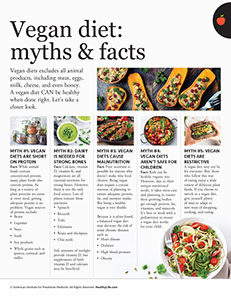
    Stuffed butternut squash with chickpeas, cranberries, quinoa cooked in nutmeg, cloves, cinnamon.

    Vegan diets excludes all animal products, including meat, eggs, milk, cheese, and even honey. A vegan diet CAN be healthy when done right. Let’s take a closer look.

    Myth #1: Vegan diets are short on protein

    Fact: While animal foods contain concentrated protein, many plant foods also contain protein. As long as a variety of plant proteins are eaten at every meal, getting adequate protein is no problem. Vegan sources of protein include:

    *  Beans

    *  Legumes

    *  Nuts

    *  Seeds

    *  Soy products

    *  Whole grains such as quinoa, oatmeal, and millet

    Myth #2: Dairy is needed for strong bones

    Fact: Calcium, vitamin D, vitamin K, and magnesium are all essential nutrients for strong bones. However, dairy is not the only food source. Lots of plants contain those nutrients:

    *  Spinach

    *  Broccoli

    *  Tofu

    *  Edamame

    *  Beans and chickpeas

    *  Chia seeds

    Safe amounts of sunlight provide vitamin D, but supplements of both vitamin D and calcium may be beneficial.

    Myth #3: Vegan diets cause malnutrition

    Fact: Poor nutrition is possible for anyone who doesn’t make wise food choices. Being vegan does require a certain amount of planning to ensure adequate protein, fat, and nutrient intake. But being a healthy vegan is very doable.

    Because it is plant-based, a balanced vegan diet may decrease the risk of some chronic diseases such as:

    *  Heart disease

    *  Diabetes

    *  High blood pressure

    *  Obesity

    Myth #4: Vegan diets aren’t safe for children

    Fact: Kids can be healthy vegans, too. However, due to their unique nutritional needs, it takes extra care and planning to ensure their growing bodies get enough protein, fat, vitamins, and minerals. It’s best to work with a pediatrician to ensure a vegan diet works  for your child.

    Myth #5: Vegan diets are restrictive

    A vegan diet may not be for everyone. But, those who follow this way of eating enjoy a wide variety of delicious plant foods. If you choose to switch to a vegan diet, give yourself plenty of time to adapt to new ways of shopping, cooking, and eating.

    © American Institute for Preventive Medicine

  • Debunking Myths On Exercise And Weight Loss

    Weight Control

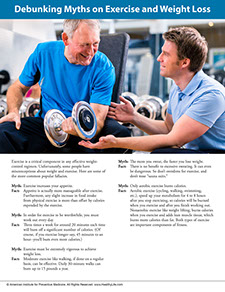
    Exercise is a critical component in any effective weight-control regimen. Unfortunately, some people have misconceptions about weight and exercise. Here are some of the more common popular fallacies.

    Myth: Exercise increases your appetite.

    Fact: Appetite is actually more manageable after exercise. Furthermore, any slight increase in food intake from physical exercise is more than offset by calories expended by the exercise.

    Myth: In order for exercise to be worthwhile, you must work out every day.

    Fact: Three times a week for around 20 minutes each time will burn off a significant number of calories. (Of course, if you exercise longer-say, 45 minutes to an hour–you’ll bum even more calories.)

    Myth: Exercise must be extremely vigorous to achieve weight loss.

    Fact: Moderate exercise like walking, if done on a regular basis, can be effective. Daily 30-minute walks can burn up to 15 pounds a year.

    Myth: Only aerobic exercise burns calories.

    Fact: Aerobic exercise (cycling, walking, swimming, etc.), speed up your metabolism for 4 to 8 hours after you stop exercising, so calories will be burned when you exercise and after you finish working out. Nonaerobic exercise like weight lifting, burns calories when you exercise and adds lean muscle tissue, which burns more calories than fat. Both types of exercise are important components of fitness.

    Myth: The more you sweat, the faster you lose weight.

    Fact: There is no benefit to excessive sweating. It can even be dangerous. So don’t overdress for exercise, and don’t wear “sauna suits.”

    Page from A Year of Health Hints book by the American Institute for Preventive Medicine. www.HealthyLife.com. All rights reserved.

    © American Institute for Preventive Medicine
  • Gather Facts

    Medical Care

    Image of 4 people sitting and talking.

    Decisions you make about your health can affect the length and quality of your life. Choose wisely. To do this, you need to gather facts. Use these sources:

    *  You. You know more about you than anyone else. Be in touch with how you feel, physically and emotionally. Keep track of past and present health concerns.

    *  Your doctor. Ask for his or her advice. Your doctor may also have written materials on your condition.

    *  Medical resources. These include:

    – The Internet’s world wide web. Look for credible sites, such aswww.medlineplus.gov,www.healthfinder.gov, and other Web sites which end in .gov. Other credible sites are ones from hospitals, medical centers, and medical associations. Most often, these sites end in .edu and .org. Beware of Web sites that promote health fraud and quackery. Accesshttp://quackwatch.orgfor information. Also, check with your doctor before you follow advice from a Web site. The advice may not be right for your needs.

    – Not-for-profit groups. These include the American Cancer Society, the American Heart Association, and the American Diabetes Association. To get information, call their toll-free numbers or access their Web sites.

    – Government agencies. One is the National Heart, Lung, and Blood Institute (NHLBI). Accesswww.nhlbi.nih.gov.

    – Support groups for conditions, such as breast cancer. Check local hospitals for lists of support groups near you. Also, contact the American Self-Help Group Clearinghouse Self-Help Group Sourcebook Online atwww.mentalhelp.net/selfhelp.

    Your job is to gather facts. Once you have the facts, you and your doctor can make the medical decision(s) best suited to your needs.

    Page from the Healthier at Home book by the American Institute for Preventive Medicine. www.HealthyLife.com. All rights reserved.

    © American Institute for Preventive Medicine

  • Busting Diet Myths

    HEALTHY EATING

    Salad bowl.

    Losing weight can be challenging. It means you have to change your eating and exercise habits. But does it mean you have to give up all the foods you love?

    Many myths about a healthy diet can make the task harder than it needs to be. But the truth is, you can change your diet for the better and still enjoy your food.

    Learn to recognize these common diet myths. You can make a healthy change to your eating habits.

    Myth:Dieting means I can’t eat my favorite foods.

    Fact:You can use moderation to still enjoy your favorite foods. Moderation means you can have a small amount once in a while. It means you may have to cut back, but you don’t have to give it up.

    Having your favorite high-calorie foods in small amounts can be fine for most people. A small piece of cake at a birthday party or a little piece of dark chocolate can still fit into your healthy eating plan.

    Myth:To lose weight, you have to give up breads, pasta and other grains.

    Fact:Many grains can be part of your healthy diet. You should limit refined, processed grains like white bread and white pasta. But whole grains contain fiber and nutrients you need. Examples of healthy grains include:

    *  Whole wheat bread and pasta

    *  Brown rice

    *  Quinoa

    *  Oats

    Read the nutrition label on whole grain products to help avoid high-calorie choices and added sugars.

    Myth:Gluten-free foods are healthier options for weight loss.

    Fact:Only people who have celiac disease or sensitivities to gluten need to avoid gluten.

    Just because a food says it is “gluten-free” does not mean it’s healthier or has fewer calories than a food that contains gluten. In fact, if you avoid gluten, you could miss out on important nutrients. See a doctor if you think you have a gluten sensitivity.

    Myth:You should avoid fat to lose weight.

    Fact:Some fat in your food is necessary and healthy. Try to eat foods that contain healthy monounsaturated or polyunsaturated fats. Eating small amounts of healthy fat can even help you feel full.

    These foods contain healthy fats that are important for overall health:

    *  Olive oil

    *  Avocadoes

    *  Nuts

    *  Seeds

    *  Eggs

    *  Salmon, trout

    Source: National Institute of Diabetes and Digestive and Kidney Diseases

    © American Institute for Preventive Medicine
  • Food Labels 2.0

    Healthylife® Weigh

    Part 7

    Woman choosing and reading label on bread in market.

    You have learned the clues on a food label that can point you toward a healthy choice or away from an unhealthy one. Here are some other common labels on food packaging and what they mean.

    Organic produceis grown without synthetic pesticides, herbicides, fertilizers, ionizing radiation, or genetically modified organisms (GMOs).

    Organic meat, poultry, eggs, and dairy productsare produced without antibiotics or growth hormones.

    Benefits of Organic Food

    *  Organic food may be tastier to you.

    *  Organic growing practices may be more sustainable and produce more nutritious food, though this is not always the case.

    *  You may avoid potentially harmful chemicals that may be added during conventional growing and processing.

    The Environmental Working Group publishes a list each year of the “Dirty 12™” and “Clean 15™.” Many plants, like avocados and corn, are naturally disease resistant and hardy. This means fewer pesticides are used on these plants, even when conventionally grown. These plant foods make up the “Clean 15™.” Other plants are less hardy and conventional growing tends to apply more synthetic pesticides. Prioritize buying the “Dirty 12™” organically. Go towww.ewg.orgto learn more about organic farming and see the year’s list.

    Clean all produce before use, whether it is grown organically or conventionally.

    Make your own veggie wash:Mix 2 cups cold tap water with ¼ cup white wine vinegar and 2 tbsp. lemon juice. Pour into a spray bottle. Squirt on your produce and let rest for 2 minutes. Rinse in tap water.

    Non-GMO Project Verifiedfoods do not contain GMOs. This means that the plant was not derived through genetic engineering. The most common products containing GMOs are corn, soy, sugar, and products made from these plants.

    Few studies have been done testing the long-term effects of consuming GMOs. However, GMO farming practices have led to increased use of synthetic pesticides and herbicides. Labeling laws and regulations surrounding GMOs are in development at the time of this guide’s publishing.

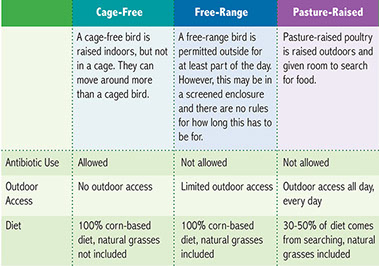
    Cage-Free, Free-Range, and Pasture-Raisedlabels refer to the living conditions of poultry. These labels indicate standards for animal welfare.

    Chart showing Cage-Free, Free-Range, and Pasture Raised definitions.

    © American Institute for Preventive Medicine