Tag: Family Life

  • Ipad Pain

    WELL-BEING

    Image of man using a tablet.

    When your iPad or other tablet causes pain in the neck and shoulders –

    *  Use a case that positions the device at a comfortable viewing angle.

    *  Routinely shift hands and weight. Stand up if seated, or sit down if standing.

    When using a laptop or desktop computer, follow the same tips for a tablet plus:

    *  Use an external keyboard.

    *  Keep shoulders relaxed and elbows close to the body.

    *  Keep hands, wrists, forearms, and thighs parallel to the floor.

    *  Take a break and change position every 15 minutes.

    Holding a tablet computer too low, say on the lap, forces the neck to bend forward too much, straining and possibly even injuring muscles, nerves, tendons, ligaments, or spinal discs. Simply placing a tablet on a table propped at an angle in a tablet case can reduce neck strain and potential pain, according to research conducted at the Harvard School of Public Health.

    © American Institute for Preventive Medicine

  • Politics & Family: Agree To Disagree

    FAMILY LIFE

    Image of family around the dinner table.

    Politics can be hard to discuss. Often, the conversations turn into arguments or people getting upset because the other person doesn’t agree. When we feel strongly about something, it’s normal to want others to see our side of things.

    Family gatherings are common during the holidays. And, sometimes politics or touchy subjects come up, even when we try to avoid them. How do you handle it when you’re trying to keep the peace?

    *Find common ground.Even if you disagree about something, there’s probably areas where you both agree. For instance, you may have different opinions on gun control. But, you both agree you want your kids to be safe.

    *Don’t attack.Using insults or strong language can damage relationships. Remember that words have the power to harm others. State your point without hurting the other person or showing disrespect by calling them names.

    *Be prepared.If you know that Uncle Tim always says something that offends you, be ready. Think about how you can take deep breaths before responding. Sometimes, it’s better to walk away or change the subject, rather than argue.

    *Know that you probably won’t change the other person’s mind.When we care about something, we want others to agree. We want them to support our views. But, it may be best to accept that no matter how good your argument is, the other person may not change their view.

    *Think about a positive goal.Use disagreements to learn how others feel about something. Be open-minded and listen to their side.

    *Find other things to do.Remember that family gatherings are supposed to bring people together. Plan a fun family game or activity. This can keep people away from having tense discussions.

    *Be okay with different views.You can care about someone and have different views from them. Tell yourself it is okay to agree to disagree.

    *End the discussion when needed.Sometimes, people keep arguing because they’re trying to find a resolution. But, a resolution isn’t always possible. Instead, tell the person you appreciate their views, but you think it’s best to move on. Ask them about their personal interests or job. Share a funny story. Do something to break the tension and stop talking about the disagreement.

    Source: American Psychological Association

    © American Institute for Preventive Medicine

  • Still No Flu Shot? It’S Not Too Late

    SELF-CARE CORNER

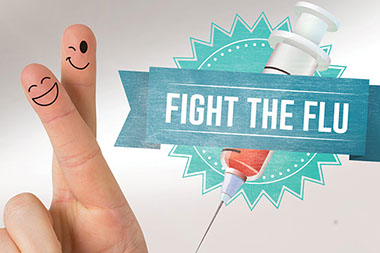
    Image of fingers crossed with smiling faces drawn in them.

    The flu causes hundreds of thousands of hospitalizations and thousands of deaths each year, according to the Centers for Disease Control and Prevention (CDC). It’s a serious disease that is especially dangerous for babies, the elderly and those with health conditions, such as heart disease.

    Get your flu shot if you haven’t done so yet. You may be wondering if getting a shot now will be helpful, and the answer is “yes!” Here’s why:

    *  Getting the shot now means you could be protected before the peak of the holiday season. It takes about 2 weeks to get the full immunity from a flu shot.

    *  Flu season usually continues until March or even April of each year. Getting the shot now means months of protection!

    *  As long as the flu keeps spreading, the flu shot can keep you from getting sick.

    *  If you do get sick, your illness will probably be much milder.

    *  No one likes to have a fever, chills, cough, headache, sore throat, body aches, nausea or vomiting. Getting the flu shot now means you reduce your risk of getting all these symptoms from the flu this season. The flu is much more serious than a cold.

    Top flu shot myths busted

    Many people have heard myths about the flu shot and may wonder if it’s safe and effective. Check out these common misconceptions and the truth about the flu shot:

    Myth: You can get sick from the flu shot.

    Fact:The flu shot cannot make you sick with the flu. It contains inactivated (killed) viruses. Some people have mild side effects that last only a day or so that include aches, soreness and a low fever. These side effects are much shorter and milder than getting the flu.

    Myth: I got the flu shot last year, so I don’t need a new one.

    Fact:The flu shot changes each year based on what flu viruses are going around. Experts choose several viruses that are most likely to make people sick and include them in the vaccine. Last year’s vaccine may not offer protection against this year’s viruses.

    Myth: It’s better to just get the flu and get immunity that way.

    Fact:While most healthy people will recover from the flu without problems, this is a dangerous risk to take. Anyone who gets the flu can be at risk of having serious problems. And, there is a high risk of spreading it to loved ones, especially babies, the elderly and people with weakened immune systems.

    © American Institute for Preventive Medicine

  • Too Sick For School?

    SELF-CARE CORNER

    Image of sick boy in bed.

    Colds? Flu? What to do? Sending a sick child to school can make matters worse and spread the illness to others. Follow these guidelines from pediatrician Dr. Jacqueline Kaari, University of Medicine and Dentistry of New Jersey, who said, “Parents need to be able to quickly assess their child and determine if he or she is well enough to go to school or needs to stay home, or if it’s time to call the pediatrician. Sometimes, parents will guess wrong, but if there’s one rule of thumb, it should be to always err on the side of caution.”

    Colds.What to do: Use over-the-counter saline nose drops or spray and a cool mist humidifier to relieve symptoms. Because colds are caused by viruses, antibiotics are not effective. Instead, the cold just needs to run its course until the child recovers. Contact your child’s doctor if a cough suddenly worsens or a fever develops.

    Fever.What to do: Give acetaminophen or ibuprofen for fevers. Encourage the child to drink lots of fluids and avoid fatty or fried foods that are hard to digest because fevers decrease stomach activity. Keep children at home if their fever is above 100.4ºF. Call a doctor if a high fever lasts more than 24 hours or does not respond to medication, or if the child’s condition worsens.

    Flu.Striking more suddenly and more intensely than a cold, the flu causes a sudden, high fever with body aches. What to do: Have your child vaccinated early in the flu season to protect against this illness. A child who comes down with the flu should stay home for several days, rest, and drink lots of fluids.

    Conjunctivitis (“pink eye”).A red, weeping eye(s) with a thick discharge that could become crusty when sleeping. What to do: Contact your child’s doctor for treatment, which may include antibiotic eye drops. Conjunctivitis can be highly contagious. Follow the doctor’s advice. Children can usually return to school 24 to 48 hours after treatment begins. Check with the school’s policy.

    Head lice.Tiny, crawling bugs that live on the scalp and feed on blood. Itching and sores on the scalp can be signs of head lice. The insects cannot jump or fly and are spread by human contact. What to do. Under bright light, check the entire scalp closely for lice or tiny white eggs (called nits), starting at the upper neck and behind the ears. Lotions and shampoos that can kill the lice are available at the drug store. Keep the child home from school until the lice have completely gone away.

    Sore throat.What to do: Have the child drink a few sips of water. If that relieves the symptoms, you are likely dealing with, at worst, a viral infection that will go away with a few days of rest, plenty of liquids, and pain relievers. If you suspect strep throat, follow the fever guidelines and contact your child’s doctor.

    Stomach ache.What to do: Keep children who have been vomiting home from school. Wait an hour after the child vomits and encourage small drinks of water. Gradually introduce clear liquids and bland foods throughout the day. Contact your doctor if vomiting lasts beyond 24 hours, occurs with worsening pain at the belly button or lower right abdomen, or if the child vomits blood or green or yellow matter.

    © American Institute for Preventive Medicine

  • Babies, Pacifiers & Thumb Sucking

    FAMILY LIFE

    Baby sucking his thumb as father holds him.

    Many babies use pacifiers or their fingers to soothe themselves. But which is best and when should they stop?

    The thumb and finger habit

    Many babies will suck on a favorite thumb or finger. This is normal. There are some good things about this habit:

    *  You don’t have to buy a pacifier. And, you don’t have to worry about it falling on the floor and getting dirty.

    *  A baby always has it when they need it.

    There are some downsides to this habit, including:

    *  Babies may touch things and get germs on their hands. Then, these germs get in their mouth.

    *  Thumb sucking may increase the risk of ear infections.

    *  You can’t take it away when you want them to quit the habit!

    Using a pacifier

    Many babies get pacifiers right after birth and use them for months or years. They can be helpful because they:

    *  Can reduce pain during shots or blood draws.

    *  They may reduce the risk of sudden infant death syndrome (SIDS).

    *  You can take them away when you want them to stop using it.

    Pacifiers aren’t always good. They can:

    *  Cause problems with breastfeeding.

    *  Get lost or fall on a dirty floor or surface.

    *  Increase the risk of ear infections.

    *  Cause dental problems with long-term use (longer than 6 months).

    Your child’s needs

    Many parents find that they need to allow their baby to soothe with fingers or a pacifier. Without it, their baby may be fussy or may not sleep well. Keep these things in mind when weighing the pros and cons:

    *  It’s best to use pacifiers in babies under 6 months. After 1 year of age, babies should start to wean off the pacifier.

    *  Don’t put honey or anything else on a pacifier. Wash it often and especially after it touches the floor or dirty objects.

    *  Thumb and finger sucking can be hard to stop. If your child doesn’t stop by age 4, talk to their doctor.

    If you have questions about pacifier use or thumb sucking, talk to your child’s pediatrician.

    Source: American Academy of Family Physicians

    © American Institute for Preventive Medicine

  • Baby Teeth

    FAMILY LIFE

    Image of baby at the doctor's office.

    The ideal time for a child to visit the dentist is 6 months after the child’s first teeth appear. During this initial visit, a dentist will be able to examine the development of the child’s mouth.

    Babies may have dental problems, such as teething irritations, gum disease, and prolonged thumb or pacifier sucking.

    The sooner the child visits a dentist, the better, says the Academy of General Dentistry in offering these other tips:

    *  Clean your infant’s gums with a clean, damp cloth twice a day.

    *  Ask your dentist when you may begin to rub a tiny dab of toothpaste on your child’s gums. Doing so will help your child become accustomed to the flavor of toothpaste.

    *  As soon as the first teeth come in, begin brushing them with a small, soft-bristled toothbrush and a pea-sized dab of fluoride toothpaste.

    *  Help a young child brush at night. This is the most important time to brush, due to lower salivary flow during sleep and higher risk for cavities and plaque.

    *  By about age 5, your child can learn to brush his or her teeth with proper help from an adult.

    © American Institute for Preventive Medicine
  • The Dangers Of Distracted Driving

    WELL-BEING

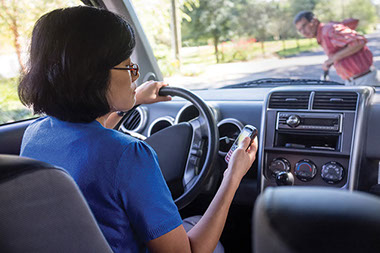
    Image of women driving while looking at her phone about to hit a pedestrian.

    Though driving a car may seem like a simple task, it requires quick reflexes, concentration and reasoning. When a driver is distracted, some – or all – of these important skills can be lost.

    Distracted driving means the driver is doing something other than focusing on the road ahead. It can be anything that takes the driver’s mind off of driving, hands off the wheel or eyes off the road. In the age of smartphones, tablets and other electronic devices, it’s easy to get distracted when driving – even for just a second.

    Though it seems harmless, a quick glance at a phone to read a text can be dangerous or even deadly. The National Highway Traffic Safety Administration (NHTSA) says sending or reading a text takes your eyes off the road for 5 seconds. That’s like driving the length of an entire football field with your eyes closed if you’re going 55 miles per hour. In that amount of time, a driver can hit a pedestrian, run a red light or stop sign, or crash into another vehicle.

    The NHTSA says nearly 3,500 people died and almost 400,000 were injured in 2015 due to distracted driving crashes. Here’s what we can do to help stop distracted driving:

    *  Never use a phone while driving. Put it in the back seat or out of reach to reduce the urge to look at it “just for a second.”

    *  Talk with your teens about distracted driving and tell them that the texts can wait. Lead by example.

    *  Sign a pledge to not drive distracted and stick to it. Ask family members and friends to sign it too. The “It Can Wait” pledge is available atitcanwait.usaa.com.

    Did you know?

    There are laws that prohibit distracted driving. Talking on a hand-held cellphone while driving is banned in 15 states and the District of Columbia. Text messaging is banned for all drivers in 47 states and the District of Columbia.

    To learn about your state laws, go towww.iihs.org/iihs/topics/laws/cellphonelaws.

    © American Institute for Preventive Medicine

  • Is 3D As Dangerous As The Warnings?

    WELL-BEING

    Illustration of a TV with wild animlas appearing to come out of the television set.

    Have you read the warnings on a 3D TV or gaming system? Can 3D actually cause altered vision, lightheadedness, twitching, nausea, disorientation, especially for children and the elderly?

    Through these disclaimers, companies may have been scaring away the customers they seek, but medical evidence does not back up the claims.

    Professional eye photographer Timothy Bennett of Penn State Hershey Eye Center said there are no health issues associated with 3D imaging. Some people experience headaches or dizziness, but these are temporary. The images may be disorienting, but as soon as you stop looking at 3D, the feelings clear up.

    He recommends sitting far from the screen, especially if you are sensitive, and take breaks from gaming or watching 3D TV.

    Some people experience headaches or dizziness, but these are temporary.

    © American Institute for Preventive Medicine

  • Power Down At Night

    FAMILY LIFE

    Image of family playing a game of chess.

    Make the hour before bed a no-electronics zone, said Dr. Jill Creighton, pediatrician at Stony Brook Children’s Hospital. Powering down makes bedtime easier because kids need to relax before going to sleep.

    Most school-age kids (ages 6 to 17) have at least one device; a smartphone, video games, iPad or computer in their bedrooms while sleeping, according to a National Sleep Foundation survey. And children who leave those devices on at night sleep less-up to one hour less on average per night. Dr. Creighton makes a few more observations for your kids (and maybe for you as well):

    *  Ban hand-held devices from the bedroom. “The burst of light from a phone (even if it’s just to check the time) can break a sleep cycle,” she said. “A regular alarm clock is best.”

    *  If your child has a slight addiction to technology and is resistant about turning off a device, try dialing down the screen time. “Reduce screen time by 30 minutes or more each week until you reach your goal,” said Dr. Creighton. “A good rule of thumb is try to limit recreational screen time to 60 minutes every day. And for every 30 minutes of screen time, make sure your kids get 30 minutes of physical activity.”

    *  Try to replace screen time with an activity. “It’s sometimes hard to get kids off the couch and get them moving,” said Dr. Creighton. “Parents, get creative and make moving fun for kids.” Some ideas: a 20-minute family walk, 20 minutes of shooting hoops outside, walking the dog, going bike riding and doing chores (with the promise of an allowance) such as vacuuming, putting away laundry, raking leaves, shoveling snow and helping with the garbage/recycling.

    © American Institute for Preventive Medicine
  • Stranded In A Storm?

    WELL-BEING

    Image of young women looking out the car window.

    Whether you’re stuck in your car or at home or elsewhere, know how to extend your cell phone’s battery life, advises the Auto Club Group.

    In an emergency, do this:

    *  Turn the phone off. Only turn it on when you are expecting or making a call.

    *  If you’re in an area with no reception, turn off the phone to prevent it from constantly searching for service. Even with automatic power-save features, this function can take up to 30 minutes and it is depleting your battery.

    *  Limit use of the vibrate function on your phone. Use a ring tone because it uses less of the battery’s power.

    *  Don’t use extra features such as the Internet, WiFi, GPS, a camera, and a hands-free device.

    © American Institute for Preventive Medicine