Tag: Family Life

  • Turn Off, Tune In

    FAMILY LIFE

    Image of family sitting on couch watching TV.

    Parents, turn off the television when your children are with you. And when you do let them watch TV, make sure the programs stimulate their interest in learning.

    That’s the advice arising from University of Iowa researchers who examined the impact of television and parenting on children’s social and emotional development.

    The researchers found that background television-when the TV is on in a room where a child is doing something other than watching-can divert a child’s attention from play and learning. It also found that non-educational programs can negatively affect children’s mental development.

    Best advice:Sit down and watch a TV show. When it’s over, turn off the TV.

    © American Institute for Preventive Medicine

  • Back-To-School Stress Busters

    FAMILY LIFE

    Smiling child with backpack on.

    Going back to school is a big transition for kids. Providing extra support and understanding can ensure a smooth start to the school year and a positive school experience.

    Ease into a daily routine

    A week or two before school starts, gradually establish an appropriate sleep and meal schedule. A tired or hungry child will struggle to manage their feelings. Set them up for success.

    Plan a daily chat time

    It doesn’t have to be long, but set aside ten or fifteen minutes to check in with your child. Ask questions and let them share their thoughts and feelings about their day.

    Make time for play

    Play is how kids relax and make sense of the world around them. Unstructured play should be a non-negotiable part of your child’s day.

    If your child is struggling, it helps to talk to your pediatrician. Your healthcare provider can recommend stress management techniques or address any other needs your child may have.

    © American Institute for Preventive Medicine

  • Bed-Wetting

    Children’s Health

    Passing urine during sleep is called “bed-wetting” when it occurs after age 5 or 6. Children are usually expected to have nighttime bladder control by this age. Bed-wetting is a very common problem. In the U.S., 5 to 7 million children have it.

    Enuresis is a medical term for bed-wetting. {Note: Bed-wetting itself, can’t be prevented, but damage to a child’s self- image can. Explain that bed-wetting is not his or her fault and that it will get better in time.}

    Causes

    Children don’t wet the bed on purpose. These are causes of bed-wetting:

    *  A lot of urine is made in the evening and during the night. A full bladder does not wake the child up.

    *  A child’s small bladder does not hold urine for an entire night.

    *  Other conditions, such as a urinary tract infection and diabetes. (Daytime wetting and other symptoms occur with these conditions.)

    *  For children who have been dry at night for 6 or more months, sometimes, emotional upsets and major changes can cause bed-wetting. An example is having a new baby in the house.

    *  Children are more likely to wet the bed if both parents did when they were children.

    Treatment

    Most of the time, children outgrow bed-wetting. Until then, self-care measures help with the problem. Medication can be prescribed when no other treatment works.

    Questions to Ask

    Self-Care / Prevention

    Be patient and give your child lots of support. Children who wet the bed can’t help it. Getting angry only makes the problem worse.

    Until Your Child Outgrows Bed-Wetting

    *  Do not blame or punish your child for wetting the bed.

    *  Limit fluids in the evening, especially 2 hours before bedtime. Ask your child’s doctor how much your child should drink. Don’t give drinks with caffeine, such as colas.

    *  Have your child urinate in the toilet right before getting into bed.

    *  See that your child can easily get to the toilet during the night. Keep the path clear. Use night lights, etc. If needed, put a portable potty close to your child’s bed. Assign a place the potty can be moved to for daytime, if your child wants to do this.

    *  Tell other members of the household that “teasing” about bed-wetting is not allowed. Respect your child’s privacy and feelings.

    *  You may want your child to use pull-up (training) pants when he or she sleeps away from home, camps, etc. On a regular basis, encourage your child to wake up to use the toilet.

    *  Keep a change of pajamas, a flannel covered pad, clean sheets, dry towels, etc., near your child’s bed. Show your child how to use these when he or she wets the bed. Include your child in the clean-up process.

    *  Have your child rehearse getting up from bed and using the toilet. Do this at bedtime. Do it during the day when your child gets the urge to urinate. Have your child lay down in his or her bed, wait a few minutes, and then get up to urinate in the toilet.

    *  If your child is 5 years old or older and he or she agrees to it, get a bed-wetting alarm. The child wears the alarm on his or her underwear. The first drop makes the alarm buzz. This wakes the child up. After awhile, the child learns to wake up when he or she has to urinate. Some of these alarms help prevent wet beds 85 to 90 percent of the time.

    Resources

    National Kidney Foundation

    888.WAKE.DRY (925.3379)

    www.kidney.org

    Healthier at Home book by the American Institute for Preventive Medicine. www.HealthyLife.com. All rights reserved.

    © American Institute for Preventive Medicine

  • Backpacks. Crayons. Glue Sticks. Epipen?

    FAMILY LIFE

    Image of 2 school kids in the classroom.

    For more and more school-age children the Epipen is becoming a necessity for completing the back-to-school supply list. In fact, allergic conditions are one of the most common medical conditions affecting children in the U.S.

    “Accidental exposure to allergens at school is a major concern for kids with severe allergies since any exposure could be fatal,” said Dr. Joyce Rabbat, pediatric allergist at Loyola University Health System.

    Food allergies are the most concerning for school-age children since allergens can be hidden in food or utensils and pots and pans could be contaminated without the child’s knowledge. Dr. Rabbat said that parents of children with food allergies should ensure an Allergy Action Plan is in place for the child at his or her school.

    This really could mean life or death to the child,” she said in suggesting that parents should make sure the school reviews the child’s health records that they provide from the doctor. She also suggests asking what the school does to prevent accidental exposure and that staff are trained to deal with an emergency situation.

    If the child is older and knows how to self-administer medications, Dr. Rabbat suggests talking to the school about allowing the child to carry the medication with them. If that is not allowed at the school, make sure the following medications are available:

    *  Epinephrine autoinjectors

    *  Antihistamines

    *  Albuterol rescue inhalers

    Also make sure a staff member, who is available at all times, is properly trained on to how to administer these medications and that your child is familiar with this person.

    © American Institute for Preventive Medicine

  • Do-It-Yourself Spring Cleaning Guide

    WELL-BEING

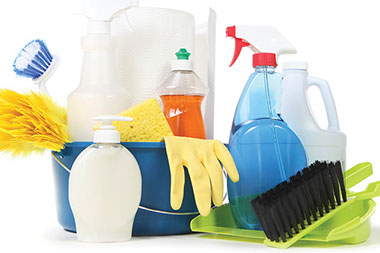
    Image of various cleaning products.

    Germs grow and invade your privacy. Bathrooms are one of their popular spots. They gather in the bathtub, shower, toilet-just about everywhere.

    “People these days just don’t take time out from their busy schedule to clean,” said Donna Duberg, lab science and germ expert at Saint Louis University. Duberg offers some simple ways to do your spring cleaning and make your bathroom germ-free.

    Simplify cleaning:Engage in basic cleaning such as disinfecting and removing visible dirt regularly, to make spring cleaning less cumbersome. As spring sets in, brace yourself to clear the scum and lime scale-mostly found on your shower curtains-and mold stuck in and around your bathtub. They hold on to bacteria and can cause fungi to grow.

    Don’t overkill:If you use too many cleaners and don’t dilute them, you risk the chance of inhaling the fumes of the cleaners, which can affect your lungs. Keep the windows open while cleaning or plug in fans to avoid breathing in the chemicals. Read the label carefully to understand how to use a product.

    Instead of harsh chemicals, use the magic ingredient:Vinegar, when mixed with water can do wonders for the surfaces. Spray a mixture of one part white distilled vinegar mixed with 9 parts water to see a nice shine on your bathtub or floor. Undiluted white distilled vinegar mixed with baking soda can be used to remove scum. The fewer the cleaning products, the better. Vinegar is inexpensive, is not harmful to kids and pets, and always leaves a shine.

    © American Institute for Preventive Medicine
  • Is Your Home Safe From Radon?

    MEDICAL NEWS

    Image of hand holding an illustration of a home.

    Indoor radon is the second leading cause of lung cancer in the U.S. Breathing it over long periods can present a significant health risk to families all over the country.

    Radon is an invisible radioactive gas that seeps into homes undetected through foundation cracks. It can reach harmful levels if trapped indoors. It travels up from underground sources of uranium in the earth’s crust.

    The radon threat is preventable with some simple steps. In existing homes, families can begin protecting themselves by buying an easy-to-use radon test kit to find out if a high level exists. If so, a high level might be lowered simply with a straight-forward radon venting system installed by a contractor.

    In new homes, builders can easily and economically include radon-resistant features during construction. Home buyers should ask for these. The EPA also recommends that home buyers ask their builder to test for radon gas before they move in.

    According to the EPA, 1 in every 15 homes nationwide has a high radon level. Test your home for radon every 2 years. Retest for it any time you move, make structural changes to your home, or occupy a previously unused level of a house.

    © American Institute for Preventive Medicine

  • Prevent Clothes Dryer Fires

    WELL-BEING

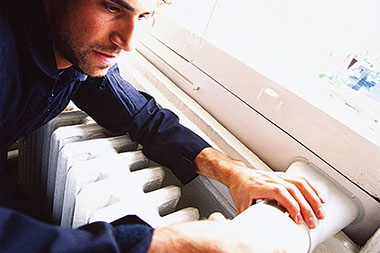
    Image of a man cleaning dryer duct.

    Built-up lint blocks air flow in your clothes dryer, which leads to high heat and a potential fire. Thousands of fires occur each year, according to the U.S. Fire Administration.

    Take these simple steps to keep your home safe:

    *  Clean the lint screen every time you use the dryer.

    *  If you use fabric softener, wash the screen in warm soapy water periodically to get rid of film build-up that restricts air flow.

    *  Make sure the lint screen has no tears (otherwise lint gets into the duct system and restricts air flow).

    *  Inspect the duct, dampers, and access covers for damage every 3 months. Clean all removable parts. Vacuum the duct to remove excess lint build-up.

    Don’t dry items that have been cleaned or soaked in gasoline, dry cleaning solvents, vegetable or cooking oil, machine oil, or other chemicals such as mop heads, which can be explosive when heated.

    © American Institute for Preventive Medicine

  • Stranded In Your Car During A Winter Storm?

    WELL-BEING

    Image of an older Asian couple stretching.

    A fast-moving winter storm could strand you in your car. The cold can lead to hypothermia and frostbite until you’re rescued.

    A charged cell phone can be your lifeline for first responders, but until help arrives, Amica Insurance with advice from the National Oceanic and Atmospheric Administration offers these tips to help keep you safe if you’re stuck in a winter storm:

    *  Always stay in your vehicle. You will become disoriented quickly in wind-driven snow and cold temperatures.

    *  Run the engine for about 10 minutes every hour to provide heat. However, be sure to slightly open a window to avoid carbon monoxide poisoning.

    *  Turn on the dome light at night when running the engine.

    *  After the snow stops, open the hood of your vehicle to indicate that you need assistance.

    *  Tie a colored cloth – preferably red – to your door or antenna.

    *  Be sure to move your arms, legs, fingers and toes to keep blood circulating.

    © American Institute for Preventive Medicine

  • Unexpected Ways To Be Happy (And Healthy)

    WELL-BEING

    Image of a couple jumping in a puddle while it's raining.

    *It’s easy being green.Make vegetables a central part of your diet. Dark green foods provide essential vitamins and nutrients to your body that protect you from many of life’s worst diseases. The FDA recommends 3 to 5 servings a day for pristine health. This is not as hard to accomplish as it sounds. Examples of one serving include 2 broccoli spears, 3 tablespoons of green beans, or 3 sticks of celery.

    *Brush your teeth.Brushing and flossing your teeth not only prevents tooth decay but gum disease, which has been linked to heart attacks and strokes. Healthy gums are one more way to keep that heart pumping strong.

    *Hear ye, hear ye!Pick up your local newspaper once in a while. There is more information out there than you can imagine. Sift through the bounty of news because when it comes to your health and health care, no one is more responsible than you are. Take time to understand what’s going on in the world.

    *Be a small fry.Order smaller portions. Even the small fries at fast food drive-throughs.

    *Give yourself a break.Not only are vacations an important part of maintaining your sanity, but there are many other positives about getting away. Studies  have shown that employees come back  to work post-vacation more creative and more productive.

    *Scrub a dub dub.The easiest way to avoid infectious diseases-a common cold, the flu-is by washing your hands often.

    *Then lend a hand.A study at Vanderbilt University found that volunteer work was good for both mental and physical health. People of all ages who volunteered were happier and had better physical health and less depression. Think about something you like to do in your spare time and find a match atwww.volunteermatch.org.

    © American Institute for Preventive Medicine
  • Balancing Work & Caregiving

    WORK LIFE

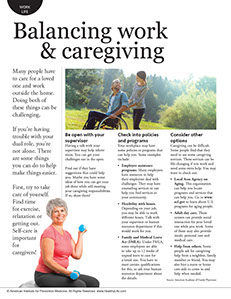
    Women pushing man in wheelchair through the lawn.

    Many people have to care for a loved one and work outside the home. Doing both of these things can be challenging. If you’re having trouble with your dual role, you’re not alone. There are some things you can do to help make things easier.

    First, try to take care of yourself. Find time for exercise, relaxation or getting out. Self-care is important for caregivers!

    Be open with your supervisor

    Having a talk with your supervisor may help relieve stress. You can get your challenges out in the open.

    Find out if they have suggestions that could help you. Maybe you have some ideas of how you can get your job done while still meeting your caregiving responsibilities. If so, share them!

    Check into policies and programs

    Your workplace may have some policies or programs that can help you. Some examples include:

    *Employee assistance programs.Many employers have resources to help their employees deal with challenges. They may have counseling services or can help you find services in your community.

    *Flexibility with hours.Depending on your job, you may be able to work different hours. Talk with your supervisor or human resources department if this would work for you.

    *Family and Medical Leave Act (FMLA).Under FMLA, some employees are able to take up to 12 weeks of unpaid leave to care for a loved one. You have to meet certain qualifications for this, so ask your human resources department about the details.

    Consider other options

    Caregiving can be difficult. Some people find that they need to use some caregiving services. These services can be life-changing if you work and need some extra help. You may want to check out:

    *Local Area Agency on Aging.This organization can help you locate programs and services that can help you. Go towww.acl.govto learn about U.S. programs for aging people.

    *Adult day care.These centers can provide social interaction for your loved one while you work. Some of them may also provide meals, personal care and medical care.

    *Help from others.Some people ask for caregiving help from a neighbor, family member or friend. You may also hire a nurse or home care aide to come in and help when needed.

    Source: American Academy of Family Physicians

    © American Institute for Preventive Medicine