Tag: Family Life

  • Gas Leak

    WELL-BEING

    Illustration of 911 Emergency written.

    Be aware of all the possible signs of a gas leak, including a distinct unpleasant smell. The odor is added to natural gas to help identify leaks.

    If a leak is suspected:

    *  Stay calm.

    *  Don’t light a match, candle, or cigarette, and don’t turn any electrical devices on or off, including light switches, or use any device or equipment that could cause a spark.

    *  Immediately evacuate the area where the leak is suspected and from a safe location call your gas company or 911.

    © American Institute for Preventive Medicine

  • Moving Away: Tips For Families

    FAMILY LIFE

    Image of couple holding moving boxes.

    Moving is a major change for all members of the family. Whether you’re buying a house across town or heading across the country, a new home can be stressful, fun and confusing at the same time. Kids – and parents – of all ages may need some help during the transition:

    *Plan in advance.Sometimes moves have to happen quickly due to a new job or other situation. But if you can, give your kids plenty of time to tell their friends about the move and to say goodbye. Get addresses, emails and phone numbers so they can keep in touch. Take pictures with friends and at your old home.

    *Talk about it and support each other.Be open with your child, teen or spouse. It’s okay to miss your old home or town. Ask them how they’re feeling. Having good communication can help relieve stress and work through tough feelings.

    *Keep your routine.As much as possible, do the same things you used to do once you’re in your new home. Cook familiar dishes for dinner and keep family activities the same. This can help everyone adjust.

    Essential moving items

    When you’re moving, you may feel like you don’t have anything you need at your new place. Make sure you pack these important items to get by until you’re settled in:

    *  Keys, wallet, purse and cell phone

    *  Chargers for electronics

    *  Medicines

    *  Toiletries, such as soap, shampoo, toothbrushes and deodorant

    *  Toilet paper and tissues

    *  Shower curtain

    *  First aid kit

    *  Sheets and pillows

    *  Plates, cups, utensils  and napkins

    *  Dish soap and hand soap

    *  Easy meals and snacks

    *  Favorite books or toys for kids

    *  A few changes of clothes and laundry detergent

    © American Institute for Preventive Medicine

  • Secrets To A Successful Life

    WELL-BEING

    Image of older man smiling.

    What do America’s elder citizens say about living a happy, healthy, and successful life? A Cornell University professor, Karl Pillemer, asked hundreds of seniors and gives their advice in his book 30 Lessons for Living: Tried and True Advice from the Wisest Americans.

    *Take risks to avoid regret.People in their 70s, 80s, 90s, and beyond endorse taking risks when you’re young, contrary to a stereotype that elders are conservative. They say that you are much more likely to regret what you didn’t do than what you did. Say yes to opportunities.

    *Make the most of a bad job.Pillemer said, “Remember that many of these folks who grew up in the Great Depression had bad jobs early on-in fact, their bad jobs make our bad jobs look like good jobs! They found, however, that they learned invaluable lessons from these less-than-ideal work situations. You can learn how the industry works, about communicating with other employees, and about customer service.

    *Choose excitement over money.Choose a career for its basic value rather than how much money you will make. Our elders are keenly aware of how short life is, and they think it’s a mistake to waste precious time in work you don’t like. According to our elders, you need to be able to get up in the morning excited about work, so choose your career with that in mind.

    *Regrets?Embrace travel, especially when you are young.

    © American Institute for Preventive Medicine

  • Talk To Your Child About Abuse

    FAMILY LIFE

    Image of parents talking to their child.

    Parents generally teach their children about “stranger danger” from an early age. They are told not to talk to, walk with or take gifts or candy from strangers. But statistics show danger often lurks closer to home.

    According to the National Association of Adult Survivors of Child Sexual Abuse, the vast majority of children who are sexually abused are abused by someone they know-most often a family member, an adult the family trusts or, in some instances, another child.

    Parents can help protect their children from sexual abuse by talking frankly to them about abuse, starting at a young age with age-appropriate information, advises Kay Knaff, clinical services program manager for Youth Villages.

    How to talk to your child (starting about age 3 or 4) about sexual abuse:

    *  Tell your child about good touch-a hug or a pat on the back-and bad touch, when someone is touching private areas.

    *  Tell your child nobody-no family member, teacher, other child or adult-is allowed to touch him or her in the areas covered by a bathing suit because these are private areas. Exceptions are a parent bathing a young child or helping the child with using the bathroom, as well as a doctor or nurse when examining the child.

    *  Tell your child he or she has permission to tell any adult who touches them in their private areas, “No!”

    Tell your child that if anyone ever touches him or her in any way in their private areas, he or she should tell mom, dad and or grandma/grandpa or another trusted person about it immediately.

    Get help immediately. If you suspect your child has been abused, act immediately. Either call your local police, your local rape crisis center, child protective services or the Childhelp National Child Abuse Hotline at 1-800-4-A-CHILD (1-800-422-4453), then push 1 to talk to a hotline counselor.

    © American Institute for Preventive Medicine

  • What Our Aging Parents Fear Most

    FAMILY LIFE

    Image of eldery man in wheel chair cooking at his stove.

    Seniors fear moving into a nursing home and losing their independence more than death, according to a new research study, Aging in Place in America, commissioned by Clarity and  The EAR Foundation.

    The study looked at the attitudes and anxieties of the nation’s elderly. The children of seniors also fear for their parents, with particular concern about their emotional and physical well-being should they have to enter a nursing home.

    One of the most significant findings of the study is that, when asked what they fear most, seniors rated loss of independence (26%) and moving out of their homes into a nursing home (13%) as their greatest fears. These two possibilities are a much higher concern than death, which was the greatest fear for only 3% of seniors surveyed.

    Other key findings include these:

    *  Most seniors want to age in place. That means they want to grow older without having to move from their homes. More than half are concerned about their ability to do so.

    *  Seniors cited three primary concerns that could jeopardize their ability to live independently: health problems, memory problems and inability to drive or get around.

    *  Many seniors said they are open to or would like to use new technologies that enable independence. More than half would consider the use of technology in their homes-specifically, sensors-to monitor their health and safety.

    *  Most Baby Boomers fear their parents will be mistreated in a nursing home and fear they will be sad. Almost two-thirds of Boomers provide some kind of help or support for their aging parents.

    “These findings tell us that, above all else, older Americans value their ability to live independently,” said Peter Bell, president of National Aging in Place Council. “As a society, we must find ways to help our parents and grandparents live their latter years at home.”

    © American Institute for Preventive Medicine
  • Nutrition For Children

    Children’s Health

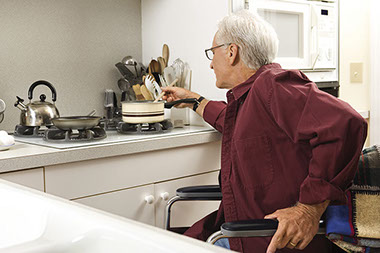
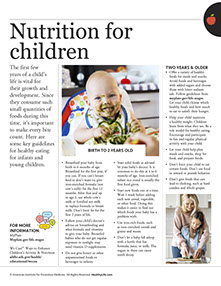
    Image of toddler eating a strawberry.

    Birth to 2 Years Old

    *  Breast-feed your baby from birth to 6 months of age. Breast-feed for the first year, if you can. If you can’t breast-feed or don’t want to, give iron-enriched formula (not cow’s milk) for the first 12 months. After that and up to age 2, use whole cow’s milk to replace formula or breast milk. Don’t limit fat for the first 2 years of life.

    *  Follow your child’s doctor’s advice on breast-feeding and what formula and vitamins to give your baby. Breast-fed babies who do not get regular exposure to sunlight may need vitamin D supplements.

    *  Start solid foods as advised by your baby’s doctor. It is common to do this at 4 to 6 months of age. Iron-enriched infant rice cereal is usually the first food given.

    *  Start new foods one at a time. Wait 1 week before adding each new cereal, vegetable, or other food. Doing this makes it easier to find out which foods your baby has a problem with.

    *  Use iron-rich foods, such as grains, iron-enriched cereals, and meats.

    *  Do not give honey to infants during the first 12 months of life.

    *  Don’t let a baby fall asleep with a bottle that has formula, juice, or milk. The sugars in these can cause tooth decay.

    Two Years and Older

    *  Give a variety of healthy foods for meals and snacks. Follow guidelines from theChooseMyPlate.gov/kidsWeb site. Let your child choose which healthy foods and how much to eat to satisfy his or her hunger.

    *  Help your child maintain a healthy weight. Give proper foods. Promote regular exercise. Lead by example. Children learn from what they see parents do, as well as, from what parents say. Eat with your children. Be a role model for good eating. Exercise, too.

    *  Let your child help plan meals and snacks, shop for food, and prepare foods.

    *  Don’t force your child to eat certain foods. Don’t use food to reward or punish behavior.

    *  Don’t give foods that can lead to choking, such as hard candies and whole grapes.

    *  Teach healthy behaviors in a fun way. For ideas to help get children to eat well and be more active, access the Web sites under “Resources”.

    Resources

    5-2-1-0 Let’s Go!

    www.letsgo.org

    ChooseMyPlate.gov

    www.choosemyplate.gov/kids/index.html

    We Can!™ Ways to Enhance Children’s  Activity & Nutrition

    www.nhlbi.nih.gov/health/educational/wecan

    Page from Healthier at Home book by the American Institute for Preventive Medicine. www.HealthyLife.com. All rights reserved.

    © American Institute for Preventive Medicine

  • Caregivers: Take Time For Yourself

    FAMILY LIFE

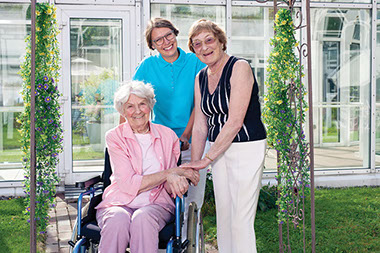
    Image of elderly female in wheechair with two caregivers.

    There’s no doubt: caregiving is a stressful job. If you help take care of an aging, ill, or disabled loved one, you are a caregiver. And although caregiving may take up a lot of your time, you need to make time for yourself too, says the Family Caregiving Alliance.

    If you’ve been trying to juggle caregiving with your other commitments, it’s time to take a moment and think about your own needs. If you keep doing things for others without taking time for yourself, your health and entire life could suffer. Caregivers of all ages can be prone to the following problems:

    *  Depression or anxiety

    *  High stress levels

    *  Poor quality sleep or not sleeping enough

    *  Unhealthy diet choices

    *  Lack of exercise

    *  Not getting needed health care for themselves

    *  Financial problems

    *  Feeling isolated and alone

    These factors together can create health and personal problems. Before you reach the point of burnout, try to find a way to get a break from caregiving. Think about what would relax you and help you recharge. Is it a lunch date with a friend? An aerobics or yoga class? A walk through the park? A soak in the tub? Whatever it is, you deserve the time to do it.

    How to find the time

    Not sure how to find time for yourself? Talk to others who can help out. Ask friends, neighbors, or family members to step in for just an hour or two so you can have a break. Or, if you can, have your loved one spend some time at an adult day care or respite center. If others have offered to help in any way, learn how to say, “Yes, that would be great,” and accept their offer. Many caregivers mistakenly think they need to do it all themselves – don’t!

    Many people feel guilty leaving their loved one for even a short while. But remember, you need to recharge yourself so you can be the best caregiver possible. You’re doing it for others just as much as for yourself.

    Talk to others

    Many caregiver support groups are available online and in local communities. Connecting with others who understand can go a long way in helping you feel better. The local Area Agency on Aging (AAA) is a good place to start. Some support groups are online, while others offer in-person meetings. Choose what is right for you.

    Remember:Taking time for you is not being selfish. It’s a necessity. You deserve some time to take care of your own needs. It will allow you to be the best you can be in all areas of your life.

    © American Institute for Preventive Medicine

  • Getting Active As A Family

    FAMILY LIFE

    Image of family jogging.

    One of the best ways to prevent weight problems in children is to make exercise and activity a family event. Not only can parents set a good example, but it helps everyone get healthier while bonding and having fun together. The U.S. Department of Health and Human Services offers some tips:

    *  Find some free time. Being active together just twice a week can have health and emotional benefits. Try to find some 30-minute time slots and put your activity time on the calendar.

    *  Don’t make too many changes at once. To get everyone on board, start gradually and be sure to celebrate each time you make a healthy change.

    *  Ask for the kids’ ideas. Ask your kids about where they’d like to walk or bike. Talk to them about sports or activities they want to try.

    Remember, any time you make a change toward more activity and less screen time, you’re helping everyone in your family lead a healthier life.

    © American Institute for Preventive Medicine
  • Mow Safely

    WELL-BEING

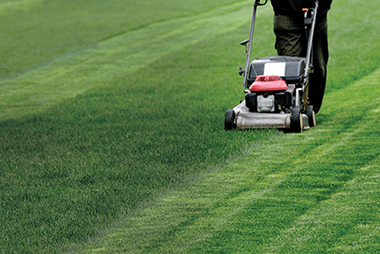
    Image of person mowing the lawn.

    Lawn mowers are powerful machines. Careless injuries harm children and adults alike each year, according to these concerned medical groups: American Academy of Orthopaedic Surgeons, American Academy of Pediatrics, and the American Society for Reconstructive Microsurgery (the docs who reattach fingers!).

    Prevent injuries by following these lawn mower safety tips:

    *  Only use a mower with a control that stops the mower blade from moving if the handle is let go.

    *  Children should be at least 12 years of age before operating a push lawn mower and age 16 to operate a driving lawn mower.

    *  Wear sturdy shoes (not sandals or sneakers) while mowing.

    *  Prevent injuries from flying objects, such as stones or toys, by picking up objects from the lawn before mowing begins. Have anyone who uses a mower or is in the vicinity to wear polycarbonate protective eyewear at all times.

    *  Do not pull the mower backward or mow in reverse unless absolutely necessary, and carefully look for children behind you when you mow in reverse.

    *  Always turn off the mower and wait for the blades to stop completely before removing the grass catcher, unclogging the discharge chute, inspecting or repairing lawn mower equipment, or crossing gravel paths, roads, or other areas.

    * Use a stick or broom handle (not your hands or feet) to remove debris in lawn mowers.

    *  Do not allow children to ride as passengers on ride-on mowers and keep children out of the yard while mowing.

    *  Drive up and down slopes, not across to prevent mower rollover.

    *  Keep lawn mowers in good working order. Before using a lawn mower for the first time in a season, have it serviced to ensure that it is working correctly.

    © American Institute for Preventive Medicine
  • Shopping Cart Spills Can Be Prevented

    FAMILY LIFE

    Image of mother with toddler sitting in a shopping cart.

    Kids dangling over shopping carts reaching for candy, standing up, and riding underneath. Every 22 minutes a child goes to the ER with a shopping cart-related injury. A study in Clinical Pediatrics found that falls from a shopping cart accounted for the majority of injuries for children up to 4 years old, followed by running into/falling over the cart, cart tipovers, and entrapment of arms, legs, and fingers in the cart. The kids suffered concussions and other head injuries.

    Dr. Gary Smith, director of the Center for Injury Research and Policy at Nationwide Children’s Hospital, said parents need to understand the dangers. He suggests these strategies:

    *  Always use the shopping cart safety straps. Be sure your child is snugly secured in the straps and that the child’s legs are placed through the leg openings. If parts of the cart restraint system are missing or are not working, choose another cart.

    *  Use a cart that has a child seat that is low to the ground, if one is available.

    *  Make sure your child remains seated. Stay with the cart and your child at all times.

    *  Avoid placing infant carriers on top of shopping carts. If your child is not old enough to sit upright in the shopping cart seat, consider other options such as leaving your child at home with another adult while you are at the store, using in-store child care areas, using a front- or back-pack carrier, or using a stroller.

    © American Institute for Preventive Medicine