Tag: Family Life

  • Single Parents: Strategies For Success

    FAMILY LIFE

    Image of father and young daughter.

    Being a single parent can be stressful. After all, raising a child is tough work! Without someone else to share the load, things may feel twice as hard.

    The U.S. Census Bureau says 11 million households with kids under age 18 have a single parent. These tips can help you and your children lead happy and healthy lives, together:

    *  Let your kids talk. Have a family meal or some time each day to talk with your kids. Ask them about school and activities. Young children may appreciate some quiet playtime with you or reading a book together. Let them talk about their feelings, both positive and negative ones.

    *  Get support. Family, friends and support groups can be very helpful for single parents. Talking to other adults is a great way to get helpful advice and lower your stress level.

    *  Don’t worry about buying “things” for your kids. Most kids just want time with their parent. Your attention is one of the best gifts you can give them.

    *  Find good child care. You may need some time for yourself, away from your kids. A reliable babysitter or daycare is a great way to give you a break from caring for your kids. Try a new hobby, take a walk, or go out with a friend when you get the chance.

    *  Keep a schedule. As much as possible, keep each day close to the same schedule. A consistent bedtime, wake time and meal times can help kids feel secure. Kids like routine because they know what happens next.

    *  Don’t turn to your kids for support. It can be hard when you feel like you need to talk to someone about your feelings. You may be tempted to say things to your kids about work stress or your former spouse or partner. Avoid this, as it adds stress and worry to a child’s mind. Try to keep it to yourself and “vent” to an adult friend instead.

    *  Work on discipline with your former spouse or partner. Having the same rules and parenting strategy is important if kids spend time at more than one house. Try to talk with your child’s other parent about ways you can work together to raise healthy and confident kids.

    *  Keep an eye on your mental well-being. If you are feeling helpless or hopeless, or if you have anxiety or panic attacks, talk to your doctor. Your mental health is an important part of taking on the stress of being a single parent.

    Source: American Academy of Pediatrics

    © American Institute for Preventive Medicine

  • This Home Fix Can Save Your Life

    WELL-BEING

    Illustration of a house.

    It’s odorless, colorless, and causes lung cancer. You could be breathing it every day and not know it. It’s radon, and it’s a major health threat in nearly all areas of the country.

    What is radon?

    Radon is a naturally occurring gas that is found in soil. It makes its way into buildings through cracks, joints, and gaps in the basement or foundation. Once inside, it can build up and result in dangerously high levels. High levels of radon can cause lung cancer. The Surgeon General has warned that radon is the second leading cause of lung cancer in the U.S. today. Only smoking causes more deaths from lung cancer.

    The CDC estimates that more than 20,000 people die every year from lung cancer caused by radon. Even people who have never smoked can get lung cancer from radon. But, if you smoke, your chance of lung cancer is even higher.

    How do I know if my house has radon?

    The only way to detect radon in your house is through a radon test. Many hardware stores carry these tests, or you can get a test through your state’s radon office. Follow the instructions exactly as listed on the test. The tests are not expensive and are easy to use. Usually you need to leave the test in your house for a set amount of time. Then, you’ll follow instructions to mail it to a lab to get your results.

    No level of radon is safe. But, if your test shows a level of 4 or higher, you need to fix your house.

    How do I get rid of radon?

    There is an effective way to get radon out of your house and keep it from coming back. A radon mitigation system involves putting a special pipe device in your basement. The pipe has a fan inside that blows the radon back outside.

    Every state has radon removal companies who can install these systems. The Environmental Protection Agency says you should use a company that is accredited by the National Radon Safety Board or the National Radon Proficiency Program.

    Radon is one health problem no one should live with. Get a radon testing kit today. Your health and life are worth it.

    Take action against radon

    To order a radon test kit, call: 1-800-SOS-RADON

    (1-800-767-7236)

    For answers to radon questions, call: 1-800-55-RADON (557-2366)

    For questions about fixing radon levels in your house, call: 1-800-644-6999.

    © American Institute for Preventive Medicine

  • Wired And Dangerous

    FAMILY LIFE

    Image of sport drinks with yellow "Caution" tape wrapped around the bottles.

    Parents beware. If your tots and teens get their hands on your energy drinks, they could experience seizures, heart palpitations, or other problems that drive them to the hospital ER.

    Children most at risk appear to be those who regularly consume the increasingly popular caffeine-laden energy drinks or gulp down a relatively large amount of the liquid in a short span, according to Rutgers University’s poison control experts.

    “These drinks are made for adults. When young children drink them, they consume a large quantity of caffeine for their body mass. At the minimum, they become wired-just as an adult would-and it might be difficult for parents to console them or calm them down,” said Bruce Ruck, director of drug information and professional education for the New Jersey Poison Information & Education System at Rutgers.

    “Children also might have trouble falling asleep or experience tremors, anxiety, agitation, heart palpitations, nausea or vomiting. Of more concern, they may experience a rapid heart rate or seizures,” he said.

    Ruck also said that, in addition to large amounts of caffeine, most energy drinks contain sweeteners, vitamins, and maybe herbal products, some of which may hold hidden risks for certain people.

    *  Don’t let kids be lured by the “rock star” graphics  on the cans that look like soda pop.

    *  Store drinks on a high shelf, away from the view  of kids.

    *  Monitor and limit your teens’ exposure to these drinks. Mixing them with alcohol or a rigorous workout can cause death.

    *  The journal Clinical Toxicology has reported that children under age 6 who consumed caffeine-infused energy drinks accounted for more than half of the energy drink-related poisonings involving children. The American Medical Association is calling for a ban on marketing energy drinks to children under 18.

    © American Institute for Preventive Medicine

  • 6 Simple Steps To A Healthier Marriage

    FAMILY LIFE

    Image of young smiling couple sitting against a wall.

    Having a healthy, supportive marriage is important to your overall well-being. But the stresses of life, work, family, and day-to-day problems can put a strain on even the best marriage at times.

    Fortunately, there are some ways you can help keep your marriage strong – or work on problems before they become major issues. Here are some tips from the National Healthy Marriage Resource Center:

    1. Make every effort to keep your commitment.

    Marriage will have “good times and bad,” and you need to realize that challenges will happen. The key is to work through them and be aware that everyone has disagreements and difficulties. No marriage is perfect, but with extra effort from both partners, you can make yours last.

    2. Make time for each other.

    Even when you’re overwhelmed with work, children, or other tasks, don’t forget about your marriage. Set aside time for a dinner alone or even a weekend getaway if you can. If that’s not possible, have 15 to 30 minutes of time to talk and connect each day – without TV or cell phones.

    3. Have a sense of humor.

    Life’s little mishaps are easier to take when you can laugh at them. Mistakes that don’t really hurt anyone don’t have to turn into arguments. Don’t focus on who’s to blame. Laugh at it if you can, and work on a solution together. Forgive your spouse (and yourself!) and try to find the humor in the situation.

    4. Communication is key.

    This is an important aspect of any marriage. Talk about what’s bothering you – and what you love. Listen to what your spouse is saying, and don’t be quick to defend yourself. No one has to “win” an argument. If you both listen and respect each other, a solution or compromise can usually be found.

    5. Do “little” things for your spouse.

    Make a favorite meal for the other person, do the dishes without being asked, or leave a love note. These small things can add up to big happiness. Just showing your spouse that you care about him or her will help build your marriage each day.

    6. Choose your battles.

    Before you get angry about something, ask yourself if it’s worth an argument. If it’s important to you, approach the subject calmly and be honest. If not, take a deep breath and focus your energy on better things.

    Marriage isn’t always easy, but working to keep it strong and healthy can have big payoffs. People in healthy marriages have better mental health and may even live longer. Give your marriage the attention it deserves, and you’ll both enjoy the benefits.

    © American Institute for Preventive Medicine

  • Choosing Quality Child Care

    FAMILY LIFE

    Image of Asian baby.

    Today, more children than ever live in households where both parents work. As a result, child care is a necessity for many families. You can make an informed choice with a little homework and preparation.

    First, think about the type of care you’d like.

    In general, your choices will include daycare centers, family child care homes and in-home care like a nanny, babysitter or au pair. There is no right or wrong answer, and no one option works for everyone. Consider your and your child’s personalities, as well as the cost of each choice.

    See it for yourself.

    If you’re considering a child care center or family home, ask about coming in for a visit. Seeing the environment yourself can often give you a better feel for the caregivers and the atmosphere. Do the children get constant supervision? Do they receive positive discipline?

    Look at group size.

    Each state has required caregiver/child ratios. See if you’re comfortable with the size of the group and ask about their typical ratios. Infants need one caregiver per four children at a minimum. The ratios get higher as the children get older.

    If you’re looking for a nanny or au pair, prepare for interviews.

    You should talk with each candidate to get a feel for their personality, child care philosophy and their training and education. You may wish to write a list of questions in advance, and take notes during each interview so you can refer to them later.

    Check health and safety guidelines.

    Caregivers should be up-to-date on CPR certifications. Ask about smoke and carbon monoxide detectors and childproofing all areas for safety.

    Discuss illness prevention.

    Find out whether policies are in place to prevent the spread of illness. This may include requiring children to be fever-free for 24 hours before returning to care, as well as other policies on specific symptoms and illnesses. Caregivers should thoroughly wash their hands after each diaper change  or using the bathroom, and before  preparing any food.

    The ultimate goal for any child care is to find one that keeps your child safe, healthy and happy.

    Source: U.S. Department of Health and Human Services, Child Care Aware

    © American Institute for Preventive Medicine

  • How To Choose A Quality Hospice

    FAMILY LIFE

    Image of male nurse and elderly man on a laptop.

    When a loved one is diagnosed with a serious or life-limiting illness, the questions facing an individual or a family can be overwhelming. The National Hospice and Palliative Care Organization recommends that people learn more about hospice as an important option before they are faced with a medical crisis.

    Hospice is not a place but a kind of care for people who have a life-limiting illness and are making the choice to focus on quality and comfort if more conventional treatments have become burdensome.

    Hospices provide high-quality care that is tailored to your loved one’s needs and that supports family caregivers.

    Your doctor and other health care providers or your company’s EAP may recommend hospice providers in your area. You can also get a list of hospice providers and more information about hospice from the National Hospice and Palliative Care Organization atwww.nhpco.org.

    Important questions in choosing a quality hospice include:

    *  Is the hospice Medicare certified?

    *  What services should I expect from the hospice?

    *  How are services provided after hours?

    *  How and where does hospice provide short-term inpatient care?

    *  What services do volunteers offer?

    *  How long does it typically take the hospice to enroll someone once the request for services is made?

    When should hospice care begin?

    Every patient and family must decide that based upon their unique needs. Professionals encourage people to learn about care options long before they think they may need them.

    © American Institute for Preventive Medicine

  • No Family Dinner? Other Options To Try

    FAMILY LIFE

    Image of laughing family as dad feeds daughter a piece of fruit.

    Today’s families are busier than ever. Parents’ jobs, kids’ activities, social events, and homework seem to leave little time for anything else.

    Research shows that sitting down as a family for dinner is good for everyone at the table. The Family Dinner Project says sharing a family meal is good for the brains and health of all family members. But some families simply can’t make this happen every night. So what should you do? Don’t give up on finding time for each other. There are other options for family bonding that don’t need to happen at the dinner hour.

    *Consider breakfast.If everyone is home in the morning, why not take a few extra minutes to enjoy a family breakfast? It can get everyone off on the right foot.

    *Try weekend lunches.If dinner only happens once or twice a week, weekend lunches can be a great choice too. A picnic outside in the warmer months makes for a fun change of pace.

    *Think about your schedule.If you can’t get everyone together for a meal at least twice a week, consider rearranging activities or saying “no” to some commitments. The benefits of family meals together are worth the effort.

    © American Institute for Preventive Medicine

  • Solve The Homework Hassle

    FAMILY LIFE

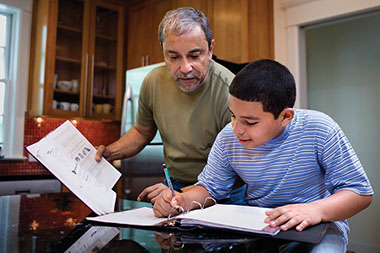
    Image of father helping son with homework.

    Do you dread those long nights of homework hassle-for parents and students? Homework does not have to be a time of great stress for families, according to Paula Kramer, chair and professor of occupational therapy at University of the Sciences. Dr. Kramer suggests the following ways to help avoid arguments over turning off the TV and hitting the books:

    *  Come to an understanding with your child that homework is a necessity-and must be done every day.

    *  Communicate (in person and by email) with the teachers and find out how much time the student is expected to devote to homework each night. Setting expectations and time limits will make the child more productive.

    *  Allow for active playtime before homework. If the child does not have an after-school activity such as a sport or dance class, provide 45 minutes to an hour for the child to engage in active behavior prior to homework. The physical activity will help the child burn off energy, settle the nervous system, and refocus mentally for homework.

    *  Create a designated area for homework and studying-desk in a bedroom or the kitchen table. Just keep the homework spot the same, quiet, and free from distractions.

    *  Create charts to track homework progress. The chart will not only set a schedule that visibly shows that homework needs to be done every night, but will also allow the child to track progress. Rewards can be given for homework completed successfully a few nights in a row.

    *  Use positive praise to encourage good homework and study habits.

    *  Be a role model for the child. School cannot teach everything. Responsibility for successful behavior also lies at home. Parents need to take an active role in their child’s education and should check in on the child during homework to make sure it is completed properly.

    © American Institute for Preventive Medicine

  • The One Question Parents Need To Ask

    FAMILY LIFE

    Image of gun and bullets.

    Before you let your child play at another person’s house, you may ask some safety questions. For instance, you’ll probably want to know if adults are there, when they will be home, and what they will be doing.

    There’s another question that may be harder to ask, but your child’s life may depend on it: “Is there an unlocked gun in your house?”

    The American Academy of Pediatrics says half of all U.S. homes contain firearms. More than a third of all accidental shootings of children happen in the homes of friends, neighbors or relatives.

    Follow these gun safety tips to help keep loved ones safe:

    *  Never keep a loaded gun in the house or in a car.

    *  Keep guns locked up and unloaded. Lock ammunition up in a separate location. Be sure your kids can’t get the keys.

    *  Put trigger locks on all guns.

    *  Know how to operate a gun before you load it.

    *  Don’t point a gun at another person.

    *  Unload the gun before setting it down.

    © American Institute for Preventive Medicine

  • You Can Survive A Family Vacation With The In-Laws

    FAMILY LIFE

    Image of multi-generation family at the beach.

    Instead of calling it “the 7 worst days of your life,” change the mantra to “this will be fun and interesting,” advises Wake Forest University Professor of Counseling Samuel T. Gladding, when describing a family vacation that includes your in-laws.

    Time spent together on the beach or at another vacation place can help children bond with grandparents, Gladding said. “If you don’t have some exposure to extended family, you will never truly get to know them. It takes time, effort and expense to be in the same place with them. The dividend is that you get to know them and then you can build a relationship. That’s how people grow.”

    Connecting with extended families is important because family members have skills, contacts, and abilities beyond those found in nuclear families, he said. Tapping into that family power is a good idea.

    Plan the right activities. Arrange constructive activities that involve interaction, such as cooking or playing board games. A Gladding family favorite is charades because it is silly and makes people laugh. When people laugh together, they create good memories that help build relationships.

    But don’t plan to spend every minute with the group. Set aside time to go out to eat or do some other favorite activity with your own immediate family. It’s okay to say, “For this block of time, we want to have just our small family together.”

    If you set expectations in advance, no one will be surprised when you take a break on Tuesday night to go play miniature golf. It also gives the grandparents some space they might appreciate just as much as you do.

    © American Institute for Preventive Medicine