Tag: Family Life

  • Helping Teens Stay Drug-Free

    FAMILY LIFE

    Father and teen son smiling.

    Most parents don’t want to think about their teen using drugs. They assume their teen is doing OK. They may also think it would be obvious if their teen was into drugs or alcohol.

    Unfortunately, even teens with great parents sometimes take risks and make dangerous choices.

    Why do teens take risks?

    A teen’s brain is very sensitive to emotions and doing things that feel good. Plus, their brains aren’t fully developed yet.

    This means they are not ready to make rational decisions all the time. They may also struggle with mental health issues like depression or anxiety. It can be all too easy to slip into using drugs or alcohol.

    What can parents do?

    A good relationship with your teen is important. This can help them feel they can talk to you about challenges they are facing. This also means they might come to you if they have a problem with drugs or alcohol. Here are some tips to help you stay connected:

    *Be a great listener.Talk with your teen about their daily life. Give them a chance to express their opinion. Don’t interrupt. If they tell you something upsetting, try to remain calm. Ask them how you can help.

    *Help them find activities.Teens do well if they have an outlet for fun and stress relief. This may be music, sports, religious activities or volunteering.

    *Know your teen’s friends.Encourage your teen and their friends to hang out at your house.

    *Don’t solve their problems for them.Parents want to help their teen when they need it. But it’s often more effective to teach them skills to help them solve their own problems. If they have a fight with a friend, talk with them about ways they could work it out themselves. Offer your support but try not to step in.

    *Talk about tough stuff.Help your teen figure out what to do if they are being pressured into something. Show them that they can turn to you. Do they feel comfortable calling you if they need a ride home from a party? Can they talk to you about peer pressure and drinking?

    Source: National Institutes of Health

    © American Institute for Preventive Medicine

  • The Family That Plays Together Stays Together

    FAMILY LIFE

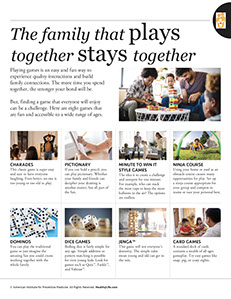
    Family playing Jenga.

    Playing games is an easy and fun way to experience quality interactions and build family connections. The more time you spend together, the stronger your bond will be. But, finding a game that everyone will enjoy can be a challenge. Here are eight games that are fun and accessible to a wide range of ages.

    Charades

    This classic game is super easy and sure to have everyone laughing. Even better, no one is too young or too old to play.

    Pictionary

    If you can hold a pencil, you can play pictionary. Whether your family and friends can decipher your drawing is another matter, but all part of the fun.

    Minute to win it style games

    The idea is to create a challenge and compete for one minute. For example, who can stack the most cups or keep the most balloons in the air? The options are endless.

    Ninja course

    Using your home or yard as an obstacle course creates many opportunities for play. Set up a ninja course appropriate for your group and compete in teams or race your personal best.

    Dominos

    You can play the traditional game or just imagine the amazing fun you could create working together with the whole family.

    Dice games

    Rolling dice is fairly simple for any age. Simple addition or pattern matching is possible for even young kids. Look for games such as Quix™, Farkle™, and Yahtzee™.

    Jenga™

    This game will test everyone’s dexterity. The simple rules mean young and old can get in the mix.

    Card games

    A standard deck of cards contains a wealth of all-ages gameplay. Try easy games like snap, pig, or crazy eights.

    © American Institute for Preventive Medicine

  • Install Smoke Detectors And Be Sure They Work

    Home Safety

    Image of smoke around a smoke detector.

    Smoke detectors save lives. But if a smoke detector is placed in the wrong spot or not maintained, it may be useless in a fire.

    To install and maintain smoke detectors:

    *  Install at least one smoke detector on each level of your house. Best locations are in hallways and just outside bedroom doors.

    *  As an added safety measure, install two types of smoke detectors. The photoelectric cell variety detects smoldering fires, and the ionization type detects hot, flaming fires. Check for a UL (Underwriters Laboratory) emblem on the label to be sure the detectors you buy meet industry standards. And make sure they each come with a warranty, in case they’re defective.

    *  Affix detectors on the ceiling or high on an interior wall, because smoke and heat rise.

    *  Once a month, check the detectors to make sure the batteries still work. Most detectors have a test button. If you push the button and hear a beep, the batteries are good. If you hear a chirping sound, the batteries need to be replaced. (To be safe, you should replace the batteries annually, whether the malfunction signal goes off or not. To help you remember, choose an annual holiday, like New Year’s Day, as replacement time.)

    *  To make sure the sensing chamber works, you should also test the device with a lit match or candle.

    *  Be sure the alarm rings loudly enough to alert your family.

    *  Most smoke detectors last three to five years. Replace as needed.

    A Year of Health Hints book by the American Institute for Preventive Medicine. www.HealthyLife.com. All rights reserved.

    © American Institute for Preventive Medicine

  • Take The Hazard Out Of Halloween

    Child Safety

    Image of children in halloween customs.

    Dressing up to go trick-or-treating is a traditional childhood ritual. But wandering the streets in the dark dressed in bizarre costumes and knocking on strangers’ doors to ask for food can pose hazards. To be sure your children have a Halloween that’s fun and safe, take these precautions.

    *  Choose white or bright costumes, preferably of flame-retardant fabric and marked with reflective tape.

    *  Be sure a costume is short enough so that your child won’t trip.

    *  Don’t let your trick-or-treaters wear masks, which can interfere with their vision. Instead, apply makeup to their faces.

    *  Trick-or-treaters should carry flashlights, not candles. Small children should be accompanied by an adult.

    *  Avoid trick-or-treating at homes on dark streets or in unfamiliar neighborhoods.

    *  Check all treats before your children eat them. Don’t let children eat candy or other treats that aren’t commercially wrapped or look as though they’ve been tampered with.

    *  Keep carved, candlelit pumpkins out of reach of young children. And be sure to set your jack-o’- lantern on a nonflammable surface.

    A Year of Health Hints book by the American Institute for Preventive Medicine. www.HealthyLife.com. All rights reserved.

    © American Institute for Preventive Medicine

  • How Much Exercise Kids Need

    BE FIT

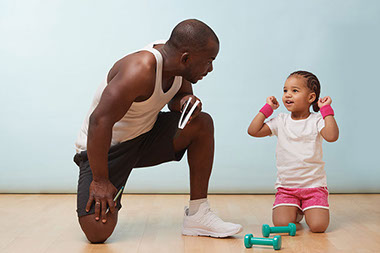
    Father and young daughter about to exercise.

    Being inactive isn’t good for children’s health. Kids can have health problems related to being inactive, such as:

    *  Sleep problems

    *  Type 2 diabetes

    *  Excess weight

    *  High blood cholesterol

    How much exercise is enough?

    Preschool children should be active throughout the day. School aged children should get at least one hour of moderate to intense activity every day. Some exercise is better than none. If your child isn’t active now, start with a few minutes of exercise each day. Gradually increase the time and intensity of their exercise as they get more fit.

    What is ‘moderate to intense activity’ for children?

    When your child is doing moderate to intense activity, their heartbeat will speed up. They will breathe much harder than normal.

    This type of activity can be walking or biking at a brisk pace. It can also be more intense, like jumping on a trampoline or swimming. Whatever your child likes to do, encourage them to do it every day!

    Know the types of exercise

    Exercise doesn’t have to be the same thing all the time. Try to encourage your child to do all three types throughout each week:

    Aerobic exercise

    Anything that speeds up your child’s heart rate. It can include:

    *  Brisk walking

    *  Bike riding

    *  Swimming

    *  Running

    *  Dancing

    *  Playing games that require running and throwing

    Muscle-strengthening exercise

    These exercises build up muscles, which is important for lifelong fitness. Examples include:

    *  Climbing

    *  Push-ups

    *  Lunges

    *  Yoga

    *  Resistance bands

    *  Hand-held weights

    Bone-strengthening

    This puts pressure on bones. Pressure from exercise helps the bones rebuild and stay strong. Exercises include:

    *  Jumping

    *  Running

    *  Skipping

    *  Sports that require running and stopping, like basketball or soccer

    Source: Centers for Disease Control and Prevention

    © American Institute for Preventive Medicine

  • The Importance Of Chores

    FAMILY LIFE

    Child holding a load of clothes in her arms.

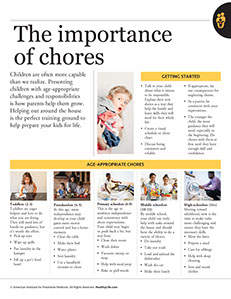
    Children are often more capable than we realize. Presenting children with age-appropriate challenges and responsibilities is how parents help them grow. Helping out around the house is the perfect training ground to help prepare your kids for life.

    Getting started

    *  Talk to your child about what it means to be responsible. Explain their new duties as a way they help the family and learn skills they will need for their whole life.

    *  Create a visual schedule or chore chart.

    *  Discuss being consistent and reliable.

    *  If appropriate, lay out consequences for neglecting chores.

    *  As a parent, be consistent with your expectations.

    *  The younger the child, the more guidance they will need, especially in the beginning. Do chores with them at first until they have enough skill and confidence.

    Age-appropriate chores

    Toddlers (2-3)

    Toddlers are eager helpers and love to do what you are doing. They will need lots of hands-on guidance, but it’s worth the effort.

    *  Pick up toys

    *  Wipe up spills

    *  Put laundry in the hamper

    *  Fill up a pet’s food bowl

    Preschoolers (4-5)

    At this age, more independence may develop as your child gains more motor control and has a better memory.

    *  Clear the table

    *  Make their bed

    *  Water plants

    *  Sort laundry

    *  Use a handheld vacuum to clean

    Primary schoolers (6-9)

    This is the age to reinforce independence and consistency with chore expectations. Your child may begin to push back a bit, but stay firm.

    *  Clean their room

    *  Wash dishes

    *  Vacuum, sweep, or mop

    *  Help with meal prep

    *  Rake or pull weeds

    Middle schoolers (10-13)

    By middle school, your child can truly help with tasks around the house and should have the ability to do a variety of chores.

    *  Do laundry

    *  Take out trash

    *  Load and unload the dishwasher

    *  Wash the car

    *  Make their lunch

    High-schoolers (14+)

    Moving toward adulthood, now is the time to make tasks more challenging and ensure they have the necessary skills.

    *  Mow the lawn

    *  Prepare a meal

    *  Care for siblings

    *  Help with deep cleaning

    *  Iron and mend clothes

    © American Institute for Preventive Medicine

  • Coping With A Crisis

    Home Safety

    The first step in coping with a crisis is to recognize what is happening. Part of this is to accept the feelings and reactions you have as normal responses to an abnormal event. Some reactions show that your body and mind are on a high state of alert. Others are part of the healing process. The second step is to manage the effect the crisis has on you (e.g., how you feel and the ability to live your life).

    Typical Reactions

    Reactions to a crisis or trauma vary widely. You may experience many, only a few, or none of these reactions. These reactions to a crisis or trauma are common. Most people fully recover from even moderate stress reactions within six to sixteen months.

    Behavior Reactions

    *  Crying, anger outbursts, restlessness

    *  Withdrawal, isolating yourself, or clinging to others

    *  Increased urge for alcohol or drugs

    *  Problems with family, friends, co-workers

    *  Being “on guard” or easily startled

    *  Inappropriate humor

    *  Change in eating, sleeping, and or other behaviors

    *  No longer maintaining daily routines. You may be too afraid to leave your home.

    Physical Reactions

    *  Headaches

    *  Upset stomach

    *  Nervousness

    *  Change in appetite

    *  Muscle aches

    *  Tiredness, fatigue, exhaustion

    *  Insomnia

    Emotional Reactions

    *  Anger

    *  Irritability

    *  Emotional numbness

    *  Worry

    *  Fear

    *  Sadness

    *  Grief

    *  Feeling unmotivated

    *  Feeling unsafe

    *  Weakness

    *  Feeling insecure

    *  Helplessness

    *  Hopelessness

    *  Guilt

    *  Feeling overwhelmed

    Mental Reactions

    *  Disbelief

    *  Shock

    *  Recurring thoughts of the event

    *  Confusion

    *  Poor memory

    *  Impaired concentration

    *  Inability to make decisions

    *  Bad dreams

    *  Violent fantasies

    *  Changes in or questions about religious beliefs

    Handling Anxiety

    *  Write down, ahead of time, the steps to take for different disasters (e.g., house, fires, floods, etc.). Go through drills for each plan with the whole family. Make sure the car always has gas. This is in case you have to leave an area.

    *  Know your place of work’s emergency plans. Find out about them from your supervisor, Employee Assistance Program (EAP), etc.

    *  Take a course in first aid from the Red Cross, your police or fire department.

    *  Give each family member a prepaid phone card with about a ten dollar value. Instruct children how to use the card and a pay phone. Some cell phone services may be overwhelmed in an emergency.

    *  Set up a “check-in” plan. Choose someone for family members to call or e-mail to check on each other. Pick someone far enough away who would not likely be part of the same event. Of course, call each other on cell, regular, or pay phones.

    *  Choose two places to meet. One is at home or near your home. Choose another place farther away in case you can’t get home. Make plans for the safety of your children.

    *  If you have children in school, find out the school’s crisis plan. Know the school’s policy for sending children home. Make sure the school has current phone numbers for you and other caregivers in case you can’t be reached. Find out what the school needs to have to release your child to designated caregivers.

    *  If you have a pet, plan for its safety. For more information, contact the Red Cross orwww.disasterrelief.org/library/prepare/pets.html.

    *  When you enter a building, find emergency exits and stairways. Plan ahead how to get out quickly from buildings, vehicles, crowded public places, etc.

    *  Make an emergency supply kit. Put these things in backpacks or containers that one or more family members can easily carry:

    – Three days’ supply of bottled water (one gallon a day per person if possible. Put these next to, not in your containers.)

    – Food that won’t spoil. A hand can opener.

    – Flashlight and extra batteries

    – A battery powered radio or TV and extra batteries

    – First aid kits for the home and the car

    – Sleeping bags or blankets

    – A change of clothing for each person

    – Items for family members with special needs (e.g., baby supplies, medicines, etc.)

    – Duct tape and dry towels that you can make wet to make a room airtight

    – Bleach

    – Important documents, cash, and credit cards

    For more information on being ready for disasters, contactwww.redcross.orgor call your local Red Cross. Ask about their “Preparing for the Unexpected” class. This one and a half-hour class teaches families and employees safety steps to take for many kinds of disasters.

    Deal with Fear

    Handling Anxiety

    Anxiety is a feeling of dread, fear, or distress over a real or imagined threat to your mental or physical well being. When anxiety becomes extreme, possible threats are overestimated. Also, inner strength, support from family, the community, and the nation are underestimated.

    A certain amount of anxiety is normal. It can alert you to seek safety when you are in physical danger. Anxiety is not normal, though, when there is no apparent reason for it or when it overwhelms you and interferes with your day-to-day life. If this is the case, seek help from your doctor, a mental health professional, or your Employee Assistance Program (EAP) at work. Treatment can include medication and counseling. It may also include behavior therapy or taking part in a self-help group.

    Signs and Symptoms of Anxiety

    *  Rapid pulse and/or breathing rate

    *  Racing or pounding heart

    *  Dry mouth

    *  Sweating

    *  Trembling

    *  Shortness of breath

    *  Faintness

    *  Numbness/tingling of the hands, feet, or other body part

    *  Feeling a “lump in the throat”

    *  Stomach problems

    Self-Help for Anxiety

    *  If you are prescribed medication, take it as advised.

    *  Identify your feelings.

    *  Talk to others about your fears. It’s okay to ask for help. If available at your place of work, attend group meetings with an EAP counselor or other mental health professional where people can share feelings.

    *  Maintain your normal routines.

    *  Escape for a little while. Go to a movie. Read a good book. Take a walk in the woods or a trip to a museum.

    *  Take a long, warm shower or bath.

    *  Don’t fight the desire to cry. Tears can help relieve stress and also release a natural pain-relieving substance from the brain.

    *  Laugh a lot. Laughter relaxes muscles and relieves tension.

    *  Recognize the things you can control and what you can’t control. Identify and use your own strengths and resources.

    *  Use measures that have helped you overcome fear and helplessness in the past.

    *  Don’t take on more than you can handle. Make a to-do list. Prioritize important items.

    *  Reward yourself. Treat yourself to little things that make you feel good.

    *  Think positively.

    Take Charge, Coping with a Crisis book by the American Institute for Preventive Medicine. www.HealthyLife.com. All rights reserved.

    © American Institute for Preventive Medicine

  • Killer Household Products

    Home Safety

    Harmful drugs could be right under your nose.

    Spray paint, gasoline, glue, hair spray, and cleaning products become drugs when their vapors are inhaled on purpose to get “high.” Inhalants are easy to get and are among the most popular and deadly substances that teens abuse.

    The highs and lows

    At first, the effects of sniffing or snorting fumes are like drinking alcohol. But feeling giddy and less inhibited lasts only a few minutes. Continued use of the inhalant is needed to feel “high” longer. Breathing in chemical fumes replaces oxygen in the lungs. As a result, repeated use can cause:

    *  Death (even from one session of repeated use of the inhalant)

    *  Liver, kidney, and bone marrow problems

    *  Heart rhythm problems and heart failure

    *  Headaches

    *  Dizziness

    *  Confusion

    *  Delusions

    Also, the use of inhalants over time can cause health problems that cannot be reversed:

    *  Hearing loss

    *  Problems with learning and memory

    *  Muscle spasms

    Signs of inhalant use:

    *  Chemical smell on clothing or breath

    *  Drunk, dazed, or dizzy look

    *  Slurred speech

    *  Sores around the nose or mouth

    *  Paint or other chemical stains on fingers

    *  Empty spray paint bottles or rags hidden in closets

    If you suspect that a family member is using inhalants, get medical help without delay.

    Action Step

    Talk to your kids about the dangers of inhalants. Find out more fromwww.inhalants.drugabuse.gov.

    Ways to Well-Being book by the American Institute for Preventive Medicine. www.HealthyLife.com. All rights reserved.

    © American Institute for Preventive Medicine

  • The Keys To Physical Well-Being Are Healthy Habits

    Personal Safety

    Couple eating watermelon.

    *  Eat nutritious foods.

    *  Get to and maintain a healthy weight.

    *  Be physically active.

    *  Get enough sleep and rest.

    *  See that you and all family members age 6 months and older get an annual flu vaccine. It is the single best way to prevent getting seasonal flu.

    Dos

    *  Balance work and play.

    *  Wash your hands often with soap and water or hand sanitizer containing 60% alcohol.

    *  Avoid secondhand smoke.

    Don’ts

    *  Don’t be a workaholic.

    *  Don’t be around people who have the flu.

    *  Don’t use tobacco in any form.

    A Year of Health Hints book by the American Institute for Preventive Medicine. www.HealthyLife.com. All rights reserved.

    © American Institute for Preventive Medicine