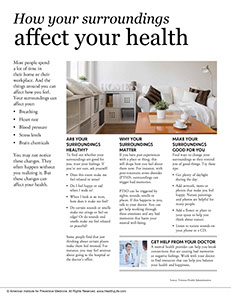
Most people spend a lot of time in their home or their workplace. And the things around you can affect how you feel. Your surroundings can affect your:
* Breathing
* Heart rate
* Blood pressure
* Stress levels
* Brain chemicals
You may not notice these changes. They often happen without you realizing it. But these changes can affect your health.
Are your surroundings healthy?
To find out whether your surroundings are good for you, trust your feelings. If you’re not sure, ask yourself:
* Does this room make me feel relaxed or tense?
* Do I feel happy or sad when I walk in?
* When I look at an item, how does it make me feel?
* Do certain sounds or smells make me cringe or feel on edge? Or do sounds and smells make me feel relaxed or peaceful?
Some people find that just thinking about certain places make them feel stressed. For instance, you may feel anxious about going to the hospital or the doctor’s office.
Why your surroundings matter
If you have past experiences with a place or thing, this will shape how you feel about them now. For instance, with post-traumatic stress disorder (PTSD), surroundings can trigger bad memories.
PTSD can be triggered by sights, sounds, smells or places. If this happens to you, talk to your doctor. You can get help working through these emotions and any bad memories that harm your mental well-being.
Make your surroundings good for you
Find ways to change your surroundings so they remind you of good things. Try these tips:
* Get plenty of daylight during the day.
* Add artwork, items or photos that make you feel happy. Nature paintings and photos are helpful for many people.
* Add a flower or plant to your space to help you think about nature.
* Listen to nature sounds on your phone or a CD.
Get help from your doctor
A mental health provider can help you break connections that are causing bad memories or negative feelings. Work with your doctor to find resources that can help you balance your health and happiness.
Source: Veterans Health Administration