Tag: fat

  • Easy Food Swaps For A Healthy Heart

    HEALTHY EATING

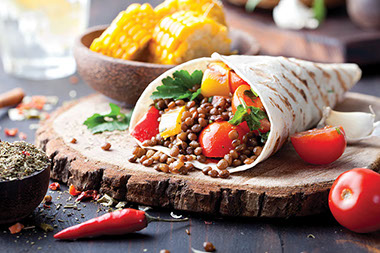
    Image of a healthy vegetable wrap.

    Eating better for your heart doesn’t have to be complicated. In fact, making some small substitutions in your diet each day can add up to better health. It doesn’t require a big investment of time or money to make these changes:

    Instead of: Crackers or chips

    Try: Unsalted nuts and seeds

    Crackers and chips are processed foods with few vitamins and minerals. They’re often loaded with salt, sugar or excess fat.

    Nuts and seeds, on the other hand, contain heart healthy unsaturated fats that can improve blood cholesterol levels. They also contain fiber, which can help lower cholesterol and fight constipation. They’re convenient to take on the go and offer a satisfying crunch.

    Instead of:  White dinner rolls or pasta

    Try: Whole grain breads and pasta

    White “refined” breads and pastas have much of the natural nutrients stripped out during processing. They usually have little to no fiber. This means they don’t help you feel full and they can cause a drop in blood sugar a short time after they are eaten.

    Instead of white pasta and bread, try a whole grain option. Whole wheat pasta, quinoa and brown rice contain fiber, nutrients and even protein that’s great for your heart. Eating whole grains instead of refined grains may lower the risk of heart attack, stroke and obesity.

    Instead of: Cheesy pasta or sandwiches

    Try: Avocado sliced or spread

    Cheese can be eaten in moderation as part of a healthy diet. But many processed cheeses contain saturated fat, salt and artificial ingredients.

    Instead of processed cheese, try creamy avocado. Diced avocado pairs well with cherry tomatoes and herbs as a pasta topping. Try ripe avocado on a sandwich in place of sliced cheese. Avocado contains monounsaturated fats, which are heart health superstars. It also has antioxidants to help fight heart disease.

    Instead of:  Lunch meat sandwiches

    Try: Hummus and vegetable wraps

    Most deli meats contain a large amount of salt. A diet high in salt can lead to high blood pressure, which increases the risk of heart disease and stroke. They may also contain saturated fat, which may raise the risk of heart problems.

    Skip the meat and try a plant-based sandwich that still offers protein without the extra salt and unhealthy fat. Almond butter and peanut butter taste great on whole grain bread. Hummus offers protein and fiber, and pairs well with vegetables on whole grain wrap bread.

    Source: American Heart Association
    © American Institute for Preventive Medicine
  • Be Fussy About Fat

    Nutrition

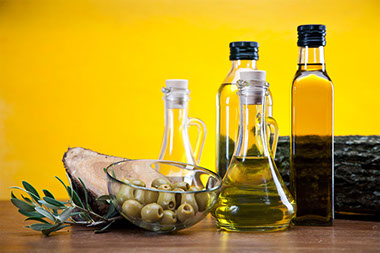
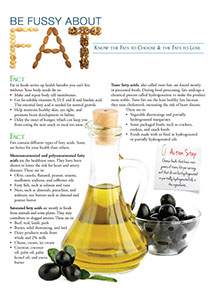
    Image of oilve oil and green olives in a clear bowl.

    Know the Fats to Choose & the Fats to Lose.

    Fact:

    Fat in foods serves up health benefits you can’t live without. Your body needs fat to:

    *  Make and repair body cell membranes.

    *  Get fat-soluble vitamins A, D, E and K and linoleic acid. This essential fatty acid is needed for normal growth.

    *  Help maintain healthy skin, eye sight, and promote brain development in babies.

    *  Delay the onset of hunger, which can keep you from eating the next snack or meal too soon.

    Fats contain different types of fatty acids. Some are better for your health than others.

    Monounsaturated and polyunsaturated fatty acids are the healthiest ones. They have been shown to lower the risk for heart and artery diseases. These are in:

    *  Olive, canola, flaxseed, peanut, sesame, sunflower, soybean, and safflower oils

    *  Fatty fish, such as salmon and tuna

    *  Nuts, such as almonds, pistachios, and walnuts; nut butters such as almond and peanut butter

    Saturated fatty acids are mostly in foods from animals and some plants. They may contribute to clogged arteries. These are in:

    *  Beef, veal, lamb, pork

    *  Butter, solid shortening, and lard

    *  Dairy products made from whole and 2% milk

    *  Cheese, cream, ice cream

    *  Coconut, coconut oil, palm oil, palm kernel oil, and cocoa butter

    Trans fatty acids, also called trans fats, are found mostly in processed foods. During food processing, fats undergo a chemical process called hydrogenation to make the product more stable. Trans fats are the least healthy fats because they raise cholesterol, increasing the risk of heart disease. These are in:

    *  Vegetable shortenings and partially hydrogenated margarines

    *  Some packaged foods, such as crackers, cookies, and snack foods

    *  Foods made with or fried in hydrogenated or partially hydrogenated oils

    Action Step

    Choose foods that have zero grams of trans fat per serving and that do not list hydrogenated or partially hydrogenated oils in the ingredients.

    Page from Ways to Well-Being book by the American Institute for Preventive Medicine. www.HealthyLife.com. All rights reserved.

    © American Institute for Preventive Medicine
  • A Safer Way To Bring Home The Bacon

    Nutrition

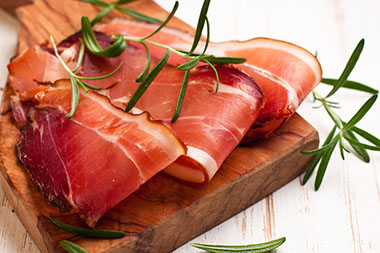
    Image of bacon and rosemary.

    Meats like bacon, bologna, frankfurters, pepperoni, and salami have been cured to stop the growth of bacteria, delaying spoilage. Curing gives these meats their reddish pink hue and distinctive flavor. Scientists have discovered, however, that nitrites and nitrates, compounds used to cure meats, might be converted into dangerous cancer-causing substances called nitrosamines when cured meats are digested. Luckily, scientists also discovered that vitamin C can help to prevent formation of nitrosamines. So now, meat processors must by law include some form of vitamin C in cured meats.

    To further ensure the safe consumption of cured meats:

    *  Don’t let bacon or other lunch meats sit unrefrigerated for more than a few minutes. They can still spoil at room temperature.

    *  Cook bacon in a microwave oven. This produces lower levels of nitrosamines than pan frying or oven cooking.

    *  Always drain fat from cooked bacon, since drippings contain twice as many nitrosamines as the meat itself.

    Despite these precautions, cured meats are still high in fat and sodium, so you should eat only limited amounts regardless of the threat of nitrosamines.

    Page from A Year of Health Hints book by the American Institute for Preventive Medicine. www.HealthyLife.com. All rights reserved.

    © American Institute for Preventive Medicine