Tag: fatigue

  • Sleep Apnea

    Sleep Well

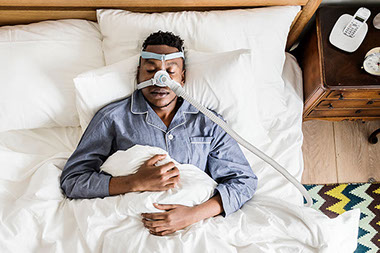
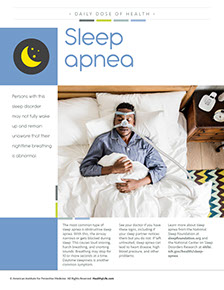
    Man wearing a CPAP machine while sleeping.

    Persons with this sleep disorder may not fully wake up and remain unaware that their nighttime breathing is abnormal.

    The most common type of sleep apnea is obstructive sleep apnea. With this, the airway narrows or gets blocked during sleep. This causes loud snoring, harsh breathing, and snorting sounds. Breathing may stop for 10 or more seconds at a time. Daytime sleepiness is another common symptom.

    See your doctor if you have these signs, including if your sleep partner notices them but you do not. If left untreated, sleep apnea can lead to heart disease, high blood pressure, and other problems.

    Learn more about sleep apnea from the National Sleep Foundation atsleepfoundation.organd the National Center on Sleep Disorders Research atnhlbi.nih.gov/health/sleep-apnea.

    © American Institute for Preventive Medicine
  • Drowsy Driving: Know The Signs

    WELL-BEING

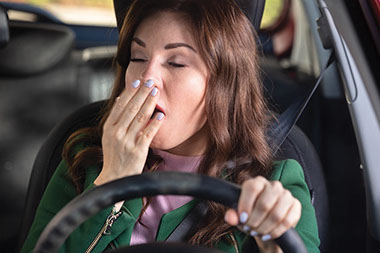
    Women yawning while driving.

    Drowsy driving is the combination of driving a vehicle and being overly tired. It might happen if you didn’t sleep well the night before. It can also happen if you take medicines that make you tired. Sometimes people who work long shifts or the night shift are drowsy when they drive home from work.

    What’s the big deal?

    Experts believe drowsy driving causes tens of thousands of car crashes each year.

    Driving when you’re drowsy is a lot like driving drunk. Drowsy driving can:

    *  Make you less aware and less attentive

    *  Slow down your reaction time

    *  Make it hard for you to make decisions while you’re  on the road

    How do I know if I’m drowsy?

    Signs of being too tired to drive include:

    *  Yawning or blinking a lot

    *  Not being able to remember some of your trip

    *  Missing your turn or exit

    *  Drifting out of your lane or off the road

    *  Hitting rumble strips

    What to do

    If you think you’re driving while drowsy, pull over in a safe place. If you can, get some coffee or a caffeinated drink. Then lock the doors and take a 15- to 20-minute nap in your vehicle. The caffeine and nap combination may help you be more alert.

    Opening the windows and loud music don’t help you stay awake. When your body needs sleep, it will do almost anything to get it.

    Prevent drowsy driving

    The best way to prevent crashes from drowsy driving is to:

    1. Get enough sleep. If you can’t get the sleep you need, have someone else drive you to your destination.

    2. See your doctor if you think you might have a sleep disorder.

    3. Never drink alcohol before driving.

    4. Never take medicines that make you drowsy before driving.

    Sources: Centers for Disease Control and Prevention, National Sleep Foundation

    © American Institute for Preventive Medicine
  • Too Tired To Exercise?

    BE FIT

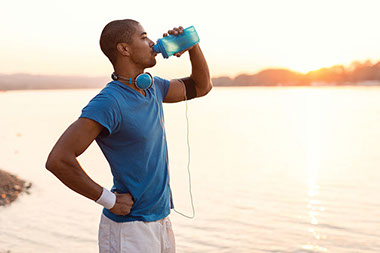
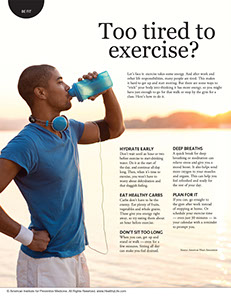
    Man standing by a body of water drinking out of a water bottle.

    Let’s face it: exercise takes some energy. And after work and other life responsibilities, many people are tired. This makes it hard to get up and start moving. But there are some ways to “trick” your body into thinking it has more energy, so you might have just enough to go for that walk or stop by the gym for a class. Here’s how to do it.

    Hydrate early

    Don’t wait until an hour or two before exercise to start drinking water. Do it at the start of the day, and continue all day long. Then, when it’s time to exercise, you won’t have to worry about dehydration and that sluggish feeling.

    Eat healthy carbs

    Carbs don’t have to be the enemy. Eat plenty of fruits, vegetables and whole grains. These give you energy right away, so try eating them about an hour before exercise.

    Don’t sit too long

    When you can, get up and stand or walk – even for a few minutes. Sitting all day can make you feel drained.

    Deep breaths

    A quick break for deep breathing or meditation can relieve stress and give you a mood boost. It also helps send more oxygen to your muscles and organs. This can help you feel refreshed and ready for the rest of your day.

    Plan for it

    If you can, go straight to the gym after work instead of stopping at home. Or schedule your exercise time – even just 30 minutes – in your calendar with a reminder to prompt you.

    Source: American Heart Association

    © American Institute for Preventive Medicine
  • How To Prevent Jet Lag

    Healthy Travel

    Image of man covering his face while at the airport.

    Jet travel makes it possible to reach the far corners of the world in a matter of hours. Yet crossing several time zones disrupts your body’s natural rhythm of eating and sleeping. The result is a combination of fatigue, disorientation, indigestion, headaches, and insomnia, collectively called jet lag. Traveling from east to west is more of a problem than traveling west to east. Traveling north or south, if you don’t change time zones, doesn’t cause jet lag. It may take as long as one day per time zone for your body to adjust to changes.

    Ways to prevent jet lag include the following:

    *  Three nights before you leave, change your bedtime. If you’re traveling east, go to bed 1 hour earlier for each time zone you will cross. For example, if you usually go to bed at 10:30 p.m.; two nights before the trip, go to bed at 9:30 p.m. and the night before you leave, go to bed at 8:30 p.m. If you’re traveling west, go to bed one hour later for each time zone you will cross.

    *  Once you are on the plane, change your watch to match the time it is where you are going. Act according to that time. For example, if it is time to sleep in the country you are going to, try to sleep on the plane. If it is daytime, do activities that keep you awake.

    *  When you travel east on a long flight (over many time zones), try to take an overnight flight or one that arrives at nighttime so you can sleep on the plane or when you arrive.

    *  Ask your doctor about using melatonin, an over-the-counter product that may help “reset” your natural awake/sleep cycle. Ask, too, about taking vitamin B12 and vitamin C supplements certain days before your flight and after you return home.

    *  During the flight, avoid sleeping pills, alcohol, and caffeine. Drink plenty of water or juices to avoid dehydration. The air in the aircraft is very dry.

    *  If you arrive at your destination during the day, plan to spend some time outdoors. Try to expose yourself to as many hours of daylight as the number of time zones you crossed.

    *  Don’t go to bed until evening.

    Page image from A Year of Health Hints book by the American Institute for Preventive Medicine. www.HealthyLife.com. All rights reserved.

    © American Institute for Preventive Medicine
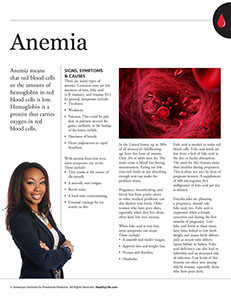
  • Anemia

    Women’s Health

    Paper cutouts of blood drops with stethoscopes.

    Anemia means that red blood cells or the amount of hemoglobin in red blood cells is low. Hemoglobin is a protein that carries oxygen in red blood cells.

    Signs, Symptoms & Causes

    There are many types of anemia. Common ones are low amounts of iron, folic acid (a B vitamin), and vitamin B12. In general, symptoms include:

    *  Tiredness.

    *  Weakness.

    *  Paleness. This could be pale skin or paleness around the gums, nailbeds, or the linings of the lower eyelids.

    *  Shortness of breath.

    *  Heart palpitations or rapid heartbeat.

    With anemia from low iron, extra symptoms can occur. These include:

    *  Tiny cracks at the corner of the mouth.

    *  A smooth, sore tongue.

    *  Brittle nails.

    *  A hard time concentrating.

    *  Unusual cravings for ice, starch, or dirt.

    In the United States, up to 20% of all women of childbearing age have this form of anemia. Only 2% of adult men do. The main cause is blood lost during menstruation. Eating too few iron-rich foods or not absorbing enough iron can make the problem worse.

    Pregnancy, breastfeeding, and blood loss from peptic ulcers or other medical problems, can also deplete iron levels. Older women who have poor diets, especially when they live alone, often have low iron anemia.

    When folic acid is very low, extra symptoms can occur. These include:

    *  A smooth and tender tongue.

    *  Appetite loss and weight loss.

    *  Nausea and diarrhea.

    *  Headache.

    Folic acid is needed to make red blood cells. Folic acid levels are low from a lack of folic acid in the diet or faulty absorption. The need for this vitamin more than doubles during pregnancy. This is often not met by diets of pregnant women. A supplement of 400 micrograms (0.4 milligrams) of folic acid per day is advised.

    Females who are planning a pregnancy, should take folic acid, too. Folic acid is important when a female conceives and during the first months of pregnancy. Low folic acid levels at these times have been linked to low birth weight and major birth defects, such as neural tube defects (spina bifida) in babies. Folic-acid deficiency can also lead to infertility and an increased risk of infection. Low levels of this vitamin are often seen among elderly women, especially those who have poor diets.

    When vitamin B12 is low, extra symptoms can occur. These include:

    *  Chest pain on exertion.

    *  Swollen red tongue or bleeding gums.

    *  A hard time concentrating.

    *  Appetite loss and weight loss.

    *  Nausea and diarrhea.

    When vitamin B12 is very low, nervous system problems can occur, such as:

    *  Numbness and tingling in the hands and feet.

    *  Walking and balance problems.

    *  Memory loss, confusion, dementia or psychosis.

    One form of vitamin B12 deficiency anemia is pernicious anemia. This is usually caused when the body doesn’t absorb vitamin B12 from food. It can result from a lack of digestive acids and a substance called the intrinsic factor. Both are needed to absorb vitamin B12. Other causes are surgery that removes part or all of the stomach and autoimmune problems that cause cells in the stomach’s lining to shrink. Vitamin B12 is found only in animal foods. It is not in plant foods unless the vitamin is added, such as in some cereals.

    Other Types of Anemia

    *  Sickle cell anemia. This is an inherited disorder that affects the red blood cells’ ability to carry oxygen to the body’s tissues. Sickle cell anemia occurs mostly in African Americans but can occur in other ethnic groups too.

    *  Aplastic anemia. This is a serious disease of decreased bone marrow production.

    Also, alcohol, certain drugs, large amounts of aspirin, and some chronic diseases can cause anemia.

    Treatment

    Anemia shares symptoms with many health problems. It needs to be diagnosed by a doctor. Persons with severe anemia may need one or more blood transfusions.Treatment for it depends on the type and what caused it. This includes:

    *  Treating the problem that caused it.

    *  Eating a proper diet and taking vitamin and/or mineral supplements, as prescribed. {Note: Don’t take iron supplements on your own. Persons with a genetic illness called hemochromatosis (iron overload disease) can be harmed with iron supplements.}

    *  Getting vitamin B12 shots, if needed.

    Questions to Ask

    Self-Care

    To Get and Absorb Iron

    *  Eat foods that are good sources of iron: green leafy vegetables, lean red meat, beef liver, poultry, fish, wheat germ, oysters, dried fruit, and iron-fortified cereals.

    *  Eat foods high in vitamin C, such as citrus fruits, kiwi, tomatoes, strawberries, broccoli, and green or red bell peppers.

    *  If you drink tea, drink it between meals. Tannins in tea block iron absorption. Or add milk to tea. The calcium in milk binds with the tannins. (Herbal tea does not have tannins.)

    *  Take the supplements your doctor advises. {Note: High levels of iron in the blood may increase the risk for heart attacks. This is especially a concern if you have gone through menopause.}

    *  Avoid antacids, phosphates (which are found in soft drinks, beer, ice cream, candy bars, etc.), and the food additive EDTA. These block iron absorption.

    To Get and Absorb Folic Acid

    *  Eat good food sources of folate every day. These include asparagus, Brussels sprouts, spinach, romaine lettuce, collard greens, and broccoli. Other good sources are black-eyed peas, cantaloupe, orange juice, oatmeal, and whole-grain or fortified cereals.

    *  Eat fresh, raw fruits and vegetables often. Don’t overcook food. Heat destroys folic acid.

    *  Take the supplement your doctor advises.

    *  Don’t smoke or drink alcohol.

    Tips for Getting Vitamin B12

    *  Eat animal sources of food. Good choices are lean meats, fish, poultry, nonfat or low-fat dairy products.

    *  Strict vegetarians (vegans) who eat no animal sources of food should get vitamin B12 from a supplement or foods fortified with it, such as cereals or plant-based milks or nutritional yeast.

    Resources

    National Heart, Lung, and Blood Institute

    www.nhlbi.nih.gov

    Women's Self-Care book by the American Institute for Preventive Medicine. www.HealthyLife.com. All rights reserved.

    © American Institute for Preventive Medicine
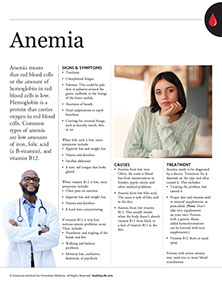
  • Anemia 2

    General Health Conditions

    Anemia means that red blood cells or the amount of hemoglobin in red blood cells is low. Hemoglobin is a protein that carries oxygen in red blood cells. Common types of anemia are low amounts of iron, folic acid (a B-vitamin), and vitamin B12.

    Signs & Symptoms

    *  Tiredness.

    *  Weakness.

    *  Paleness. This could be pale skin or paleness around the gums, nailbeds, or the linings of the lower eyelids.

    *  Shortness of breath.

    *  Heart palpitations or rapid heartbeat.

    *  Cravings for unusual things, such as laundry starch, dirt, or ice.

    When folic acid is low, extra symptoms can occur. These include: Appetite loss and weight loss; nausea and diarrhea, swollen abdomen, and a sore, red tongue that looks glazed. When vitamin B12 is low, extra symptoms include: Chest pain on exertion; appetite loss and weight loss; nausea and diarrhea, a hard time concentrating, and a sore, red tongue that looks glazed. If vitamin B12 is very low, nervous system problems occur. These include: Numbness and tingling of the hands and feet; walking and balance problems; memory loss, confusion, dementia, or psychosis. This is known as pernicious anemia.

    Causes

    *  Anemia from low iron. Often, the cause is blood loss from menstruation in females, peptic ulcers, and other medical problems.

    *  Anemia from low folic-acid. The cause is lack of folic acid in the diet.

    *  Anemia from low vitamin B12. This usually results when the body doesn’t absorb vitamin B12 from food, not a lack of vitamin B12 in the diet.

    Treatment

    Anemia shares symptoms with many health problems. It needs to be diagnosed by a doctor. Treatment for it depends on the type and what caused it. This includes:

    *  Treating the problem that caused it.

    *  Proper diet and vitamin and/or mineral supplements, as prescribed. {Note: Don’t take iron supplements on your own. Persons with a genetic illness called hemochromatosis (iron overload disease) can be harmed with iron supplements.}

    *  Vitamin B12 shots, if needed.

    Persons with severe anemia may need one or more blood transfusions.

    Questions to Ask

    Self-Care / Prevention

    Follow your doctor’s treatment plan.

    To Get and Absorb Iron

    *  Eat foods that are good sources of iron: Lean, red meats; green, leafy vegetables; beef liver; poultry; fish; wheat germ; oysters; dried fruit; and iron-fortified cereals.

    *  Eat foods high in vitamin C, such as citrus fruits, tomatoes, and strawberries. Vitamin C helps your body absorb iron from plant foods.

    *  Take the supplements your doctor advises.

    *  If you drink tea, drink it between meals. Tannins in tea block iron absorption. Or, add milk to tea. The calcium in milk binds with the tannins. (Herbal tea does not have tannins.)

    *  Avoid antacids, the food additive EDTA, and phosphates (found in soft drinks, beer, ice cream, etc.). These block iron absorption.

    To Get and Absorb Folic Acid

    *  Eat good food sources of folate every day. Examples are asparagus, brussels sprouts, spinach, collard greens, broccoli, peas, oranges, cantaloupe, oatmeal, and whole-grain cereals.

    *  Eat fresh, raw fruits and vegetables often. Don’t overcook food. Heat destroys folic acid.

    *  Take the supplement your doctor advises.

    *  Don’t smoke. Don’t drink alcohol.

    For Getting B12

    *  Eat animal sources of food. Good choices are lean meats, fish, poultry, nonfat or low-fat dairy products, and cereals with added vitamin B12.

    *  Strict vegetarians (vegans) who eat no animal sources of food may need a vitamin B12 supplement or foods fortified with it.

    Healthier at Home book by the American Institute for Preventive Medicine. www.HealthyLife.com. All rights reserved.

    © American Institute for Preventive Medicine
  • Eyestrain From Computer Use

    Eye Conditions

    Persons who use computer video display terminals (VDTs) at work and/or at home may notice eyestrain.

    Signs & Symptoms

    *  Eye discomfort or irritation. This includes dry, red, and/or watery eyes.

    *  Eye fatigue.

    *  Having a hard time focusing.

    *  Back pain, shoulder pain, and headaches may also occur.

    Causes

    The cause of eyestrain is most likely from conditions that surround the VDT, not the VDT itself. These include improper positioning of the VDT and supplies, poor lighting, and/or poor posture.

    A pre-existing eye problem may also be the cause.

    Treatment

    Self-care measures prevent and treat eyestrain when using VDTs.

    Questions to Ask

    Self-Care / Prevention

    *  Place the screen so that your line of sight is 10 to 15 degrees (about one-third of a 45-degree angle) below horizontal.

    *  Position the VDT screen about 2 feet away from your eyes. This is a little farther away than normal reading distance.

    *  Dust the screen often.

    *  Reduce glare. Place the VDT at right angles to a window. Turn off or shield overhead lights. Wear a visor to block them, if needed.

    *  Place your paperwork close enough that you don’t have to keep refocusing when switching from the screen to the paper. Use a paper document holder placed at the same height as the VDT screen.

    *  Blink often to keep your eyes from getting dry. Use “artificial tear” eyedrops, if needed.

    *  Tell your eye specialist that you use a VDT. Glasses and contacts worn for other activities may not be good for VDT work. With bifocals, the near-vision part of the lens is good for looking down, as when you read, but not for looking straight ahead, as when you look at a video display screen. You may need single-vision lenses for VDT work.

    *  If the image on the VDT screen is blurred, dull, or flickers, have it serviced right away.

    Resources

    Prevent Blindness America

    www.preventblindness.org

    Healthier at Home book by the American Institute for Preventive Medicine. www.HealthyLife.com. All rights reserved.

    © American Institute for Preventive Medicine

  • Fatigue & Autoimmune Diseases

    Women’s Health

    Fatigue is being very tired, weary, and lacking energy. Often, it is a symptom of other health problems.

    Signs & Symptoms

    *  Feeling drained of energy.

    *  Feeling exhausted.

    *  Having a very hard time doing normal activities.

    *  Having low motivation.

    *  Feeling inadequate.

    *  Having little desire for sex.

    Causes

    Causes that need medical care include anemia, depression, heart disease, and chronic fatigue syndrome (the fatigue lasts at least 6 months). Fatigue is also a common symptom of autoimmune diseases. These include diabetes, low thyroid, multiple sclerosis, and lupus (the systemic type).

    Other physical causes include lack of leisure activities or lack of sleep; poor diet; side effects from allergies, chemical sensitivities or drug or alcohol addiction; being in hot, humid conditions; and prolonged effects of the flu or a bad cold.

    Possible emotional causes are burnout, boredom, and a major life change (e.g., divorce, retirement, etc.).

    Treatment

    Treatment for fatigue depends on the cause(s). Keep track of any other symptoms that occur with the fatigue. This helps find out both physical and emotional causes.

    Questions to Ask

    Self-Care / Prevention

    If fatigue is due to a medical condition, follow your doctor’s or health care provider’s guidelines for rest, diet, medication, etc.

    *  Get regular physical activity. Exercise can give you more energy, especially if you sit all day at work. Exercise can calm you, too.

    *  Cool off. Working or playing in hot weather can drag you down. Rest in a cool, dry place as often as you can. Drink plenty of water.

    *  Rest and relax. Get a good night’s sleep. Relax during the day if you can, too. Practice deep breathing or meditation.

    *  Eat well. Eating too much and “crash dieting” are both hard on your body. Don’t skip breakfast. Limit high-fat and/or rich, sugary foods. Eat whole-grain breads and cereals and fruits and vegetables every day. Have 5 to 6 light meals a day, instead of 3 large ones. Take vitamin and mineral supplements, as advised by your doctor.

    *  Change your routine. Do something interesting each day. If you do too much, plan for some quiet time.

    *  Lighten your work load. Assign tasks to others when you can. Ask for help when you need it.

    *  Do something for yourself. Plan time to do things that meet only your needs.

    *  Avoid too much caffeine and alcohol. Don’t use illegal drugs. These trigger fatigue.

    Resources

    Chronic Fatigue Syndrome & Fibromyalgia Information Exchange Forum (Co-Cure)

    www.co-cure.org

    Women's Self-Care book by the American Institute for Preventive Medicine. www.HealthyLife.com. All rights reserved.

    © American Institute for Preventive Medicine
  • Fatigue

    General Health Conditions

    With fatigue, a person is tired, weary, and lacks energy. Often, fatigue is a symptom of another health problem.

    Signs & Symptoms

    *  Feeling drained of energy.

    *  Feeling exhausted.

    *  Having a very hard time doing normal activities.

    *  Having low motivation.

    *  Feeling inadequate.

    *  Having little desire for sex.

    Causes

    Causes that need medical care include anemia, depression, heart disease, low thyroid, lupus (the systemic type), and chronic fatigue syndrome (CFS).

    Other physical causes include: Lack of sleep; poor diet; side effects of medicines; allergies; drug or alcohol problems; being in hot, humid conditions; and the flu.

    Possible emotional causes are burnout, boredom, and a major life change, such as divorce or retirement.

    Treatment

    Treatment depends on the cause. Tell your doctor about any other symptoms that occur with the fatigue. He or she will explore both physical and emotional causes.

    Questions to Ask

    Self-Care / Prevention

    *  If fatigue is due to a medical problem, follow your doctor’s or health care provider’s guidelines for rest, diet, medication, etc.

    *  Get regular physical activity. Exercise can give you more energy, especially if you sit all day at work. Exercise can calm you, too.

    *  Cool off. Working or playing in hot weather can drag you down. Rest in a cool, dry place as often as you can. Drink plenty of water.

    *  Avoid too much caffeine and alcohol.

    *  Don’t use illegal drugs.

    *  Lighten your work load. Assign tasks to others when you can, both at work and at home. Ask for help when you need it from family and friends. Hire help if you need to.

    *  Change your routine. Try to do something new and that you want to do every day.

    *  If you do too much, make time for some peace and quiet.

    *  Do something for yourself. Plan time to do things that meet only your needs, not just those of others.

    Resources

    Treating Chronic Fatigue Syndrome & Fibromyalgia

    www.treatcfsfm.org

    Healthier at Home book by the American Institute for Preventive Medicine. www.HealthyLife.com. All rights reserved.

    © American Institute for Preventive Medicine