Tag: fats

  • Go Nuts For A Healthy Heart

    HEALTHY EATING

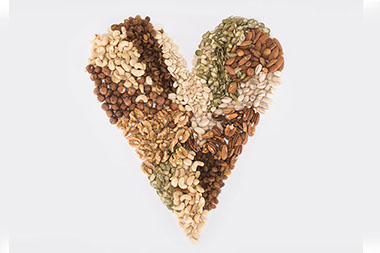
    Variety of nuts shaped into a heart.

    Nuts often get a reputation as being unhealthy. We add them to cookies and ice cream. People eat them by the handful at parties. But do nuts deserve a bad rap?

    Concerns about calories

    For years, many people avoided nuts because they are high in calories and fat. However, newer research finds that nuts can be an important part of a healthy diet. They contain many nutrients needed for body functions.

    The key is to eat nuts in moderation. This means you may need to eat smaller portions. Then, you can avoid eating too many calories from nuts.

    Look at the serving size on a package of nuts to get an idea of how much to eat. One serving may be quite small (2-4 tablespoons).

    Some Fats are Healthy

    Yes, most nuts are high in total fat. But these fats found in nuts actually promote good health! Most are high in healthy monounsaturated or polyunsaturated fats.

    Monounsaturated and polyunsaturated fats can help lower bad cholesterol, which can lower the risk of heart disease and stroke. The American Heart Association recommends people eat more of these fats from healthy sources like nuts and seeds.

    Protein packed

    Nuts are a good source of plant-based protein. Protein is an essential nutrient that the body needs for building muscle, repairing tissues and making hormones.

    It takes longer for the body to digest proteins than carbohydrates. That’s why eating some protein could help you feel less hungry than if you ate only carbohydrates, like crackers or bread.

    The Dietary Guidelines for Americans recommend that people eat healthy sources of protein, like those that come from nuts and seeds, and plant foods.

    Which types to eat

    Of course, there are many different kinds of nuts. Each type tastes different and may contain a variety of nutrients. As long as you’re not coating nuts with sugar and salt, any type can be healthy.

    Take a look at your favorite nut’s nutrition facts and go from there. For instance, macadamia nuts are one of the highest in calories and fat per ounce. But take those calories into account, and eat them instead of chips or cookies.

    Replace unhealthy, processed foods with nuts. You’ll get more nutrients and might even feel more full.

    Sources: Academy of Nutrition and Dietetics, National Institutes of Health, U.S. Department of Agriculture

    © American Institute for Preventive Medicine
  • Go For The Good Oils

    Nutrition

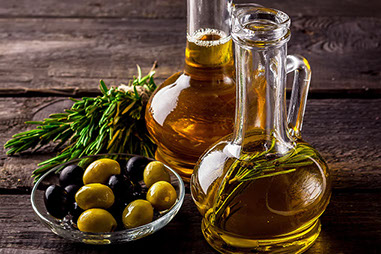
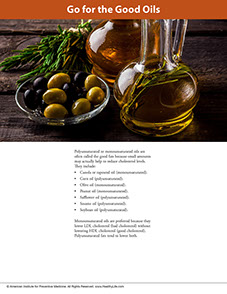
    Image of olive oil and olives.

    Polyunsaturated or monounsaturated oils are often called the good fats because small amounts may actually help to reduce cholesterol levels. They include:

    *  Canola or rapeseed oil (monounsaturated).

    *  Corn oil (polyunsaturated).

    *  Olive oil (monounsaturated).

    *  Peanut oil (monounsaturated).

    *  Safflower oil (polyunsaturated).

    *  Sesame oil (polyunsaturated).

    *  Soybean oil (polyunsaturated).

    Monounsaturated oils are preferred because they lower LDL cholesterol (bad cholesterol) without lowering HDL cholesterol (good cholesterol). Polyunsaturated fats tend to lower both.

    Page from A Year of Health Hints book by the American Institute for Preventive Medicine. www.HealthyLife.com. All rights reserved.

    © American Institute for Preventive Medicine
  • Strategies For Reducing Fats And Cholesterol

    Nutrition

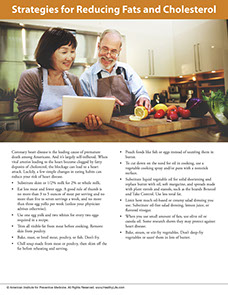
    Image of couple cooking in kitchen.

    Coronary heart disease is the leading cause of premature death among Americans. And it’s largely self-inflicted. When vital arteries leading to the heart become clogged by fatty deposits of cholesterol, the blockage can lead to a heart attack. Luckily, a few simple changes in eating habits can reduce your risk of heart disease.

    *  Substitute skim or 1/2% milk for 2% or whole milk.

    *  Eat less meat and fewer eggs. A good rule of thumb is no more than 3 to 5 ounces of meat per serving and no more than five to seven servings a week, and no more than three egg yolks per week (unless your physician advises otherwise).

    *  Use one egg yolk and two whites for every two eggs required in a recipe.

    *  Trim all visible fat from meat before cooking. Remove skin from poultry.

    *  Bake, roast, or broil meat, poultry, or fish. Don’t fry.

    *  Chill soup made from meat or poultry, then skim off the fat before reheating and serving.

    *  Poach foods like fish or eggs instead of sautéing them in butter.

    *  To cut down on the need for oil in cooking, use a vegetable cooking spray and/or pans with a nonstick surface.

    *  Substitute liquid vegetable oil for solid shortening and replace butter with oil, soft margarine, and spreads made with plant sterols and stanols, such as the brands Benecol and Take Control. Use less total fat.

    *  Limit how much oil-based or creamy salad dressing you use. Substitute oil-free salad dressing, lemon juice, or flavored vinegar.

    *  When you use small amount of fats, use olive oil or canola oil. Some research shows they may protect against heart disease.

    *  Bake, steam, or stir-fry vegetables. Don’t deep-fry vegetables or sauté them in lots of butter.

    Page from A Year of Health Hints book by the American Institute for Preventive Medicine. www.HealthyLife.com. All rights reserved.

    © American Institute for Preventive Medicine

  • Olive Oil

    HEALTHY EATING

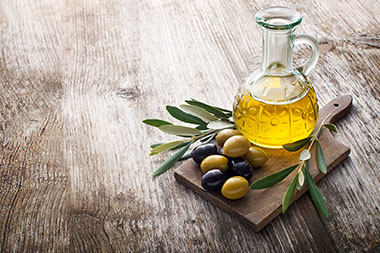
    Image of olives and olive oil.

    Olive oil is a more healthful choice than many other cooking fats. Using olive oil in place of saturated fats has been shown to help lower bad cholesterol and raise good cholesterol levels, which is why olive oil is heart healthy.

    Know these facts about olive oil, from the North American Olive Oil Association:

    *  Extra virgin olive oil is the most flavorful olive oil, with an unlimited range of flavors spanning from smooth and subtle to peppery and pungent. A finishing drizzle of extra virgin olive oil can enhance the texture, taste, and aroma of food.

    *  Olive oil, sometimes referred to as “classic” or “pure” olive oil, has a milder flavor with just a hint of fruitiness. The subtle flavor of olive oil makes it a perfect everyday cooking oil and easily adapts to a number of cooking methods such as grilling, sautéing, roasting, frying, and baking.

    *  Use bottled olive oil within 8 to 12 weeks of opening. Sealed packages can keep for up to 2 years.

    *  Dark bottles or tins are best at reducing potential damage from light.

    *  Avoid packages that show signs of improper handling or storage such as dust on the bottle, broken or loose seal on the cap, or an orange tint to the oil, which could indicate overexposure to fluorescent lighting or that heat has damaged the oil.

    *  Look for a country of origin statement, which is required by federal labeling laws and is typically found on the back label near the nutritional information.

    © American Institute for Preventive Medicine
  • What Are Healthy Fats?

    HEALTHY EATING

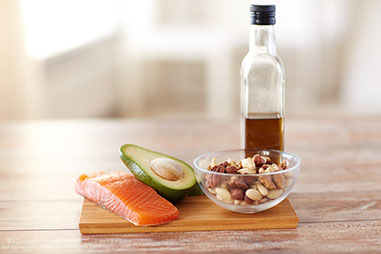
    Image of healthy fats.

    Low-fat diets and low-fat foods have been around for years. But should we really be avoiding fat for better health?

    The answer isn’t simple. Although quantity of fat does matter, quality is also very important. Your body needs some fat to function and stay healthy. So, eating the right kinds of fats can have health benefits.

    The different kinds of fats

    The American Heart Association recommends no more than 35 percent of your total calories from fats. And most, if not all, should be from healthy sources.

    *Saturated fatcomes mostly from animal products, such as meat and full-fat dairy. Saturated fat may raise cholesterol. So limit it to 6 percent of your total daily calories.

    *Trans fatsare found in some processed foods. If the ingredients list partially hydrogenated oil, the food contains trans fats. These fats raise “bad” LDL cholesterol and lower your “good” HDL cholesterol. Avoid trans fats as often as possible.

    *Monounsaturated and polyunsaturated fatsare healthy fats that can improve cholesterol and decrease the risk of heart disease. They should be used in place of saturated fats and trans fats.

    What to eat for healthy fats

    These foods contain healthy fats. But, stay within your calorie limits to avoid weight gain.

    Omega-3 is a polyunsaturated fat that is considered heart healthy. Good sources of omega-3 include:

    *  Fatty fish, such as salmon, albacore tuna and sardines – Enjoy fish up to twice per week.

    *  Canola oil – Use canola in place of butter, margarine or other cooking oils.

    *  Eggs – Some companies feed their chickens a diet high in omega-3s, which leads to more of this fat in the eggs. Check for omega-3 content on the label.

    *  Walnuts – Try walnuts in breads and on salads.

    *  Flaxseeds – Look for ground (not whole) flaxseeds and add them to cereal, yogurt and smoothies.

    Monounsaturated fats can be a healthy addition to your diet, especially if you eliminate saturated and trans fats. Foods that have monounsaturated fats include:

    *  Nuts – Because nuts are high in calories, keep portion sizes small. Love peanut butter? Avoid those with added sugar, salt or hydrogenated oil.

    *  Avocados – Use them in dips, smoothies, salads, sandwiches and pasta.

    *  Olive oil – Use it in salad dressings and stir frys and as a dip for whole grain bread.

    Food labels will tell you what the saturated and trans fat content is, so check this before you buy.

    Sources: American Heart Association, Academy of Nutrition and Dietetics

    © American Institute for Preventive Medicine