Tag: fertility

  • Diet & Fertility

    HEALTHY EATING

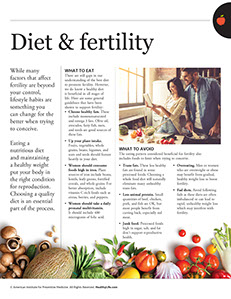
    Couple in kitchen cooking together.

    While many factors that affect fertility are beyond your control, lifestyle habits are something you can change for the better when trying to conceive.

    Eating a nutritious diet and maintaining a healthy weight put your body in the right condition for reproduction. Choosing a quality diet is an essential part of the process.

    What to eat

    There are still gaps in our understanding of the best diet to promote fertility. However, we do know a healthy diet is beneficial in all stages of life. Here are some general guidelines that have been shown to support fertility:

    *Choose healthy fats.These include monounsaturated and omega 3 fats. Olive oil, avocados, fatty fish, nuts, and seeds are good sources of these fats.

    *Up your plant intake.Fruits, vegetables, whole grains, beans, legumes, and nuts and seeds should feature heavily in your diet.

    *Women should consume foods high in iron.Plant sources of iron include beans, lentils, leafy greens, fortified cereals, and whole grains. For better absorption, include vitamin C-rich foods such as citrus, berries, and peppers.

    *Women should take a daily prenatal multivitamin.It should include 400 micrograms of folic acid.

    What to avoid

    The eating pattern considered beneficial for fertility also includes foods to limit when trying to conceive.

    *Trans fats.These less healthy fats are found in some processed foods. Choosing a whole food diet will naturally eliminate many unhealthy trans fats.

    *Less animal protein.Small quantities of beef, chicken, pork, and fish are OK, but most people benefit from cutting back, especially red meat.

    *Junk food.Processed foods high in sugar, salt, and fat don’t support reproductive health.

    *Overeating.Men or women who are overweight or obese may benefit from gradual, healthy weight loss to boost fertility.

    *Fad diets.Avoid following fads as these diets are often imbalanced or can lead to rapid, unhealthy weight loss which may interfere with fertility.
    © American Institute for Preventive Medicine

  • Reversing Male Infertility

    Men’s Health

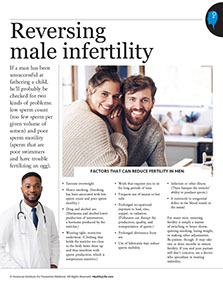
    Image of male doctor.

    If a man has been unsuccessful at fathering a child, he’ll probably be checked for two kinds of problems: low sperm count (too few sperm per given volume of semen) and poor sperm motility (sperm that are poor swimmers and have trouble fertilizing an egg).

    Factors that can reduce fertility in men include:

    *  Extreme overweight.

    *  Heavy smoking. (Smoking has been associated with low sperm count and poor sperm motility.)

    *  Drug and alcohol use. (Marijuana and alcohol lower production of testosterone, a hormone produced by the testicles.)

    *  Wearing tight, restrictive underwear. (Clothing that holds the testicles too close to the body heats them up and thus interferes with sperm production, which is temperature sensitive.)

    *  Work that requires you to sit for long periods of time (for reasons similar to those above).

    *  Frequent use of saunas or hot tubs.

    *  Prolonged occupational exposure to lead, zinc, copper, or radiation. (Pollutants can disrupt the production, quality, and transportation of sperm.)

    *  Prolonged abstinence from sex.

    *  Use of lubricants, such as petroleum jelly and K-Y brand jelly, which can kill or immobilize sperm.

    *  Infection or other illness. (These hamper the testicles’ ability to do their job.)

    *  A varicocele (a congenital defect in the blood vessels to the testes).

    For many men, restoring fertility is simply a matter of switching to boxer shorts, quitting smoking, losing weight, or making other adjustments. Be patient, though. It may take two or three months to restore fertility. If your partner still doesn’t conceive, see a doctor who specializes in treating infertility.

    A Year of Health Hints book by the American Institute for Preventive Medicine. www.HealthyLife.com. All rights reserved.

    © American Institute for Preventive Medicine
  • Want To Have A Baby? Try This

    Pregnancy & Prenatal Care

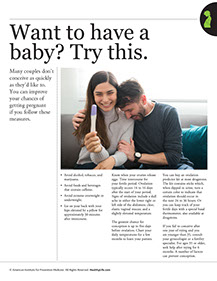
    Image of happy couple looking at positive pregnancy test, while male is making a phone call.

    Many couples don’t conceive as quickly as they’d like to. You can improve your chances of getting pregnant if you follow these measures.

    *  Avoid alcohol, tobacco, and marijuana.

    *  Avoid foods and beverages that contain caffeine.

    *  Avoid extreme overweight or underweight.

    *  Lie on your back with your hips elevated by a pillow for approximately 30 minutes after intercourse.

    *  Know when your ovaries release eggs. Time intercourse for your fertile period. Ovulation normally occurs 14 to 16 days after the start of your period. Signs of ovulation include a dull ache in either the lower right or left side of the abdomen; clear, elastic vaginal mucus; and a slightly elevated temperature.

    You can buy an ovulation predictor kit at most drugstores. The kit contains sticks which, when dipped in urine, turn blue if you’re ovulating.

    Or you can keep track of your fertile days with a special basal thermometer, also available at drugstores. Having intercourse when your temperature drops approximately 0.4ºF increases your chances of conception.

    If you fail to conceive after one year of trying, consult your gynecologist or a fertility specialist. A number of factors can prevent conception.

    A Year of Health Hints book by the American Institute for Preventive Medicine. www.HealthyLife.com. All rights reserved.

    © American Institute for Preventive Medicine

  • Thinking About Getting Pregnant?

    WELL-BEING

    Image of couple looking at the results of a pregnancy test.

    A healthy pregnancy starts with these steps, according to the CDC:

    *  Take a vitamin with 400 micrograms (mcg) folic acid every day. Read the label.

    *  Avoid alcohol, tobacco, and street drugs.

    *  Keep hands clean by washing them often with soap and water to prevent infections.

    *  See a health care professional regularly. Talk about any medical problems (such as obesity, diabetes, seizures) and medicine use (both prescription and over-the-counter).

    *  Ask about avoiding any substances at work or at home that might be harmful to a developing baby.

    *  Eat a healthy, balanced diet.

    *  Avoid unpasteurized (raw) milk and foods made from it.

    *  Avoid eating raw or undercooked meat.

    *  While pregnant, get early prenatal care and go to every appointment.

    © American Institute for Preventive Medicine